
Compare jackpot mechanics before choosing a slot
 Available in US
Progressive pools grow through qualifying wagers, but contribution rates and prize arrangements vary by game.

How Jackpot Pools Build Across Casino Slots
A progressive jackpot is funded through play rather than being a prize set entirely in advance. Each qualifying wager sends a small share into the jackpot pool, while the rest remains within the game’s wider payout structure. Across progressive jackpot slots, that contribution is typically between 1% and 3% of each wager. The amount added to the pool therefore rises as play continues, although the precise contribution is a feature of the individual game, not a universal rule for every slot.
That distinction matters when comparing games in a casino. Two titles may both display a growing prize, yet their contribution rates and arrangements need not be identical. The number shown beside the game is the current pool value; it does not, by itself, explain how much of each wager goes into it or how the game is configured. Those details belong to the game’s rules and information panel.
From the operator’s side, a progressive jackpot slot is part of a catalogue assembled from games supplied by providers. A casino can carry some progressive titles and not others. Availability can also change as providers update their catalogues. A specialist review has reported this variation, but a review captures a particular set of offerings rather than establishing a permanent list for every operator. In practice, a title’s presence on one casino site says little about whether it will appear on another.
Progressive jackpot slots can make payout terms an important part of choosing where to play. This list offers a concise reference point on the payout information available for each operator.
-
Dieselwin
- Payout speed
- 1-3 business days
Dieselwin lists a payout speed of 1–3 business days. This is the available factual detail relevant to assessing its place on this page.
-
Chanze
- Payout speed
- 1-3 business days
Chanze lists a payout speed of 1–3 business days. No further operator details are provided here.
-
EvoSpin
- Payout speed
- 1-3 business days
EvoSpin lists a payout speed of 1–3 business days. That payout timeframe is the available point of reference for this listing.
-
SpinFormula
- Payout speed
- 1-3 business days
SpinFormula lists a payout speed of 1–3 business days. No other specifics are available to characterise it further.
-
Jetsetspins
- Payout speed
- 1-3 business days
Jetsetspins lists a payout speed of 1–3 business days. This is the only supplied detail to consider for this page.
-
x3bet
- Payout speed
- 1-3 business days
x3bet lists a payout speed of 1–3 business days. The available information does not provide further details about its progressive jackpot slots.
-
Britsino
- Payout speed
- 1-3 business days
Britsino lists a payout speed of 1–3 business days. No additional facts are supplied for this reference card.
-
Revery Play
- Payout speed
- 1-3 business days
Revery Play lists a payout speed of 1–3 business days. This is the only stated detail available for the listing.
-
Amunbet
- Payout speed
- 1-3 business days
Amunbet lists a payout speed of 1–3 business days. No further information is provided to support a more specific description.
-
Zombillion
- Payout speed
- 1-3 business days
Zombillion lists a payout speed of 1–3 business days. The supplied information offers no other operator-specific details.
That is why the phrase “progressive jackpot casino” can describe several different things. It might mean an online casino that offers progressive slots, a particular title available there, or simply the setting in which someone expects to find such a game. The label is not a guarantee that every progressive title is carried, or that the same selection will remain in place. The catalogue is a commercial and provider-led part of the experience.
I have found it more useful to separate the pool from the storefront. The pool describes how the prize grows; the storefront is the operator’s selection of games. They are related, but they answer different questions. A casino may list a progressive slot because it has access to that game, while the pool’s growth follows the game’s own contribution arrangements. Seeing the game in a casino does not mean the operator independently sets every feature of the jackpot.
The same distinction applies to an online casino progressive jackpot. The online setting makes a game accessible through an operator’s site, but it does not make the game’s mechanics identical to those of every other progressive slot. The contribution rate and the way the prize is presented depend on the title. The operator’s role in presenting a catalogue should not be confused with the game’s own pool rules.
There is also a practical difference between a prize that is visibly accumulating and the amount a player has personally contributed. The displayed pool reflects the game’s jackpot, not an individual account balance or a record of one person’s wagers. Contributions from play build the shared prize mechanism attached to the slot. A large display can make that process feel immediate, but it does not change the basic arrangement: eligible wagers feed a pool, and the pool grows as those contributions are added.
This is one reason promotional language needs translating. “Growing prize” describes the visible movement of the jackpot, not a prediction about when it will be won or what any particular session will return. The pool can rise without offering a player a dependable route to the prize. A progressive jackpot is a feature of the game, not a promise attached to the casino’s marketing.

When assessing progressive jackpot casino slots in the UK, the more grounded comparison is between the actual games available and the terms shown for each one. A casino’s catalogue can change, so an old listing or a general claim about its selection may no longer describe what is currently offered. The game information is the place to establish how that particular slot treats contributions and what its displayed jackpot represents.
The broad picture is straightforward: wagers provide the fuel, a defined share is channelled into the pool, and the casino provides access to whichever progressive titles it carries at that time. The share is modest per wager, but repeated play is what allows a progressive pool to accumulate. The details sit with each game. No single casino label explains them all.
Online Networks: One Game, a Shared Jackpot
A progressive slot can appear on more than one casino site without each site running a separate jackpot. When operators carry the same networked game, they can be connected to a shared prize pool. The display may sit inside one operator’s website, but the jackpot belongs to the game’s wider network, not simply to that casino.
That distinction changes how the prize should be understood. A figure shown while playing at one site is not necessarily the result of play there alone. The same progressive game may be offered by other operators connected to its pool, so activity across those locations contributes to one shared jackpot. The sites are separate; the game’s prize pool is not.
I find it useful to separate the operator from the game when reading a jackpot display. A casino provides the setting in which the slot is available. The provider’s network arrangement determines whether that slot shares its progressive jackpot with the same game elsewhere. Seeing the same title at two casinos does not, by itself, tell the whole story; the relevant point is whether both carry the networked progressive version.

This is why online progressive jackpot slots can look more connected than the casino pages that host them. A player may encounter the same game through different operators, while the jackpot remains part of a single network. The pool’s reach is therefore tied to where that particular game is carried, rather than to the boundaries of one website.
There is a practical limit to that connection: not every operator offers every progressive title. A specialist review describes availability as varying between operators and changing when providers update their catalogues. That makes any snapshot of online slots with progressive jackpots temporary. A title appearing at one site may not be present at another, and catalogues can change. The network may be shared, but access to the game is not universal.
This also makes “best” a slippery label for online progressive jackpot slots. A shared pool does not make a game automatically better at one operator than at another. It explains how the jackpot is connected, not whether the slot suits a particular player or what its other features are. Nor does a jackpot display on a casino page prove that the casino alone has generated the amount shown. The game’s network matters.
Free play is another phrase that needs care in this context. A demonstration version can show how a slot works, but it should not be confused with participation in the real-money network jackpot. Whether a practice mode connects to a live prize pool is a separate matter from the fact that operators carrying the same progressive game share its network pool. A displayed counter in a free version is not enough, on its own, to establish that real-money play is contributing to that pool.
When comparing online progressive jackpot slots in the UK, the useful question is not simply which site displays the largest figure. It is whether the same progressive game is being offered and whether its jackpot is networked across the operators carrying it. The shared-pool arrangement explains why a prize can be associated with play in more than one place, but it does not identify every site that carries the title or guarantee that its catalogue will stay unchanged.
One game, many doors.
How a Progressive Jackpot Game Triggers Its Prize
The word “progressive” describes a jackpot that can grow; it does not tell how a particular game awards it. In progressive jackpot slot games, the trigger may be random, tied to a specific combination, or dependent on entering a bonus round. Those are different routes to the prize, and they should not be treated as interchangeable.
With a random trigger, the jackpot event can occur during play without a particular winning combination being required. That does not mean every spin is guaranteed an equal chance of winning, or that the game has no qualifying conditions. It means the prize is not necessarily awarded only when a named set of symbols appears. The exact rules belong to the individual game.
A combination-based trigger works differently: a stated result must appear for the jackpot to be won. The symbols and any other requirements are specific to that game. A bonus-round trigger adds another step. The player must reach the relevant feature, and the jackpot is then awarded according to the rules of that feature. Reaching a bonus round is not, by itself, proof that the jackpot has been won.
The distinction matters when comparing progressive jackpot casino games. A large headline figure says nothing on its own about the route to the prize. A game with a random trigger and one that requires a particular combination may display a jackpot, yet demand different conditions before that prize can be awarded. “Easy to win” is promotional language, not a description of a trigger. The rules are the description.

I have found that the practical question is not simply whether a game has a jackpot, but what event qualifies for it. Game information should explain whether the trigger is random, combination-based or linked to a bonus round, and whether any additional condition applies. If those details are unclear, the jackpot figure is not enough to explain how a win happens.
There is a further wrinkle with some random-trigger games: a minimum bet may be required to qualify for the highest jackpot tier. A specialist review has reported this condition for certain games, but it should not be presented as a rule across progressive slots. It is a game-specific qualification, not a universal feature of random jackpots. The distinction also matters: a bet may qualify for a lower tier while leaving the highest tier unavailable, depending on the game’s stated rules.
That condition changes how the word “random” should be read. Random describes the way the jackpot can be triggered; it does not necessarily mean that every stake qualifies for every prize tier. Nor does the presence of a minimum qualifying bet establish that raising the stake improves the chance of a trigger. The specific game rules are needed to establish what the stake affects.
When I compare top progressive jackpot slots, I separate the advertised prize from the trigger mechanics. The largest progressive slot jackpot is not automatically the most accessible, and a lower displayed prize does not imply an easier trigger. Without the game’s rules, neither conclusion follows. Prize size and trigger method answer different questions.
Random Trigger
The jackpot can occur during play without requiring a specific winning combination, though qualifying conditions may apply.
Combination-based Trigger
A stated set of symbols or a specific result must appear for the jackpot to be awarded.
Bonus-round Trigger
The player must first reach a relevant feature, where the jackpot is then awarded according to the feature's rules.
A useful comparison therefore records the trigger type, any combination or bonus-round requirement, and any stated qualifying stake for the highest tier. That keeps a random award distinct from a feature that must first be reached, and prevents a condition reported for one game from being applied to another. The headline is only the headline.
From Connected Machines to a Growing Jackpot
A progressive jackpot on connected slot machines is built from play across the linked machines, rather than from one machine’s wagers alone. Each wager adds a contribution to the shared pool. As play continues, those contributions accumulate, so the jackpot can grow while the machines remain connected to it.
That distinction changes what the displayed prize represents. It is not simply a measure of how much has been wagered on the cabinet in front of a player. The total reflects contributions from wagers made across the connected group. One machine is part of the system; it does not, by itself, account for the whole pool.
I find it useful to think of the machines as feeding a common total, not as holding separate prizes that happen to look alike. The connection is the essential feature: without it, wagers on one machine would not add to the same accumulating jackpot as wagers on the others. The pool’s growth follows the combined activity of the connected machines.
The word “shared” can make the arrangement sound more complicated than it is. At its simplest, the machines contribute to one pool as wagers are placed. The jackpot therefore reflects activity beyond any single play session or cabinet. That does not mean every machine has its own independent version of the same total; the progressive feature is the accumulation across the connected set.
This also explains why a progressive slot machine should be understood as part of a wider arrangement. The cabinet provides the game, but the growing jackpot depends on contributions from wagers on connected machines. A player may see the amount associated with the machine, yet the underlying pool is built by the group’s play. The distinction is easy to miss when attention is fixed on one screen.
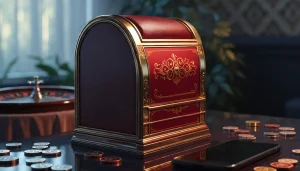
The mechanics are less about a dramatic jump in the displayed figure than about repeated contributions entering the pool. Each wager is part of that flow. Over time, the total grows through activity on the connected machines, rather than being reset and rebuilt solely from play on one cabinet. The machine is a point of entry into the pool. Not the whole pool.
For anyone comparing progressive slot machines in a physical setting, the important question is whether the jackpot belongs to a connected group of machines. The term “progressive” describes a prize that accumulates as wagers contribute to it; “connected” describes how those contributions can come from more than one machine. Together, those features explain why the jackpot can grow beyond the activity on an individual cabinet.
The arrangement is straightforward, even if the display makes the prize feel like a feature of one particular machine. The amount is attached to the connected pool, while wagers on the machines in that group contribute to its growth. That is the central operating idea behind machine-based progressive jackpots: many machines feed one accumulating total.
The UK Framework Behind Progressive Slots
The regulatory question around progressive jackpot slots in the UK is not answered by where a game server or other equipment happens to sit. For remote gambling offered to consumers in Great Britain, the UK Gambling Commission’s reach applies regardless of the location of the equipment supporting the service. That distinction matters: a business cannot place its technical operation elsewhere and treat that fact alone as removing the British regulatory framework.
The Commission regulates gambling activity across the United Kingdom, including online casinos. Its remit as the sole regulator for commercial gambling applies specifically to Great Britain. Those terms are not interchangeable. The Gambling Act 2005 applies in England, Wales and Scotland, while Northern Ireland is outside that Act’s scope. When describing regulation, the location and legal framework therefore need to be stated accurately rather than compressed into a loose claim about one identical system across every UK jurisdiction.
I find that the licence structure is often blurred in promotional copy. The Commission grants operating licences to businesses and personal licences to individuals working in relevant roles in Great Britain. These are different permissions: the business licence covers the company’s authority to provide gambling services, while a personal licence concerns an individual’s regulated activity. A reference to a casino being “licensed” is only useful if it is clear that the relevant permission belongs to the operator, not simply a person or supplier associated with its service.

That distinction applies to mobile play as much as desktop access. A progressive jackpot slot does not become outside the regulator’s concern because it is played through an app, or because its supporting equipment is hosted beyond Great Britain. The relevant point is the remote gambling service being offered to consumers in the regulated market. The technology may be distributed; the regulatory responsibility is not determined by a server address.
This framework is market-wide, not a certification of a particular jackpot feature. The Commission regulates gambling and licenses businesses and individuals; that role should not be confused with an endorsement of a game’s prize size, popularity or chance of paying out. A “regulated” label describes oversight and permission to operate, not a promise about the outcome of a spin. Separate questions about how a jackpot is triggered or what happens after a win belong to the game rules and the operator’s terms.
I would also separate the regulator’s role from the commercial decisions made around a catalogue. Whether a particular progressive jackpot slot is available through a service is not, by itself, a measure of regulatory approval or a ranking of the game. The Commission’s function is to oversee gambling activity and the licensed businesses and individuals involved in providing it. It is not a guide to which title is the biggest or best.
In practical terms, the framework establishes who may provide remote gambling to consumers in Great Britain and which authority oversees that activity. The location of the equipment does not settle the question. Nor does a jackpot’s headline figure. Licence and oversight are the starting point; game terms remain a separate matter.
Free Play, Bonus Conditions and Real-Money Limits
“Free play” can describe two different things: a demo mode with no cash at stake, or promotional spins attached to an account. Neither phrase, by itself, establishes that a progressive jackpot is available or that a resulting prize can be withdrawn. The distinction matters. A practice session is not the same as playing progressive jackpot slots for real money, and a promotion has its own conditions.
For a demo, the useful question is what the mode is designed to demonstrate. It may let a player see the game’s features, but it should not be treated as a route to a cash jackpot. Promotional free spins need a closer reading: the game list and the prize rules determine what those spins can produce. A specialist affiliate review reports that most free-spin offers are limited to non-progressive games, and that winnings from progressive slots played with free spins may be capped at £50–£100. These are reported offer terms, not a rule applying to every promotion.
That difference can be easy to miss in the wording. An offer may advertise spins while the qualifying games exclude progressive titles; alternatively, the game may be available while winnings remain subject to a cap. The headline describes the promotional entry point, not necessarily the conditions on any prize. The detail is in the terms.
No-deposit offers
A no-deposit bonus is also promotional play, not unrestricted real-money play. A specialist affiliate review reports wagering requirements of 40x–60x for no-deposit bonuses, alongside maximum withdrawal caps of £50–£100 on winnings from them. Those figures should be read as reported offer conditions rather than fixed UK-wide standards. The terms attached to a particular offer control.
The practical point is that a displayed balance and a withdrawable amount are not interchangeable. Wagering conditions can require qualifying play before withdrawal, while a cap can limit what is payable even when a balance is higher. The wording should be checked together: the wagering requirement, the games that count towards it, and the maximum withdrawal condition. A single headline number does not explain the whole offer.

Real-money play
With real-money progressive jackpot slots, the stake comes from deposited funds rather than a free-spin allocation or no-deposit promotion. That does not make every promotional condition irrelevant: an offer may still restrict which games qualify or how winnings are treated. Keep the categories separate when reading terms. Free spins, no-deposit bonuses and ordinary cash play are not interchangeable labels.
I have seen the word “free” do too much work in casino copy. It describes the entry offer; it does not settle eligibility, the jackpot rules or withdrawal conditions. Read the specific promotion, not just its headline.
What a Jackpot Site’s Withdrawal Terms Can Mean
A jackpot displayed on a slot screen and money received into an account are separate stages. The figure signals the prize associated with the game; it does not, by itself, explain how a claim is checked or how payment is arranged. In the cases that matter most, the withdrawal terms do that work.
A specialist review reports that a large progressive jackpot claim may involve additional verification and could be paid in structured instalments over several years. Those are possibilities, not a universal payout rule. The terms attached to the particular game and operator determine what applies. From the industry side, this distinction is easy to overlook: a headline prize is simple to advertise, while the payment conditions sit in the detail.
The displayed amount is not the whole process.
Indicative payment timings
Debit-card withdrawals typically take one to three working days, e-wallets can take hours, and bank transfers may take three to five working days or longer.
Additional checks can mean that a withdrawal takes longer to resolve than an ordinary account payment. That does not establish that a claim is disputed; it means the advertised figure should not be read as a promise of immediate, single-payment access. Where instalments apply, the winner receives the prize according to a schedule rather than as one transfer. Timing and structure matter as much as the total.
Payment speed also depends on the method. A specialist review gives indicative timings of one to three working days for debit-card withdrawals, hours for e-wallets, and three to five working days or longer for bank transfers. These figures are not a guarantee for every account or transaction, and payment arrangements can change. They are best read as a comparison of possible processing times, not a deadline against which every operator can be judged.
For UK sites offering progressive jackpot slots, withdrawal terms are therefore part of the product’s practical value. A site may carry the same game as another, yet the payment route and any applicable claim process can differ. That is why a list of the best progressive jackpot slots sites cannot tell the whole story: the slot’s displayed jackpot says little about the route from a win notification to funds reaching an account.
I have seen promotional language make this distinction disappear. “Fast payouts” sounds definite; the actual terms may distinguish between payment methods and separate routine withdrawals from a large jackpot claim. The wording matters. Before treating a displayed prize as spendable money, the relevant questions are whether extra verification may apply, whether the prize can be paid in instalments, and which timing applies to the chosen method.
Read the payment mechanics, not the banner.

RTP and the Trade-Off Behind Progressive Slots
RTP is a measure of the share of stakes a slot is designed to return over extended play. In a progressive jackpot slot, that figure needs reading alongside the prize structure: the base game may return less because part of the game’s payout is directed towards the jackpot.
The base-game RTP for progressive slots often falls in the 88%–92% range. The difference in payout goes towards the jackpot pool. That is the financial trade-off behind the headline prize. A larger potential jackpot is not an extra return layered on top of an unchanged base game; it is tied to money allocated away from ordinary game returns.
I have seen RTP treated as a quick quality score, but that misses what the figure describes. It does not tell how often a jackpot will be won, when it might be won, or what one particular session will return. Nor does a higher displayed jackpot establish that a slot offers better value. RTP describes a theoretical return across extended play, not a personal forecast.
That distinction matters when comparing progressive jackpot slots. A base-game RTP figure can help explain how the game’s return is divided, but it cannot rank the chance of landing the jackpot. Jackpot rules and pool size are separate parts of the picture, and a headline prize alone does not settle the comparison.
“Top-rated” is a label, not a calculation. A list of popular progressive slots may be useful for identifying games, but popularity does not reveal the balance between base-game returns and jackpot funding. The same applies when looking for a progressive jackpot slot RTP: the percentage is informative only when it is clear whether it refers to the base game or the wider prize structure.
Crypto progressive slots do not change that basic reading. The payment method does not make an RTP figure a prediction of winnings or jackpot odds. What matters for this comparison is how the game allocates its payout.
In practice, I read the RTP as a description of the game’s long-run design, then separate it from the appeal of the jackpot. A lower base-game return reflects the cost of funding that prize structure; it is not evidence that a particular player will recover less in a session. And it is not a promise that the jackpot will compensate.
What Makes a Slot Progressive
A progressive slot is defined by what happens to its jackpot, not by its graphics or bonus features. The prize is not a fixed amount printed into the game and left unchanged. Instead, a portion of wagers is added to a jackpot pool, so the potential prize can grow as play continues.
In progressive jackpot slots, that contribution is typically between 1% and 3% of each wager. The exact amount depends on the game. The rest of the wager is handled under the game’s other rules; the defining point here is that a small share is assigned to the growing prize.
I find the word “progressive” can make the feature sound more complicated than it is. It describes the movement of the jackpot value: contributions go in, and the displayed pool rises. It does not mean that every spin is more likely to win, or that the prize is guaranteed to reach a particular amount. A growing total is not a prediction.
That distinction matters when comparing a progressive jackpot slot with a game offering a fixed prize. A fixed jackpot stays at its stated level, while a progressive slot has a pool that changes as qualifying wagers contribute to it. The screen may show the current total, but that number is the prize pool at that moment, not a promise about what a future spin will pay.
For me, the clearest test is simple: does a share of wagers feed a jackpot that can increase? If so, the slot is progressive. The label alone says nothing about how often the prize is won or what conditions apply; those details belong to the individual game.
That is the mechanism.
Video Slots and Different Routes to a Jackpot
A video slot can look much like a standard game while adding a jackpot feature behind its reels. The distinction is not simply visual: the prize may be attached to an event that happens during ordinary play, or to a particular result the game has to produce.
In one format, a progressive jackpot can be awarded at random while a qualifying spin is in progress. The reels do not necessarily need to land on a visible jackpot combination. That can make the feature less obvious from the screen alone; the game rules explain what event can award the prize.
Other video slots make the route more visible. A specified combination may trigger the jackpot, or a bonus round may provide the chance to win it. The bonus is not itself proof that the jackpot has been won: its rules determine whether it leads to a jackpot award, another prize, or a further stage of play.
I have found that the promotional label can flatten these differences. “Jackpot feature” sounds like one mechanic, but the trigger rules are part of the game’s design. They affect what a player is actually waiting for: a random award, a particular combination, or entry into a bonus sequence.
Slots without a progressive jackpot can still include bonus rounds and special symbols, but those features do not make the game progressive. For video slots with progressive jackpots, the game information is the place to identify the trigger, rather than assuming that a dramatic animation or a bonus round is the winning event. Different routes. Different rules.
Do all UK casinos offer the same progressive jackpot games?
No. Each operator’s selection varies and can change when providers update their catalogues. The same networked game may also share one jackpot across the operators that offer it.
What should I look for in a progressive jackpot slot?
Check the game information for its contribution rate, base-game RTP, how the jackpot is triggered and whether a minimum bet is needed to qualify for the top tier. These details vary by game.
Are progressive jackpot slots worth playing?
They may appeal if you want a chance at a large jackpot, but the prize is not a dependable return: progressive slots often have a base-game RTP of 88%–92%, with part of the payout going to the jackpot pool.
How fast are progressive jackpot withdrawals paid out?
Debit card withdrawals typically take 1–3 working days, e-wallets can take hours, and bank transfers often take 3–5 working days or longer. Large jackpot payouts may require extra verification or be paid in installments over several years.
Can you win a progressive jackpot on a minimum bet?
It depends on the game’s jackpot rules: some random-trigger games require a minimum bet to qualify for the highest jackpot tier. Check the game information to see whether a minimum bet applies.
Games: UK Casino Game and Slot Guides
Content created by the «Bentelbrothers.com» team