
Separate the live format from the game itself
 Available in US
A practical guide to what the live label tells you and what still needs checking in game rules and casino terms.

What “Live Dream Catcher” Means on an Online Casino
The word “live” describes how a casino game is presented and played online. Instead of seeing only a computer-generated game screen, the player watches a real-time video feed from a studio, where a human dealer runs the game. Bets are submitted through controls displayed alongside or over the stream. The video and the betting interface work together: one shows the live action, while the other records the player’s choices.
That distinction matters when a name such as Dream Catcher appears beside “live” on a casino page. The wording points towards a live-dealer format, but it does not, by itself, explain the rules or equipment of a particular game. I separate the format from the product. The general mechanics can be described without assuming what a named game looks like.
In a live casino, the studio feed is transmitted over the internet as the game unfolds. The dealer is physically present in that setting, rather than represented by an animated character. Players follow the broadcast on their screens and use the casino’s interface to take part. The online system handles the submitted bets; the dealer’s actions are visible in the stream.
Choosing a UK casino for live Dream Catcher means checking practical details as well as the game itself. This list highlights the payout information available for each option.
-
Dieselwin
- Payout speed
- 1-3 business days
Dieselwin lists a payout speed of 1–3 business days, a useful detail to consider when choosing where to play.
-
Chanze
- Payout speed
- 1-3 business days
Chanze lists a payout speed of 1–3 business days, giving players a clear indication of its stated withdrawal timing.
-
EvoSpin
- Payout speed
- 1-3 business days
EvoSpin lists a payout speed of 1–3 business days. This is the available practical detail to weigh when considering it for live Dream Catcher.
-
SpinFormula
- Payout speed
- 1-3 business days
SpinFormula lists a payout speed of 1–3 business days, offering a stated timeframe for payouts.
-
Jetsetspins
- Payout speed
- 1-3 business days
Jetsetspins lists a payout speed of 1–3 business days. That timing is the known detail relevant to assessing it.
-
x3bet
- Payout speed
- 1-3 business days
x3bet lists a payout speed of 1–3 business days, so its stated payout timing is easy to factor into your choice.
-
Britsino
- Payout speed
- 1-3 business days
Britsino lists a payout speed of 1–3 business days. This gives a concrete point of reference when considering the operator.
-
Revery Play
- Payout speed
- 1-3 business days
Revery Play lists a payout speed of 1–3 business days, the available detail to consider when choosing a live Dream Catcher option.
-
Amunbet
- Payout speed
- 1-3 business days
Amunbet lists a payout speed of 1–3 business days. Its stated payout timing is the practical information available here.
-
Zombillion
- Payout speed
- 1-3 business days
Zombillion lists a payout speed of 1–3 business days, providing a stated timeframe to keep in mind.
That arrangement is different from simply watching a recording. The point of the live format is that the presentation and betting take place in real time, so the timing of a round matters. A player sees the current action, makes a selection during the period allowed by the interface, and then watches the round continue. The screen is not just a video window, and it is not just a digital game panel. It combines both.
The term “online casino” can make this sound like a single type of product, but the experience depends on several parts working at once. There is the studio broadcast, the game’s own rules, the casino software that displays the controls, and the connection carrying information between the player and the service. The dealer provides the visible human element; the interface is where a remote player enters a bet. Neither replaces the other.
From the operator’s side, the interface has a practical job. It must show the available choices, make it possible to submit a bet, and indicate what is happening as the round proceeds. The broadcast gives context to those controls. A live table would be difficult to follow if the video and the betting information were disconnected or unclear. When the components are coordinated, the remote format resembles a table-based game more than a solitary sequence of clicks.
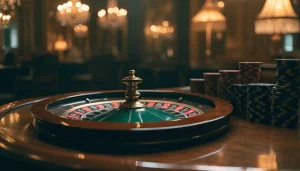
The stream also changes the pace. In a live setting, a dealer presents the action and the round moves forward in sequence. The player is not controlling every moment of the game. There is a shared timetable: the table opens for betting, the action proceeds, and the next opportunity follows. That rhythm is part of what “live” means in practice, even though the exact sequence depends on the game being offered.
It is easy to read “live” as a guarantee of a particular atmosphere or level of interaction. More precisely, it identifies the use of a real-time studio feed and a human dealer. The amount of interaction can vary between games and interfaces; the basic label does not promise a particular chat feature, camera angle or set of controls. Those are separate details, not automatic consequences of a live broadcast.
I have found that the cleanest way to understand the label is to ask what it describes. It describes the delivery format, not a game’s full identity. A live game has a human dealer on camera and an on-screen route for placing bets. The name attached to it may suggest a specific product, but the word “live” alone cannot establish that product’s mechanics.
This helps make sense of phrases such as “Dream Catcher online casino” or “play Dream Catcher online” without treating them as technical descriptions. They may be used to refer to a game being sought within a casino’s live section, but the format label does not tell anyone how that game works. The only safe general reading is that “live” refers to streamed play with a dealer and interface, provided the casino is actually presenting it in that way.
The appeal is straightforward: the game is shown as an event taking place, rather than as an abstract screen. But the delivery method should not be confused with a promise about outcomes, pace or particular features. A live feed is a way of presenting casino play. It is not a shortcut to understanding the rules.
Format, not a full specification.
Dream Catcher Casino: What Can Be Verified
“Dream Catcher” is a name that can point to a particular live casino product, but the name alone does not establish how that product works. For a useful description, the distinction matters: general facts about live casino play do not prove the rules, equipment, payouts or availability of a named game. Those details need to be tied to the actual game and the casino offering it.
What can be said about the UK context is clear. A live casino serving customers in the UK must operate under a UK Gambling Commission licence. That is a condition of legal provision, not a quality mark for a particular game. A licence does not confirm that a casino carries Dream Catcher, nor does the game’s presence on a site by itself explain its rules.
The broader live casino format is also distinct from product-specific information. A live game involves a real-time studio stream, a human dealer and bets placed through an on-screen interface. Those features describe the format in general. They should not be used to fill gaps in a description of Dream Catcher. For instance, they do not tell us whether a wheel is used, how an outcome is determined, what choices appear on screen or how a winning bet is calculated.

That distinction is easy to lose in promotional copy. A page may present a game under a familiar label and surround it with language such as “immersive” or “instant action”. Such words convey tone, not rules. From an operational point of view, the information that matters is concrete: what actions are available, what outcomes are possible, how stakes are settled and what the displayed return conditions mean. Without product-specific detail, those questions remain unanswered.
The same caution applies to the word “casino” in the game’s name. It does not establish that the title is a casino in the legal sense, that it belongs to a particular category of table game, or that it uses a particular device. Nor does it tell us whether the game is currently offered in the UK. Availability can depend on the operator and its catalogue; a general description of live casinos cannot verify a listing at any individual site.
I would not infer a wheel from the word “Dream Catcher”, even if a casino page uses imagery that suggests one. Artwork and naming are not a substitute for rules. A product might use a physical object, a digital display, or another arrangement; without a direct, reliable description of that specific product, none should be presented as fact. The same applies to any claim about bonus features, multipliers, special bets or the way a round progresses.
Payout claims need the same discipline. A stated prize or return is meaningful only when its conditions are clear: which selection qualifies, how the result is determined, whether a payout is fixed or conditional, and what stake is used in the calculation. No payout schedule for Dream Catcher can be inferred from general live casino conventions. It would be misleading to attach a number or a description of a winning outcome simply because similar games elsewhere use one.
Rules also cannot be borrowed from other familiar games. Roulette, blackjack and baccarat each have identifiable procedures, but those procedures do not establish the mechanics of Dream Catcher. A comparison may help explain what a verified rule resembles, but it cannot certify that the named game shares it. The product needs its own rules, not an assumed place in a neighbouring category.
There is a practical difference between saying “this is a live casino game” and saying “this is how this particular game plays”. The first can describe a broad delivery format. The second requires product-level evidence: a rules page, an in-game information panel or a clear operator listing that identifies the title and explains its mechanics. If those materials are not available, a responsible account should stop short of making the claim.
That restraint is not evasiveness. It protects the reader from treating a plausible description as a verified one. A confident-sounding explanation can easily create expectations about how a round works or what a player can win. If those expectations are based on a name, a thumbnail or an analogy, they may have no connection to the actual product.

So the defensible description is limited but useful: Dream Catcher is a named game associated with the live casino subject, while its precise rules, wheel or other equipment, payout structure and UK availability need confirmation from product-specific information. The legal baseline is that live dealer casinos are permitted in the UK when they hold a UK Gambling Commission licence. Beyond that, the details belong to the particular game and operator—not to the label alone.
Names are not mechanics.
How to Judge a Casino Offering Live Games
A search for a good UK casino with live Dream Catcher can make the game name seem like the main decision. I would start elsewhere. A title on a page does not establish that the game is available to a particular account, or that the casino is suitable for live play. The operator, the conditions of access and the quality of the connection matter before the name on the lobby tile does.
Start with the licence
For real-money online casino play in the UK, the essential check is whether the operator holds a current UK Gambling Commission licence. Live dealer casinos can operate legally in the UK when they are properly licensed. A polished studio presentation, familiar payment branding or a page describing British players does not substitute for that regulatory status.
- Verify the operator holds a current UK Gambling Commission licence
- Check the licence details against the Gambling Commission’s register
- Confirm the specific casino being used is covered by that licence
I treat licensing as a threshold, not a badge that proves every other part of the service will be satisfactory. It establishes that the operator is within the relevant regulatory framework; it does not tell me whether a particular live game is available, how responsive the interface feels, or whether the table conditions suit the intended style of play. Those need separate checks.
The wording around a licence matters. A group may operate several websites, and a reference to a licensed company is not, by itself, confirmation that the specific casino being considered is covered. The operator and licence details should be checked against the Gambling Commission’s register, rather than inferred from a logo or a general statement in promotional copy. A small check with a large consequence.
Look beyond the game tile
A casino lobby is designed to make games easy to browse. It is not necessarily a complete description of what is offered. A search for the best live Dream Catcher casino may lead to a page that uses the game name prominently, while leaving important access conditions elsewhere. The practical question is whether the game is actually presented as available to the relevant account, and whether the operator’s own information supports that impression.
I avoid treating a search result, review headline or thumbnail as confirmation. A listed title can be outdated, restricted or simply a reference to a broader live category. The casino’s live lobby and its terms are more useful places to establish what the operator currently makes available. If the information conflicts, the promotional claim is the weaker evidence.

This is not a reason to assume that every casino offering live games carries the same titles. Live content can differ between operators, and a general claim about a live casino does not establish that any named game is included. The game name is a starting point for checking, not proof.
Match the format to the playing conditions
Live games do not move at the same pace as digital versions. A real-time stream and a human dealer shape the rhythm, while bets are entered through an on-screen interface. There is less scope to treat each round as an instant, isolated action. That difference is part of the format, not a technical fault.
The connection also has a direct role. Live play needs stable internet access because the stream and the betting interface must remain usable together. A connection that regularly drops or stalls can make it harder to follow the table and act within the available betting window. A site can be properly licensed and still be a poor fit for the conditions in which it is being used.
I would assess the actual experience rather than rely on broad labels such as “seamless” or “immersive”. Those are sales words. What matters is whether the picture and interface remain in step, whether the controls are clear, and whether the pace feels manageable. No connection claim can guarantee that a stream will behave perfectly in every setting.
Do
- Assess the actual experience of the stream and interface
- Check if the pace feels manageable
- Ensure the picture and interface remain in step
Don't
- Rely on broad labels like "seamless" or "immersive"
- Assume a connection claim guarantees perfect performance
- Use sales words as a substitute for a technical check
Separate a suitable casino from a “best” claim
There is no useful universal winner for every player. One person may prioritise clear live-game information; another may care more about whether the stream works reliably on the device and connection available. A ranking does not resolve those differences, and a casino promoted as the best Dream Catcher option may be making a broad editorial or commercial claim rather than describing a verifiable advantage.
My own test is deliberately plain: confirm the operator’s licence, confirm the named game through the casino’s own current information, and consider whether the slower live format and connection requirement fit the circumstances. If one of those checks fails, promotional language does not repair it.
This section is general information for entertainment purposes only, not gambling advice. Live play remains gambling, and a well-presented studio or a suitable connection does not change that.
Playing a Live Casino Game: The Dealer, Interface and Table Rules
A live table combines a video stream with controls for placing bets. The dealer and the table appear on screen; the betting interface sits alongside the feed, showing the available choices and the status of the round. The stream shows what is happening, while the controls register the player’s decisions. Those are related parts of the experience, but they do different jobs.

Live blackjack provides a clear example. A human dealer handles physical cards from a standard deck, and the stream lets players watch the deal as it happens and interact with the dealer. The aim is to beat the dealer with a hand worth twenty-one points or less. Going over twenty-one means losing the hand. The interface presents the decisions available at that point in play; it is not a substitute for understanding the table’s rules.
I have seen players treat the video as the whole game and skim past the details attached to the table. That is where small differences matter. The rules explain how decisions are handled, while the paytable sets out what qualifying outcomes pay. A familiar game name does not guarantee identical conditions from one table to another. Read those details before betting, not after a round has started. No shortcut there.
This distinction matters when a page or game label includes Dream Catcher. A request to play a Dream Catcher casino game does not establish that the title uses blackjack rules, a card table or the same interface. Those are separate matters. Blackjack is an example of a live casino format; its cards and objective should not be transferred to another named game without checking that game’s own rules.
The interface can also make the pace feel more immediate than it is. In live play, decisions occur around a real-time stream and the dealer’s actions, rather than through a purely digital sequence. If a control is unclear, the table rules and help information are the place to resolve it. Guessing at what a button does is a poor way to learn a game with real stakes.
Live Blackjack Example
In live blackjack, a human dealer handles physical cards from a standard deck. The objective is to beat the dealer with a hand worth twenty-one points or less, as going over twenty-one results in a loss.
A further point is the house edge. Blackjack is not a system that can be made risk-free by changing how bets are placed. Martingale, for instance, increases stakes after losses; it can still lead to losses rather than erase the game’s underlying advantage. The betting interface may make it easy to alter a stake, but ease of use is not evidence that a staking pattern works.
The useful order is straightforward: identify the game, follow the live action, understand the controls, then check the rules and paytable before play. That keeps a general live-table example in its proper place and avoids assuming that one game’s mechanics apply to another. This material is for entertainment purposes only, not gambling advice.
The Wheel Behind Live Roulette
A live roulette table and a computerized roulette game may look similar on screen, but the result is produced differently. In live roulette, a dealer spins a physical wheel and the ball lands in one of its numbered pockets. In computerized roulette, a Random Number Generator (RNG) produces the result instead. The interface can resemble a filmed table, but the source of the outcome is not the same.
That distinction matters when the word “live” appears beside a wheel game. It refers to a real wheel and a streamed dealer-led game, not simply to graphics that imitate a casino table. It does not, by itself, tell anything about the particular rules or layout of a separate named game. Those need to be checked on their own terms.
The wheel layout changes the odds. European Roulette has a single green pocket marked 0. American Roulette has that pocket plus a second green pocket, marked 00; the extra number also appears on the betting layout. The stated chance of winning is 1 in 37 on the European wheel and 1 in 38 on the American wheel.
It is a small visual difference with a direct mathematical consequence. A bet that covers the same numbered pocket faces a larger set of possible pockets on the American layout. The green 00 is not decoration or an alternate label for zero. It is a separate number, and it changes the denominator in the odds.
When assessing a wheel game, the useful details are therefore specific: whether the result comes from a physical wheel or an RNG, and whether the layout is European or American. A studio backdrop does not answer the second question. The table layout does.
There is no sound basis for transferring roulette assumptions to every game described as a wheel game. A game with a different name may use its own format and rules; the word “wheel” alone does not establish that it is roulette, or that it uses either roulette layout. I have seen the label do too much work in sales copy. Check the actual game information.
The distinction is plain once separated: a live roulette stream shows a dealer operating a physical wheel; computerized roulette uses an RNG. Within roulette, one green pocket versus two is the concrete difference between the European and American layouts, and the odds reflect it. No mystery.
European Roulette
Features a single green pocket marked 0, resulting in a winning chance of 1 in 37.
American Roulette
Features two green pockets (0 and 00), resulting in a winning chance of 1 in 38.
Choosing a Live Casino Site Without Relying on the Sales Pitch
A live casino site is not suitable merely because its page looks polished or its games are presented as “immersive”. That word describes the presentation, not the operator’s legal status or how reliably a live table will run. I start with the licence: real-money casino operators serving the UK must hold a current operating licence from the UK Gambling Commission. A live dealer casino is legal here only when the operator holds that licence.
The licence check belongs to the operator, not just the game page. A logo in a footer is a claim; the operator’s identity and licensing details should be clear enough to verify with the Commission. If the site makes the licensing position hard to establish, the sales copy has not answered the important question. No flourish fixes that.
The playing conditions matter too. Live games move more slowly than their digital counterparts because play is streamed and follows a dealer-led table. They also have higher minimum bets, while the video feed needs a stable internet connection. That combination changes the feel of a session: interruptions can make it harder to follow the table, and the pace leaves less room for rapid decisions than a digital game. A site cannot remove those characteristics with a slogan.
When assessing a live Dream Catcher casino site, I separate the operator from the game name. The name alone does not establish that a particular site is licensed or that the stream will suit the available connection. The useful checks are the operator’s status and whether the live format works under the actual playing conditions, not the confidence of the promotion.
I also set a budget before starting. A live table’s slower rhythm can make time pass differently, but it does not change the need to keep spending within a fixed amount. If the connection becomes unstable or the pace no longer suits the session, stopping is a practical decision, not a failure to make the experience work.
That is the whole test: legitimate operator, workable stream, sensible limits. The rest is packaging. This material is for entertainment purposes only, not gambling advice.
What a Dream Catcher Demo Can—and Cannot—Show
A free-play version can be useful for understanding an interface, but its value is narrow. If a demo is offered, it may show where controls appear, how a round is presented and how the screen responds to selections. That can make the layout less unfamiliar. It does not establish what happens when money is involved.
For a live game, the distinction matters. Live dealer games combine a real-time studio stream, a human dealer and an on-screen betting interface. A demo that reproduces some of that presentation may help explain the software, but it should not be assumed to reproduce every part of a real-money session. Nor should an interface preview be treated as evidence of a particular game feature. I separate what is visible on screen from what the operator actually confirms.
A Dream Catcher demo should not be described as available, or as having specific functions, unless the relevant casino clearly shows that version and explains its terms. The name alone does not establish that a free-play mode exists. If one is presented, the practical question is what it lets a player inspect: the display, navigation and interaction, rather than any promise about results.
The financial boundary is simpler. Free play does not produce real payouts or winnings. Any balance or result shown in a practice mode is part of that mode, not money available to withdraw. “Risk-free” is a sales phrase; it describes the absence of a real-money stake in that session, not a route to income or proof that paid play will behave the same way. Different context.
A demo also cannot settle whether a real-money game suits a person’s budget or preferred pace. It offers no sound basis for predicting future outcomes, and a run of practice results says nothing about what comes next. The experience is a preview, not a forecast.
I would treat a Dream Catcher casino demo, where a site offers one, as a way to become familiar with its presentation only. Its limits should be stated plainly: it is not a source of cash winnings, does not validate unconfirmed game details and cannot promise the experience of real-money play. This material is for entertainment purposes only, not gambling advice.
Reading a Live Casino Review for the Details That Matter
A review can sound confident while telling very little. “Generous” describes an impression, not a condition; “live action” says nothing about how a game counts towards a bonus. I look for statements that can be checked against the operator’s own terms, and separate those from language designed to make an offer feel valuable.
The distinction matters when a review discusses a Dream Catcher table. A general description of live casino play does not establish that a particular operator offers the game, or that its bonus can be used on it. Those are separate claims. A useful review identifies the operator and the offer it assessed, then points to the relevant terms rather than treating availability or eligibility as self-evident.
Bonus wording deserves close attention. The headline value is only one part of the arrangement. The terms specify which games qualify, how much each game contributes to wagering requirements, and whether a maximum bet applies while the bonus is active. Live games may count for only a small proportion of the required wagering; one stated weighting is 10%. That figure should not be assumed to apply across operators or offers. The specific terms govern.
A specialist review reports that UK welcome promotions commonly take the form of slot free spins, which are not valid at live tables. That is a reported pattern, not a promise about every current offer. Even where a promotion is described as casino-wide, the exclusions can narrow its practical reach. The operator’s wording is the point to verify.
I also distinguish observation from sales copy. “Easy to claim” is not proof that a bonus applies to a chosen game. “Fast-paced” or “immersive” is an opinion, not evidence of eligibility or value. A review that quotes a condition, explains where it appears, and makes clear what it does not establish is more useful than one built around adjectives.
The same discipline applies to any claim about a Dream Catcher casino review: check whether it concerns the named game, a particular offer, or the operator generally. Those are not interchangeable. Promotional language fades. Terms remain.
Before Playing: Limits, Stakes and the Cost of a Live Table
Live play changes the arithmetic of a session. A digital game can move straight from one round to the next; a live table waits for the dealer and the betting window. That slower rhythm means more time is spent at the table, while a minimum stake still applies to each round. The total outlay can therefore build even when each individual bet seems modest.
I treat a table minimum as an entry condition, not as a sensible spending target. Before joining, the useful figure is the amount set aside for the whole session, with a firm stopping point. Once that budget is reached, play ends; a longer round or a near miss does not change the limit. Live play also depends on a stable internet connection, so interruptions can complicate a session without making the stakes any less real.
A specialist review has cited starting stakes of around 20p for many live roulette and baccarat tables, while blackjack tables often begin at higher limits. That is an indicative report, not a fixed market tariff, and it says nothing about the minimum for a particular Dream Catcher table. Limits are set at table level and can vary, so the displayed minimum matters more than a broad comparison.
For anyone considering Dream Catcher live casino play, the same distinction applies: the general cost of live play does not establish the named game’s minimum stake. The table’s own terms are the relevant reference. If the minimum is above the amount budgeted for each round, that table does not fit the plan.
A budget is a boundary, not a target to recover after a loss. I have seen that distinction disappear quickly once the pace feels social. Stop at the limit.
This material is for entertainment purposes only and is not gambling advice.
Finding an Online Casino with Dream Catcher: Check the Terms First
A casino’s name appearing beside Dream Catcher is not enough to establish that the game is available there. Game libraries can vary between operators and change over time, so I treat an in-site listing as a starting point, not a promise. I would not rely on a general claim that a casino is the “best” without clear, current details about the game and the terms attached to play.
Bonuses need separate scrutiny. A promotion may be advertised prominently while excluding live games altogether. A specialist review reports that many UK welcome offers are free spins for slots and cannot be used at live tables; that is a report, not a rule for every offer. The promotion’s own terms decide.
Where live games do qualify, their contribution to wagering requirements may be restricted. A specialist review gives 10% as an example of live-game weighting, but the applicable rate must be checked in the specific offer. A low contribution can make a bonus less useful for someone intending to play live tables: eligible stakes may count only in part towards the requirement.
I also check whether the offer has a maximum bet condition while wagering, and whether Dream Catcher itself is excluded. Those details can sit in separate sections of the terms rather than beside the headline offer. Read them before opting in; once a bonus is active, its conditions can affect how bets count and what happens to associated funds.
The practical choice is not a promotional label. It is a confirmed game listing and terms that match the intended play. This is entertainment information, not gambling advice.
Is the house edge the same at live dealer casinos online?
No. It varies by game and bet: the stated roulette edge is 2.9% for straight-up bets and 2.7% for other bets.
How can you win live dealer roulette?
Choose a number and place a bet on it; you win if the ball lands on that number.
What is the difference between European and American Roulette?
American Roulette has both 0 and 00, while European Roulette has only 0. The odds of winning are 1 in 38 on the American wheel and 1 in 37 on the European wheel.
How does the house edge change between games?
It differs by game and by rules. For example, American Roulette has a lower chance of winning than European Roulette, while in French Roulette an even-money bet loses only half when the ball lands on zero.
Why does the dealer always win in blackjack?
The dealer does not always win; players can beat the dealer by finishing closer to 21 without going over. Blackjack still has a house edge over time.
Games: UK Casino Game and Slot Guides
Content created by the «Bentelbrothers.com» team