
Check the Cashier Before Choosing a Payment Route
 Available in US
E-check availability depends on the options shown in the live cashier, while deposit speed and the route back for withdrawals may differ.

Checking Whether a Casino Cashier Supports E-checks
A casino’s general payment page is not enough to establish that an e-check can be used for a deposit. Payment information can describe methods offered in some circumstances, while the cashier shows what is available for a particular account. For anyone looking for an e-check casino in the UK, that distinction matters: a payment method should not be treated as supported until it appears in the live cashier and can be selected for the intended transaction.
I have seen payment descriptions do more work than they can reliably carry. A logo, a short list of payment brands or a broad claim about banking options may be intended to cover several markets or account situations. It is useful as a starting point, not as confirmation. The cashier is where the operator presents the options available at the point of payment.
The practical check begins after signing in to the casino account and opening its deposit area. The relevant screen is the current cashier, not a search result, a promotional banner or a general page that may have been written for a wider audience. If e-check is not listed there, the public-facing wording alone does not establish that the casino accepts it. If it is listed, the displayed instructions and any eligibility notices still matter before a deposit is submitted.
When looking for UK casinos that accept e-checks in 2026, payout speed is one useful detail to consider. This list gives a concise reference point for the operators with a stated payout timeframe.
-
Dieselwin
- Payout speed
- 1-3 business days
Dieselwin lists a payout speed of 1–3 business days.
-
Chanze
- Payout speed
- 1-3 business days
Chanze lists a payout speed of 1–3 business days.
-
EvoSpin
- Payout speed
- 1-3 business days
EvoSpin lists a payout speed of 1–3 business days.
-
SpinFormula
- Payout speed
- 1-3 business days
SpinFormula lists a payout speed of 1–3 business days.
-
Jetsetspins
- Payout speed
- 1-3 business days
Jetsetspins lists a payout speed of 1–3 business days.
-
x3bet
- Payout speed
- 1-3 business days
x3bet lists a payout speed of 1–3 business days.
-
Britsino
- Payout speed
- 1-3 business days
Britsino lists a payout speed of 1–3 business days.
-
Revery Play
- Payout speed
- 1-3 business days
Revery Play lists a payout speed of 1–3 business days.
-
Amunbet
- Payout speed
- 1-3 business days
Amunbet lists a payout speed of 1–3 business days.
-
Zombillion
- Payout speed
- 1-3 business days
Zombillion lists a payout speed of 1–3 business days.
There is a difference between a method being named and a transaction being enabled. The cashier may show an option but also display conditions, request information or indicate that it is unavailable for that account. A method that appears in a general description should not be assumed to work simply because the account is based in the UK. The live screen is more useful because it reflects the options the operator is presenting for that customer at that time.
This is also why fixed lists of “e-check casinos” can mislead. A list can repeat a method name without showing whether it remains available in the cashier, whether it applies to UK customers or whether it is limited to a particular transaction. I would not label an operator as an e-check option on the strength of a payment-page mention alone. The evidence has to reach the actual cashier.
Card logos need the same care. A specialist review lists Visa and Mastercard among the methods associated with the sites it discusses, but that does not settle present-day UK availability or whether a particular card product is eligible. Those points need checking in the casino cashier. A logo is not a promise that every card carrying that brand will work.
The UK restriction on credit-card payments for gambling is especially relevant when reading card information. UK-licensed casinos cannot accept credit-card payments for gambling, so a Visa or Mastercard reference should not be read as permission to fund play with a credit card. The payment product and its eligibility matter; the brand name alone does not determine the result. A listed card route does not override the restriction.

I treat the deposit flow as a sequence of checks rather than a single yes-or-no label. First, is the method visible in the signed-in cashier? Next, can it be selected for the deposit being made, and does the operator show any account or transaction condition? Finally, do the displayed instructions identify the payment route clearly enough to proceed without guessing? These checks are more reliable than inferring availability from a casino’s marketing language.
The cashier should also be checked again when the payment is actually being made. Available options can change, and a method that was mentioned elsewhere may not be offered in the current transaction. If an option is absent, choosing a similarly named route or assuming that another banking method is equivalent would be speculation. The label needs to match the payment method being used.
For an e-check specifically, the useful conclusion is narrow but important: no operator should be described as accepting it unless the casino’s own current cashier confirms the option for the account. That is not a claim that e-checks are impossible; it is a standard of verification. The same standard applies to card eligibility, where the cashier must confirm current availability rather than relying on a brand logo or an older description.
Payment pages are signposts. The cashier is the test.
Verifying Payment Support
-
1
Sign in
Log in to your casino account to access the personal area.
-
2
Open the cashier
Navigate to the deposit area to see the live options available for your account.
-
3
Locate the method
Check if the e-check option is explicitly listed and selectable for the intended transaction.
-
4
Review conditions
Read any displayed instructions or eligibility notices before submitting the deposit.
What “Accepts E-check” Needs to Mean in Practice
The phrase “accepts e-check” can describe more than one thing. It may appear in general payment information, but that alone does not establish that the method is available for a particular customer, account or transaction. In practice, acceptance has to mean that the payment route can actually be used in the relevant circumstances—not simply that it is mentioned somewhere on a casino site.
That distinction matters because payment descriptions are often written broadly. A page may describe a method as supported without explaining how that statement applies to every account. The wording can be accurate at a general level and still leave the practical question unresolved. From the other side of the counter, I learned to treat a payment label as a starting point, not as a completed transaction.
For anyone looking into casinos that accept e-checks in the UK, the useful question is not just whether the term appears in promotional or general information. It is whether the option is available for the account and payment being considered. An “accepted” method that cannot be selected for that transaction does not solve the customer’s practical need. A general statement and a usable route are different things.
A payment label is not the whole arrangement
A payment method is tied to a customer’s details, not only to a name in a list. The casino account and the payment route both need to belong to the same customer. When basic ownership information does not line up, avoidable friction can arise around a transaction. Keeping those details aligned reduces that risk.

This is a modest point, but it is often more useful than a broad claim about convenience. The payment label may sound straightforward; the underlying arrangement still has to make sense. If the casino account belongs to one person and the payment route belongs to someone else, the mismatch creates a complication before the merits of the method even matter.
I would not read a method’s appearance as permission to use another person’s account or payment details. Nor would I treat a successful-looking description as proof that every account can use that route. “Available” has to be understood in relation to the actual customer and transaction. Otherwise, the word is doing more work than the information supports.
What “available” means to the customer
There are several levels of meaning that can get compressed into the single word “accepts”. A casino might refer to a method in broad information; a method might be relevant to a particular account; and a customer might need to make a specific transaction. Those are not interchangeable statements. The practical standard is whether the method can be used for that customer’s intended payment under the applicable conditions.
This is why a general article or banner should not be treated as a personal confirmation. It may describe the site’s payment arrangements overall, while saying little about how those arrangements apply to an individual account. The same caution applies to claims about “instant” e-check casinos: a speed label does not, by itself, establish that an e-check is available to a given customer or that every transaction follows the same path.
The word “instant” is especially easy to overread. It is an advertising term unless its meaning is clear in the particular context. It does not settle the separate question of access, and it does not turn a general payment description into a commitment for every customer. A label is not a transaction.
Do
- Align casino account and payment route ownership
- Verify availability in the live cashier
- Check specific transaction conditions
Don't
- Rely on general payment page descriptions
- Use another person's payment details
- Assume a general label means personal access
Keep the ownership question simple
I have seen routine payment friction start with details that looked minor on paper. The account information and payment route need to point back to the same customer. That basic alignment is a practical safeguard against avoidable ownership questions; it is not a claim that it guarantees acceptance or removes every possible obstacle.
This principle does not depend on whether the method is an e-check, a card or another route. It is about whose account is being used. The more clearly the casino account and payment details belong to the same person, the less likely it is that basic ownership information becomes the issue. No elaborate theory is needed.
There is also a difference between a payment method being named and the customer being able to complete a transaction with it. General information can help explain what a casino says it supports. It cannot, on its own, settle the account-specific question. In practical terms, “accepts” should mean more than “mentioned”: the route must be relevant to the customer, the account and the transaction, with ownership details aligned.
That is the useful standard. Not a badge. A working route.
Deposit Options and Cashier Compatibility
An e-check label can sound like a clear promise, but it does not identify a payment route that can be assumed to work at every UK-facing casino. The cashier is where the available deposit methods are presented for an account and transaction. That distinction matters: payment methods documented across the market are not a guarantee that every operator offers each one, or that a particular product is eligible.

The methods with established presence at UK casinos include debit cards such as Visa and Mastercard. Those names are useful starting points, not blanket confirmation. Card eligibility can depend on the casino’s current cashier and the particular card product. Credit-card payments for gambling are not permitted at UK-licensed casinos; the fact that a card brand appears in a payment list does not change that restriction.
I have seen payment pages treated as if they were a menu of universal options. They are not. A site can describe a method in general terms while the cashier presents a narrower set of choices for the account. The transaction screen is the operational version of the offer. What matters is the method actually available there, not a label copied from a generic payment page.
This is especially relevant when looking for e-check deposits. A site’s general mention of bank payments does not by itself establish that it accepts e-checks. Nor does the presence of a familiar payment provider prove that an e-check route is available under that provider’s name. The method needs to be identified distinctly in the cashier; otherwise, the wording may describe a different form of bank transfer or a service with separate eligibility conditions.
Other documented methods illustrate the same point. A specialist review describes Skrill as a frequent deposit choice among UK-friendly casinos in 2026, but that is a time-sensitive assessment, not a promise of availability at any specific site. Some UKGC-licensed casinos also take Apple Pay for deposits. Open banking and bank transfers are reported by a specialist review as offering instant deposits and fast withdrawals at many sites, but their presence and function still depend on the operator’s cashier. These examples show the range of routes that can appear; they do not establish e-check support.
Debit Cards
Visa and Mastercard are established options, though eligibility depends on the cashier and product type.
E-wallets
Services like Skrill are frequent choices, but availability is time-sensitive and site-specific.
Open Banking
Bank transfers and open banking can offer instant deposits and fast withdrawals depending on the operator.
Compatibility is not merely a question of whether a payment logo appears somewhere on a website. The cashier may distinguish between deposit and withdrawal functions, and an option may be presented only under particular account conditions. A method’s name therefore needs to be read in context: whether it is offered for the intended transaction, what instructions accompany it, and whether the account can use that route. A deposit method should not be treated as a withdrawal option unless the casino confirms both functions.
The same care applies to card wording. Visa and Mastercard are commonly accepted as debit-card brands, yet the practical check remains the live cashier and the product being used. A general list cannot establish current availability or card eligibility for every account. That is not a technicality; payment systems apply rules at the point of transaction, and the site’s displayed options are the useful evidence of what it is prepared to process.
For an e-check search, the useful comparison is therefore not a ranking of sites by an unverified label. It is whether an operator’s cashier names an e-check option clearly and makes it selectable for the account. If the cashier instead offers a bank transfer or an open-banking service, that should be understood as the route actually displayed, rather than casually relabelled as an e-check. Similar descriptions can conceal different payment mechanisms.
There is also a compliance boundary around what can be funded. UK-licensed casinos cannot accept credit-card payments for gambling, including where credit-card funds are routed through a money service business or a wallet that permits such funding. Debit-card availability does not imply that every card product is suitable. The cashier’s wording and the casino’s payment rules need to be read together.
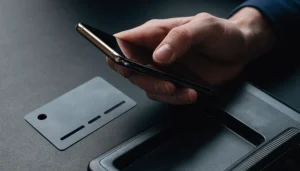
In practice, compatibility is a specific match between the account, the method and the transaction being attempted. A method appearing in an article or a general payment page is only background. The cashier is the working menu. That is where the distinction becomes real.
Instant Deposits Do Not Guarantee Instant Payouts
A deposit and a withdrawal are separate journeys through a casino’s payment process. A balance appearing straight away records that money has reached the account for play; it does not show how quickly a later payout will be approved, sent or delivered. Payment descriptions can blur those stages. The practical distinction is simple: money going in and money coming out are not mirror images.
A specialist review describes open banking and bank transfers as routes that can make deposits instant and withdrawals fast at many sites. That is a description of possible performance, not a promise that both directions will move at the same pace in every transaction. A bank-linked deposit may be confirmed quickly, while a withdrawal still waits for the casino’s internal checks before it is released. “Fast” is not a single step.
The same distinction appears with cards. A specialist review notes that a card deposit may show immediately, whereas a payout can take several business days. The deposit is an incoming authorisation; the withdrawal involves the casino approving the request and then a separate payment leg. A quick confirmation at the cashier therefore says little about the time required for funds to reach a bank account.
For casino payments described as e-checks, the label alone does not settle the timing question. It does not tell whether the transaction is processed as an immediate account payment, whether a casino has a review stage, or how the receiving institution handles a payout. An instant e-check deposit, where offered, should not be read as evidence of an instant e-check withdrawal. The two claims require separate support.
From the operational side, internal approval is often the part least visible on a cashier screen. The player may see a withdrawal request marked as submitted, but the casino still has to process it. That review can be distinct from the transfer time after release. An account awaiting verification can also affect withdrawal speed. A displayed estimate that covers only the payment provider’s leg leaves out the casino’s own queue.
Bank transfers add timing conditions beyond the casino. A specialist review identifies cut-off times, weekends and currency conversion as factors that can alter delivery. A request made after a bank’s processing window may not move through the same cycle as one submitted earlier. A weekend can interrupt business-day handling, and conversion can add a step when the account and transfer currencies differ. These are conditions, not a universal timetable.
This is why a single “instant” badge can be misleading when applied to a whole payment route. It may describe the deposit confirmation, not withdrawal approval or the receiving bank’s delivery. The wording matters. A cashier can use “instant” for the moment a deposit is credited while the withdrawal information elsewhere describes a different process. Neither statement necessarily contradicts the other; they refer to different stages.

The same caution applies to claims about the quickest payout methods. A specialist review places PayPal, open banking services and debit cards connected to fast payout systems among the methods that can be quick, but that does not remove the casino’s approval stage or establish a fixed arrival time. The particular account, payment arrangement and processing conditions remain material. A general ranking cannot promise the result of an individual withdrawal.
When comparing timing claims, the useful question is what event the stated time measures: casino approval, release to the provider, or arrival in the bank account. Those are not interchangeable. If a casino publishes separate deposit and withdrawal estimates, the difference between them is more informative than a headline about speed. If the wording is broad, it should be treated as broad.
The central point is not that instant deposits are unreliable. It is that they describe one direction of travel. Withdrawal delivery has its own approval and transfer stages, and bank processing conditions can add further variation. An e-check deposit claim, by itself, does not establish the speed of a payout. Different clocks.
Using One Payment Route Consistently
I have seen payment problems begin with a basic mismatch: the casino account is in one person’s name, while the account or payment route used to move money belongs to someone else. Keeping the customer details and payment route under the same person’s ownership reduces the chance that an avoidable ownership question interrupts a transaction.
The cleanest arrangement is often one named account used consistently for deposits and withdrawals. That does not make every transaction automatic, and it does not override a casino’s checks. It does keep the basic record coherent: the account holder, the source of funds and the route associated with the casino account point to the same customer. Fewer loose ends.
This matters when looking at e-check casinos in the UK as well as when using other payment methods. An e-check should not be treated as available merely because the term appears in general casino information. Where a cashier does offer a route, the practical question is whether it can be used for the customer’s own account and fits the casino’s transaction process. Consistency is useful; it is not proof of availability.
Changing routes can make a payment history harder to follow. A switch may mean the casino has to establish who controls the new account or why it differs from the details already held. That is an account-control issue, not a judgement about the payment method itself. The clearest records are the least ambiguous.
I would keep the casino profile accurate and use a payment account registered to the same customer. If a different route is needed, the reason for the change should be straightforward to explain, and the casino’s stated requirements should be checked before relying on it. A familiar brand name does not make two accounts interchangeable.
For someone comparing e-check options, this is a practical filter rather than a recommendation to use one. A route that matches the casino account’s ownership is simpler to account for than one that introduces a second person or unclear control. One customer, one coherent record.

Comparing Payment Options Without a “Best” Claim
Calling one payment route the “best” only makes sense after deciding what is being compared. For one player, the priority may be avoiding conversion; for another, it may be the total charge on a particular transaction. An e-check label alone tells little about either. It does not establish what the casino or payment provider will charge, or whether the account currency matches the payment currency.
I have found that payment comparisons become more useful when they are tied to a specific transaction rather than a method in the abstract. The casino may apply a charge, the provider may apply its own fee, and a bank or issuer may have separate terms. If the route involves currency conversion, the exchange-rate spread matters too; a network fee may also apply. The overall cost can therefore vary with the casino, provider, currencies and amount involved.
There is no single payment method that can be identified as the lowest-fee choice across all those conditions. A fee that looks small in one transaction does not settle the comparison for another. The same route can produce a different total when the amount or currency changes. Compare like with like: the same amount, the same account currency and the charges shown for each route. Otherwise, the apparent winner may simply be the option whose costs are less visible in that comparison.
Some specialist casino reviews report that GBP is supported on the pages they assess. That is useful context, not a substitute for checking the currency assigned to an individual casino account before its first transaction. If the account is held in another currency, conversion may enter the calculation even when the payment method itself appears straightforward. A headline fee is not the full comparison.
For e-check casinos in the UK, the practical question is not which operator can be called “best” in general. It is whether a specific route is available on the account and what the full cost would be for the intended transaction. A confident ranking without those details would imply more certainty than the comparison supports.
No universal winner.
Payment Methods in Casino Apps and Cashiers
An app is not a separate payment network. It is another interface to the casino account, and the payment choices shown there still depend on the operator’s cashier and the customer’s circumstances. A method pictured in an app advert or listed on a general information page does not, by itself, confirm that it can be used for a particular deposit.
Some UKGC-licensed casinos accept Apple Pay for deposits. That is a documented option at some operators, not a promise that every casino app includes it. The cashier is where the available methods become concrete: an Apple Pay button may appear for one account and not another, or be available on the casino’s website but not presented in the app. Interface differences are easy to mistake for a change in the underlying payment rules.
I have seen this distinction matter in practice. Product pages are written to describe what a service can support; a cashier has to show what is enabled for the account and transaction in front of it. “Available in the app” can mean only that the app has a payment screen. It does not necessarily mean that every listed method is active there.

Card branding needs the same care. Specialist casino reviews list Visa and Mastercard, but current UK availability and eligible card products need to be confirmed in the cashier. A familiar logo is not enough to establish that a particular card can be used. UK-licensed casinos cannot accept credit-card payments for gambling, so the relevant question is not simply whether the card bears a recognised network name; its product type and eligibility matter.
For a search for an e-check casino app in the UK, the useful distinction is between app access and payment-method support. The app may provide account and cashier functions without offering every method associated with the operator. E-check support should not be inferred from the presence of a payment menu, a bank-related label, or a general claim about deposits. The cashier must identify the method itself.
There is no shortcut in the icon. An app is a doorway, not proof.
Other Payment Routes Mentioned by Casino Sites
A specialist review of casino websites describes a broad mix of payment routes: Visa and Mastercard, bank transfer, e-wallets and several cryptocurrencies. That is a snapshot of what those sites mention, not a market-wide inventory or a ranking of which methods are most useful. Nor does a general list establish that a particular route is available to every account.
The categories also cover different kinds of transactions. A bank transfer moves funds through banking channels; an e-wallet is a separate payment service; and a cryptocurrency payment involves a digital asset. Those labels do not, by themselves, explain the conditions attached to a route or whether it suits a particular customer.
This matters when an e-check is being considered alongside other options. A broad payment list can make a casino’s cashier look more comprehensive than it is for an individual account. The names describe the landscape, not a promise that every listed method can be selected at the point of payment. “Many options” is only a description.
I have seen payment pages treated as if they were a complete catalogue. In practice, a method named in general site material should not be read as proof of a wider set of routes, or as evidence that an unmentioned method is accepted. The distinction is modest but important: Visa, Mastercard, bank transfers, e-wallets and cryptocurrencies are the types of routes identified in the review; they do not constitute a verified list of e-check casinos.
That broader context is useful without turning it into a recommendation. Payment methods appear across different categories, and a label alone says little about the account-level terms behind it. No ranking follows from the list.
Where Payment Costs Can Hide
The amount shown before a payment is not always the full cost of moving money. In a specialist payment review, possible charges are separated across the casino, payment provider, card issuer or bank, and, where relevant, the payment network. Each party can apply its own terms, so a zero-fee label from one does not settle the total.

Currency conversion adds another layer. An account may be shown in pounds while a payment route processes funds in a different currency. The exchange rate can include a spread: the difference between the rate applied to the transaction and a reference market rate. That difference may cost more than a visible flat fee, even when no separate conversion charge appears on the screen. Quiet arithmetic.
I have seen payment comparisons become misleading when they count only the line item labelled “fee”. That figure may describe a casino charge, while leaving provider, issuer or network costs outside the comparison. A rate applied during conversion can also matter more than a small fixed charge, depending on the transaction.
For an e-check payment, the same distinction matters: a method’s name does not reveal which parties process it or what each may charge. The cashier’s displayed terms are only one part of the picture; provider and bank terms may sit elsewhere. Before comparing routes, the relevant calculation is the total amount leaving the account against the value credited, with any conversion and separate charges included.

There is no reliable fee ranking without those details and the actual transaction amount. A flat charge is easy to spot. The spread is easier to miss.
E-check Deposits and the Route Back for Withdrawals
An e-check listed for deposits does not, by itself, establish that the same route can receive a withdrawal. Payment labels describe the incoming transaction; the route back is governed by the casino’s payment controls and the account’s verification status. I keep those as separate questions. A deposit method is not automatically a payout method.
UK anti-money laundering rules generally require a casino to return funds to the original payment source. This closed-loop control helps establish where the money came from and where it is going. If a payment provider cannot accept a return payment, or the original route is no longer usable, the casino may need to consider another method and carry out additional checks. That can mean more administration, not an automatic alternative payout.
The practical point for an e-check casino withdrawal in the UK is to confirm the withdrawal route in the casino’s own terms or cashier information. A deposit option alone cannot settle the question. Nor should a general statement about bank payments be taken as confirmation that a particular e-check service supports withdrawals.
Timing also has an approval stage. A specialist review notes that a first withdrawal may take longer while the casino completes verification; processing time includes the operator’s internal approval, not just the journey between payment providers. KYC can therefore affect when a payout is released, even when the payment route itself is functioning.
I treat the first withdrawal as a separate transaction, with its own checks and possible route restrictions. The deposit may have gone through cleanly, but that does not remove the casino’s responsibility to review ownership and source details before releasing funds. Different stage.
What is the fastest withdrawal method for UK casinos?
PayPal, open banking and debit cards connected to fast-payout systems are generally among the quickest options. The casino’s approval process and your verification status also affect how soon funds arrive.
What is the current minimum deposit?
Minimum deposits commonly start at £10–£20, depending on the payment method.
Which method has the lowest fees?
There is no universally cheapest method. Compare casino and provider charges, any bank or issuer fees, currency-conversion spread and network costs for the amount you plan to deposit or withdraw.
Are Visa and Mastercard deposits definitely debit cards?
No. The card brand alone does not show whether a card is debit or credit, and UK-licensed casinos cannot accept credit-card payments for gambling. Check the card’s product type and the casino cashier’s eligibility information.
Why can a fast payout casino still delay my withdrawal?
A casino’s internal approval can take time, and first withdrawals may take longer while verification is completed. An account that is not fully verified can also affect payout speed.
Are fast casino withdrawals guaranteed?
No. Even with a fast payment method, the casino’s approval process and your verification status affect the timing.
Casino Payments in the UK: Deposits and Withdrawals
Content created by the «Bentelbrothers.com» team