
Check the payment route before depositing
 Available in US
A cashier option, bonus eligibility and withdrawal access are separate checks when assessing an Upaycard deposit.

How payment choice can affect casino bonuses and slot deposits
A deposit and a bonus are separate decisions in the cashier, even when they appear as one transaction. A payment method can be accepted for adding funds while still being excluded from a promotion. The distinction is easy to miss: the cashier checks whether the payment can be processed, while the promotion’s terms determine whether that deposit qualifies for its offer.
That matters when a slot session is being funded with a bonus in mind. The offer may depend on the payment route selected, the way the deposit is recorded, or whether the promotion was activated as required. If the method is excluded, the money can reach the account without the bonus being added. The deposit has succeeded; the promotional condition has not.
I have seen this treated in marketing as a small-print issue. It is more practical than that. A bonus is a set of conditions attached to an account and a qualifying transaction. The payment method is one possible condition, not a guarantee that the offer will apply.
When considering casinos associated with upaycard in the UK, check the payment options and terms available to you before signing up. The payout information below gives one practical detail to consider.
-
Dieselwin
- Payout speed
- 1-3 business days
Dieselwin lists a payout speed of 1–3 business days.
-
Chanze
- Payout speed
- 1-3 business days
Chanze lists a payout speed of 1–3 business days.
-
EvoSpin
- Payout speed
- 1-3 business days
EvoSpin lists a payout speed of 1–3 business days.
-
SpinFormula
- Payout speed
- 1-3 business days
SpinFormula lists a payout speed of 1–3 business days.
-
Jetsetspins
- Payout speed
- 1-3 business days
Jetsetspins lists a payout speed of 1–3 business days.
-
x3bet
- Payout speed
- 1-3 business days
x3bet lists a payout speed of 1–3 business days.
-
Britsino
- Payout speed
- 1-3 business days
Britsino lists a payout speed of 1–3 business days.
-
Revery Play
- Payout speed
- 1-3 business days
Revery Play lists a payout speed of 1–3 business days.
-
Amunbet
- Payout speed
- 1-3 business days
Amunbet lists a payout speed of 1–3 business days.
-
Zombillion
- Payout speed
- 1-3 business days
Zombillion lists a payout speed of 1–3 business days.
A successful deposit is not proof of bonus eligibility
Promotion pages often put the headline offer first and the qualifying rules elsewhere. The terms may specify which payment methods count, whether a bonus must be claimed before depositing, and what happens if an excluded route is used. Those details define the offer more accurately than the banner does.
A customer can therefore have funds in the balance and no promotional balance. That is not necessarily a payment failure, nor does it mean the casino has reversed the deposit. It may simply mean the transaction did not meet the offer’s rules. The distinction affects what can be expected during play and how any bonus-related conditions apply.
The wording needs to be read as a sequence: choose or activate the promotion, make a qualifying deposit, then check whether the bonus appears as described. If the terms say a certain payment type is ineligible, selecting it can leave the offer unavailable even when the cashier accepts the transaction. The cashier’s green tick is not a bonus confirmation.
Payment exclusions can be method-specific
Promotional rules can treat payment routes differently. A specialist casino review reports that PayPal, despite being valued for speed and convenience, may be excluded from bonus eligibility. The point is not that every casino applies the same rule; it is that a familiar deposit option cannot be assumed to qualify everywhere.
The same caution applies to e-wallets. A specialist casino review reports that Skrill and Neteller are available at some sites but are often excluded from promotions. That is a reported pattern, not a rule that can be carried from one operator to another. The individual offer’s terms still decide.

From the operator’s side, the payment method can be used as a boundary around a promotion. The advertised offer is not necessarily attached to every way of funding an account. That boundary may be written into the conditions rather than repeated beside each payment icon. A payment logo in the cashier says something about processing availability; it does not, by itself, say anything about promotional eligibility.
This is why “deposit with a bonus” should not be read as a single promise. It is a transaction followed by a separate qualification test. The method may pass one test and fail the other.
The slot balance is only one part of the picture
When the aim is to play slots, the balance shown in the account can still be misleading if its source is unclear. A cash balance and a bonus balance may be subject to different rules. The promotion terms explain how the bonus is used and what conditions attach to it; the payment choice affects whether the deposit qualifies in the first place.
I would check the offer language before treating a planned deposit as bonus-funded. In particular, the relevant question is not simply whether the casino accepts the payment route. It is whether the promotion names that route as eligible, or excludes it, and whether any activation step is required. The wording may also distinguish between a deposit that qualifies for an offer and one that merely adds cash to the account.
There is no reason to assume that a slot offer overrides a payment exclusion. A promotional banner may be aimed at slot play, but its payment rules remain part of the offer. If the chosen route does not qualify, the slot focus does not change that result.
Make the check before funding play
For anyone considering an Upaycard-funded casino deposit, the bonus question should remain separate from the acceptance question. No claim about a casino accepting a payment method establishes that the method qualifies for a particular promotion. Both points need to be confirmed for the intended account and offer.
The sensible order is to read the promotion’s payment conditions, confirm any claim or activation requirement, and then check the cashier before the slot balance is funded. If the terms are unclear, relying on a banner or on another player’s experience leaves the key condition unresolved. Promotions change, and one operator’s rule cannot safely be transferred to another.
A clean transaction is easier to understand when the deposit method and offer eligibility are clear before money moves. That avoids confusing a processed payment with a bonus award, and avoids starting a slot session on an assumption the terms do not support.
The distinction is simple. Deposit accepted; bonus not assured.
What to check before choosing a casino payment route
A payment logo on a casino page is a starting point, not proof that the method will work for a particular account. I treat the cashier as the operational record: it shows which routes are currently offered in that account and which transaction the operator is prepared to process. A general payment-method page can lag behind a change, or describe a method that is not available to every customer.
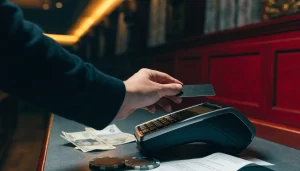
The first check is whether the option appears after signing in. Availability can depend on the account, the site’s current arrangements and the kind of payment being attempted. A route mentioned in an overview may not be selectable in the cashier. Conversely, a method may be visible but still require details or checks before a transaction can proceed. The distinction matters: a method being named is not the same as the cashier accepting the particular payment.
Match the method to the transaction
Payment methods are not interchangeable simply because they appear beside one another on a casino page. Some may be offered for deposits, while another transaction may follow different rules. Before starting, the cashier should make clear whether the selected route is available for the intended action. If that information is unclear, the operator’s payment terms or support channel is the sensible place to resolve it before funds are sent.
I have seen payment friction begin with an assumption that “available” means universally available. In practice, the account view is more useful than a broad list because it reflects the options presented for that customer at that point. The label alone does not confirm that every card product, account arrangement or transaction will pass. Read the instructions attached to the option and compare them with the details being entered.
Do
- Check if the option appears after signing in
- Read instructions attached to the option
- Compare payment details with the account
Don't
- Rely on a broad general payment list
- Assume "available" means universally available
- Test routes with payments that might be declined
This is a compatibility check, not a reason to test a route with a payment that might be declined. A failed attempt can leave uncertainty about whether the problem was the casino, the provider or the payment details. Confirming the route first is cleaner.
Check the account and payment details
The name and other basic account details should be consistent with the payment route being used. When the account belongs to one person but the payment instrument appears to belong to someone else, routine ownership checks can become harder to resolve. Keeping those details aligned reduces avoidable questions; it does not guarantee approval.
The cashier’s instructions also matter. It may request information specific to the selected method, and incomplete or mismatched details can interrupt the process. I would not treat a successful selection as confirmation that the payment has completed. The status shown by the casino and any confirmation from the provider are separate parts of the transaction.
There is a practical difference between a payment method being supported by a site and a particular card or account being eligible. A specialist review’s payment table lists Visa and Mastercard, but that is not a reliable substitute for checking the live cashier. The current UK option and the eligibility of the specific card product need to be confirmed there. Broad labels can conceal distinctions that matter at the point of payment.

Confirm currency before proceeding
Currency is another compatibility issue, not just a display preference. A specialist review reports that its listed pages support GBP, but the casino account currency still needs to be checked before the first transaction. If the account is set to a different currency, a conversion may occur somewhere in the payment chain. The amount displayed by the casino may then differ from the amount ultimately recorded by a bank or provider.
I check the account currency alongside the cashier’s available methods, rather than assuming that a UK-facing site automatically has every account set to pounds. The cashier or account settings should establish what currency applies. If the information is not clear, it is better to obtain clarification than to proceed on an assumption.
The same principle applies when a payment page presents more than one route. A method can be technically visible while the currency or account conditions make it unsuitable for the intended transaction. That is a mismatch, not necessarily a fault.
Read the confirmation, not just the button
Before submitting, review the method selected, the account details and the currency shown on the final screen. A button marked “continue” only advances the process; it does not establish that the payment has been accepted. The final status is what matters. If it remains pending or fails, avoid repeating the attempt blindly and check the casino’s instructions or contact support.
I prefer a short pause at this point. It catches the common gap between what a payment page advertises and what a specific account can actually use. Availability, eligibility, transaction purpose and currency all need to line up. No single logo answers all four.
- Check live cashier options after login
- Confirm the route suits the transaction purpose
- Verify account details match payment details
- Confirm account currency is correct
A cashier is a working interface, not a promise. Check the live option, confirm that it suits the intended transaction, and make sure the account details and currency are clear before proceeding. That is the useful baseline for any casino payment route.
Can an online casino actually take Upaycard?
A UK casino can accept Upaycard only if it makes that payment route available for the relevant account. A general statement that a site accepts cards, or a list of payment methods used by UK casinos, does not establish that Upaycard itself will work. The distinction is easy to miss: payment summaries tend to group methods into broad categories, while a cashier presents the options an account can actually use.
A specialist review of UK casino payment methods describes Visa, Mastercard, bank transfer, e-wallets and several cryptocurrencies. That kind of overview gives a picture of payment categories, not a guarantee that every casino supports every product within them. “Card payments accepted” is not the same as “Upaycard accepted”. One describes a broad route; the other names a specific product.
In practice, acceptance is an operator-level decision. A payment brand may be familiar in the wider market and still not appear in a particular casino’s cashier. Even where a cashier has a card option, that label alone does not settle whether a specific card product is eligible. The practical answer to whether an online casino can take Upaycard is therefore conditional: it can, if the operator offers it and the relevant account can use it. A general payment list cannot answer that on its own.

I have seen broad payment wording create false confidence. A page may name several ways to pay without showing which ones are enabled for each customer or transaction. The label looks definitive. The underlying choice may be narrower.
That leaves no sound basis for naming a “best” Upaycard casino or claiming that a particular UK site accepts Upaycard deposits. The same applies to claims about casinos paying winnings back to Upaycard: acceptance for a deposit would not, by itself, confirm that the same route is available for a payout. Those are separate capabilities, and a general list should not be stretched to cover both.
The useful distinction is simple. A casino’s broad payment information describes what it may support; the account’s cashier shows what is offered in that setting. Only the latter can establish that Upaycard is presented as an option for a transaction. Until it is shown there, a casino should not be described as an Upaycard venue on the strength of a generic reference to cards or payments.
That is a narrower answer than a list of names, but a more reliable one. “Accepts cards” is broad wording. Upaycard support is specific.
Card acceptance is not the same as Upaycard acceptance
Visa and Mastercard debit cards are common payment options at UK casinos. That tells little about a different card brand or product, however. A cashier listing “Visa” does not mean it can process every card that carries a Visa logo, and the same distinction applies to Mastercard. Card-network acceptance is a broad category; acceptance of a particular issuer’s card depends on the casino’s payment arrangements and the product’s eligibility.
That distinction matters for Upaycard. A search for casinos accepting Upaycard in the UK may return sites that accept debit cards generally, but that is not proof that an Upaycard payment will go through. Nor does a general reference to “cards” establish that an Upaycard debit card is supported. The name of a network, the type of card, and the payment route behind it are separate pieces of information. Treating them as interchangeable is how an apparently compatible option becomes a declined transaction.
I have seen payment descriptions written at a broad level because they are meant to summarise a cashier, not document every product it can process. “Debit cards accepted” is useful as a category label, but it does not settle whether a specific card is eligible. A casino can accept Visa and Mastercard debit cards while still applying product-level restrictions. The practical detail is the current cashier option and its terms, not the headline card logos.
The word “debit” also needs care. It describes how a card accesses funds; it does not establish that a casino recognises the issuing product. A casino’s acceptance of debit cards is not an endorsement of every prepaid, branded or separately issued card. Without an explicit Upaycard option or confirmation that the relevant card product is eligible, the general Visa and Mastercard position cannot be extended to Upaycard.
Ownership is another part of the same compatibility picture. Account details and payment details belonging to the same customer reduce the chance that basic identity checks create avoidable friction. If names or other account information do not line up, a transaction may prompt questions even when the card category itself is supported. That is a straightforward operational check, not evidence that a particular brand has been accepted.

Credit-card payments for gambling are not permitted at UK-licensed casinos. The restriction also covers credit-card funding routed through a money service business, and operators cannot accept wallet payments where the wallet allows credit-card funds to be used for gambling. This is separate from the question of whether a debit card is supported: a card’s funding source matters, not simply the logo printed on it.
So “casino accepts cards” is not a reliable substitute for “casino accepts Upaycard”. The first describes a general payment category; the second requires confirmation for the named product. Similar wording can conceal a meaningful gap. Category accepted. Product unconfirmed.
Upaycard and slot play: the payment details do not name games
A payment method and a slot catalogue answer different questions. A cashier can indicate which routes an account may use to fund a balance; it does not identify the games available after a deposit. The name Upaycard, on its own, therefore cannot establish that a particular slot is offered, that a casino has a certain selection, or that a payment route is connected to a particular game provider.
That distinction matters because “best games” language can make a payment page sound like a games guide. It is not one. A list of casinos said to accept a payment method would still need current confirmation in each casino’s cashier, and it would not, by itself, show which slots are available there. Game catalogues can vary between operators and may change independently of their payment options.
The same separation applies to mobile play. A casino’s website or app may present slots on a mobile device, but that says nothing about whether Upaycard is available as a deposit option for that account. Conversely, a payment route shown by a casino does not establish that every game in its catalogue is accessible through the same account or under the same conditions. Payment access and game access are separate parts of the service.
I have seen these details blurred in promotional copy: “one wallet for everything” sounds simple, but it compresses several independent checks into one slogan. The cashier handles funding; the casino’s games area shows its catalogue; and the account’s terms govern how play and balances work. Treating the payment label as proof of a games list skips those distinctions. Neat slogan. Separate systems.
Searches for new casinos, mobile casinos, bonuses or slot selections linked to Upaycard also combine subjects that need separate evidence. A new site is not necessarily a site that offers a particular payment method. A bonus does not establish which games qualify, and a games page does not establish how deposits can be made. Those details should not be inferred from a shared brand name or from a broad claim that a casino accepts cards.
There is one important UK rule in the background. Credit-card payments for gambling have been prohibited since 14 April 2020, and the restriction remains in force. It also covers credit-card funding routed through a money service business. A payment product’s branding does not override that rule; the relevant distinction is whether the transaction is a prohibited credit-card payment, not whether the casino advertises slots alongside the payment option.

So the useful conclusion is narrow: a payment label cannot name or recommend games. Slot choice has to be assessed through the casino’s own catalogue, while payment availability is a separate matter to confirm at account level. No game list follows from the name alone.
Alternatives when Upaycard is not available
When Upaycard is not offered in a casino cashier, the practical alternatives are the methods the operator lists for that account. There is no single substitute that works everywhere: availability depends on the site, and a payment brand appearing in general casino guidance does not mean it will appear for every customer.
Bank transfer and open banking are worth considering where they are shown. A specialist casino review reports that these routes can support instant deposits and fast withdrawals at many sites. That is a description of the sites covered by that review, not a promise about every operator or account. The cashier’s current options remain decisive.
Paysafecard is a different kind of fallback. It is a prepaid voucher for deposits, so it should not be treated as a route for receiving a withdrawal. That distinction matters: a method can put funds into a casino account without providing a matching way to take funds back out.
E-wallets offer another possible route, but their availability is also site-specific. Skrill and Neteller appear at some casinos; a specialist review characterises them as commonly available options, although that does not establish availability at a particular cashier. PayPal is another recognised payment route, but it should not be assumed to be offered by every casino.
Bank Transfer & Open Banking
Can support instant deposits and fast withdrawals at many sites.
Paysafecard
A prepaid voucher for deposits; it cannot be used for receiving withdrawals.
E-wallets
Includes options like PayPal, Skrill, and Neteller, though availability is site-specific.
Names can change, too. EcoPayz became Payz in 2022, so an older reference to EcoPayz may not match the label shown in a current payment menu. Jeton is a more limited alternative: a specialist review describes it as available at a handful of UK online casinos in 2026. That is not a broad-coverage claim.
I have seen payment lists treated as if they were permanent menus. They are not. Operators can change what they offer, and the options displayed after signing in are more relevant than a generic list elsewhere. A substitute that is absent from the cashier is not a usable substitute, however familiar its name may be.
The useful comparison is therefore functional, not promotional. A deposit-only voucher may suit someone who needs a prepaid deposit route; a bank transfer or e-wallet may suit a different account and transaction. The label “best alternative” has little meaning without knowing which methods that casino currently supports and whether the route fits the intended use.
If no suitable option appears, there is no need to infer acceptance from a casino’s general payment information. The available alternatives can be checked directly in the cashier before funds are committed. That is the working distinction: a method mentioned in a review is a possibility; a method actually offered for the account is an option.
How to verify an Upaycard option in the cashier
A payment logo on a casino page is a starting point, not a transaction confirmation. I treat the cashier as the operational record: it shows which methods are available to that account at that time, rather than which methods a general payment guide says the site may support. A specialist casino review may list Visa and Mastercard, for instance, but that does not establish that an Upaycard product can be used.
The check needs to happen before a slot balance is funded. Once logged in, the cashier should be examined for an Upaycard option by name. If it is not shown, a generic card choice should not be read as confirmation. If it is shown, the next step is to establish whether the specific card product is eligible and whether the transaction is being processed as a permitted debit-card payment. UK-licensed casinos cannot accept credit-card payments for gambling, including credit-card funds routed through a money service business.
The wording around a payment button matters. “Cards accepted” describes a broad category; it does not promise every issuer, prepaid product or card arrangement will pass. The cashier may reveal a separate card-brand choice, but the final eligibility can depend on the product and the casino’s payment controls. An attempted payment that fails is not a useful test of whether the option is supported; it can leave the account with an unclear transaction status and no reliable answer.
I have found it cleaner to keep the payment details aligned with the account holder’s own details. Using a named account consistently for deposits and withdrawals reduces avoidable friction over basic ownership checks. That is not proof that a particular card will be accepted, but it avoids introducing a mismatch while the casino is assessing the payment.
Verify Upaycard Option
-
1
Log in
Access the casino account and open the cashier.
-
2
Search for Name
Look for the Upaycard option specifically by name rather than a generic card choice.
-
3
Align Details
Ensure payment ownership matches the account holder's details to avoid friction.
-
4
Confirm Eligibility
Verify the specific card product is eligible and permitted as a debit payment.
A practical check is therefore narrow: confirm the named option in the live cashier, confirm that the relevant card product is eligible, and make sure the account and payment details belong to the same customer. If any of those points remains unclear, the casino’s support team can clarify the payment route before a deposit is attempted. A general list of card methods cannot settle a product-specific question.
“Instant” is not a separate acceptance category. A fast-looking cashier option still needs to identify the actual method and allow the relevant transaction. Without that confirmation, claims about Upaycard casinos or an instant Upaycard deposit are not a basis for relying on the card. The cashier decides.
Why a deposit method may not be available for withdrawals
A payment route that works for a deposit does not automatically become the route for a withdrawal. UK anti-money laundering rules usually require casino payouts to go back to the original payment source. This closed-loop approach helps connect the money leaving an account with the funds that entered it.
That principle does not confirm that Upaycard can receive casino withdrawals. A cashier might display a card option for deposits, while the operator’s payout rules or the card product’s capabilities do not support returning funds to it. The payment method’s name alone is not enough to establish the route for cashing out.
In practice, the casino may need to match the withdrawal request to the original deposit method and confirm that the account belongs to the named customer. If the original route cannot receive a payout, the operator may explain what alternative process applies. That can involve further checks; it is not a reason to assume that funds can be sent to any account chosen for convenience.
I have seen the distinction get lost in the word “instant”. A deposit can be authorised at one point in the transaction, but a withdrawal still has to pass the casino’s own approval process. A specialist casino review describes first withdrawals as potentially taking longer while verification is completed; it also notes that processing speed depends on approval and whether the account is fully verified.
KYC is therefore part of the payout route, not just an administrative step at registration. If account details, payment ownership or requested withdrawal information do not line up, the casino may need to resolve the discrepancy before releasing funds. A first withdrawal can bring those checks into view even when earlier deposits appeared straightforward.
For Upaycard specifically, the relevant question is whether the casino’s current withdrawal terms name the particular card product as an eligible destination, not merely whether a deposit option appears. No assumption should be made that Upaycard casinos offer direct, fast or instant withdrawals to that card. The cashier and the operator’s payout rules need to establish that separately.
A deposit and a withdrawal are different transactions. Same source, separate approval.
Deposit amounts, currency and payment costs
A minimum deposit is set by the casino and can differ by payment route. A specialist casino review puts the starting range at £10–£20, but that is not a guaranteed Upaycard minimum or a promise that a £5 deposit will be accepted. The figure shown in the cashier for the selected method is the one that matters; a displayed minimum can also differ from the amount permitted on a particular account.
I treat the minimum as a practical condition, not a measure of value. A small first deposit may be below a method’s threshold, while depositing more than needed can leave funds committed before the payment details have been understood. The advertised amount is only one part of the transaction.
Currency is another. A specialist review says GBP is supported, but the account currency still needs checking before the first payment. If the casino account, card or payment service uses a different currency, conversion may be applied. That can change the final debit or the amount credited, even when the cashier shows a clear deposit figure. No mystery. Just the exchange rate.
Costs can sit at several points in the payment chain: a casino charge, a payment-provider fee, a fee from the card issuer or bank, an exchange-rate spread, or a network fee. Not every route carries each charge, and a visible flat fee is not the whole comparison. A less obvious conversion spread can cost more than a stated fee. I compare the total for the intended amount rather than assuming that a method with no displayed charge is cost-free.
The same check matters when the payment is described as a card deposit. The casino’s displayed amount may be in pounds, while a card issuer’s conversion or fee is determined separately. The cashier figure and the final account statement can therefore differ.
For an Upaycard deposit, these figures should be treated as conditional on the method actually appearing and being available in the cashier. A general minimum range or a GBP statement does not establish an Upaycard-specific threshold, fee, or currency arrangement. The useful comparison is the amount accepted, the currency charged, and the total cost shown for that transaction.
GamStop status is separate from the payment method
GamStop concerns self-exclusion; a payment method concerns how money moves. Seeing Upaycard mentioned in connection with a casino would not establish whether that casino participates in GamStop, and a casino’s GamStop status would not establish whether its cashier accepts Upaycard. These are separate checks.
I have seen the two ideas blurred in promotional wording. “Unaffected by GamStop” can sound like a feature of a payment route, but a card cannot change an operator’s self-exclusion arrangements or regulatory status. Nor does a search for casinos outside GamStop establish that any particular site accepts Upaycard. The cashier and the operator’s own account controls are different evidence.
For the UK market, legality is the more important distinction. Remote gambling licensees serving Great Britain must hold the relevant UK Gambling Commission licence. A site being outside GamStop is not, by itself, proof that it is unlicensed; equally, a payment option cannot make an unlicensed site lawful. A casino serving UK players without the required licence is outside the UK regulatory system. Payment branding does not alter that.
There is also a separate account-level safeguard. UKGC rules require remote operators to ask new customers to set a financial limit before their first deposit and to make limit controls accessible within the account. That applies to the operator’s customer protections, not to whether a deposit is made by Upaycard, a debit card or another route. Different mechanism.
In practical terms, claims about “Upaycard casinos with no GamStop” should not be treated as a single verified category. One claim concerns a payment product; the other concerns self-exclusion and the operator’s status. Neither proves the other. A casino’s current licensing position and its own self-exclusion arrangements need to be considered independently, while the payment route must be confirmed separately. No shortcut.
Why must withdrawals return to the deposit method?
Returning funds to the original payment source is a common anti-fraud and anti-money-laundering control. Using the same customer-owned account for deposits and withdrawals can also reduce avoidable transaction checks.
What is the fastest withdrawal method for UK casinos?
PayPal, open banking services and debit cards linked to fast-payout systems are generally among the quickest options. The casino’s approval process and your verification status also affect the wait.
Can I deposit in GBP?
Yes, GBP is supported at the sites covered. Check your account currency before depositing to avoid conversion.
What is the current minimum deposit?
Minimum deposits usually start at £10–£20, depending on the payment method.
Which method has the lowest fees?
There is no universal lowest-fee method. Compare the casino’s charges, provider or bank fees, currency conversion spread and any network costs for your transaction.
Do UK casino withdrawals require verification?
Yes, casinos may complete verification before approving a withdrawal, and first withdrawals can take longer while checks are carried out. Having a fully verified account can help avoid delays.
Why can a fast payout casino still delay my withdrawal?
A fast payment service does not remove the casino’s internal approval stage. Verification, especially for a first withdrawal, can add time before the payment is sent.
Are fast casino withdrawals guaranteed?
No. Withdrawal speed depends on the casino’s approval process, your verification status and the payment method’s processing conditions.
Casino Payments in the UK: Deposits and Withdrawals
Content created by the «Bentelbrothers.com» team