
Check the funding route before choosing a cashier option
 Available in US
Boku uses a mobile bill or PAYG credit, while a bank transfer moves money from a bank account through a banking service.

Bank transfers and pay-by-phone deposits are not the same thing
The phrase “bank transfer” describes where the money comes from and how it is sent: a payment moves from a bank account through a banking service. Pay by Phone describes a different route. With Boku, the deposit is charged to the player’s mobile phone bill or deducted from PAYG credit. The phone account, not the bank account, is the source of the funds.
That distinction matters when a casino cashier groups several methods under broad labels such as “online payments” or “instant deposits”. A payment option appearing beside a bank logo, or in the same cashier menu as bank services, does not make it a bank transfer. The operative detail is the account that will be charged. If the transaction is billed by a mobile network, it is a phone-bill payment.
I treat the name shown in the cashier as a starting point, not a complete description. The method’s actual funding route is what counts. Boku can draw on a monthly mobile bill or on prepaid PAYG credit; neither route is the same as sending money directly from a bank account. A player looking specifically for an online casino with bank transfer access is therefore asking a different question from someone looking for a casino that accepts Boku.
The two methods can feel similar at a high level: both move value into a gambling account. That surface similarity is where descriptions become misleading. “Deposit” says what the money does after payment; it does not identify its source. “Cashier” is simply the casino’s payment area. Neither term tells whether the funds came from a bank account, a mobile bill or prepaid phone credit.
This is particularly relevant when a page uses “bank transfer” loosely as a catch-all for payments that do not involve a card. That wording blurs distinctions which affect how a transaction appears and which account bears the charge. Boku’s charge is associated with the mobile account. Calling it a bank transfer would imply a different funding source and give the wrong expectation about the payment route.

There is also a difference between searching for a bank transfer casino and searching for a phone-bill casino. The first concerns banking access; the second concerns Pay by Phone. A player may want one, the other, or both, but a result describing Boku answers only the phone-bill part. It does not establish that the same operator accepts payments directly from a bank account.
I have seen payment labels do too much work in casino copy. “Alternative payment” sounds like a single category, but it can cover methods with little in common beyond being alternatives to a card. In this case, the distinction is simple: Boku places the deposit on a mobile bill or takes it from PAYG credit. A bank transfer uses a bank account as the payment source. Similar purpose, different route.
That does not mean the words in a cashier are always perfectly informative. A method may be described by its brand, by a broad category, or by a short label. The practical reading is to separate the method name from the funding mechanism. When Boku is named, the relevant question is whether the charge will go to the phone account. When a bank transfer is named, the relevant question is whether funds are being sent from a bank account. Those descriptions should not be swapped.
For someone comparing online casinos that accept bank transfers in the UK, a Boku reference should not be treated as confirmation of bank-transfer support. It is evidence only of a phone-billing route, where that option is available. Conversely, seeing a bank transfer listed does not establish that Boku is offered. Cashier options are distinct, even when they sit next to one another or are discussed together in general payment advice.
The boundary is worth keeping clear before comparing casinos. Boku is a Pay by Phone method, not a bank transfer under another name. Its charge belongs to a mobile bill or prepaid phone balance. That is the scope of what a Boku listing tells the reader.
What “best” means when the payment option is Boku
When considering a casino that accepts bank transfers, payout timing is one practical detail to check. The entries below note the payout speed provided for each operator.
-
Dieselwin
- Payout speed
- 1-3 business days
Dieselwin has a stated payout speed of 1–3 business days.
-
Chanze
- Payout speed
- 1-3 business days
Chanze has a stated payout speed of 1–3 business days.
-
EvoSpin
- Payout speed
- 1-3 business days
EvoSpin has a stated payout speed of 1–3 business days.
-
SpinFormula
- Payout speed
- 1-3 business days
SpinFormula has a stated payout speed of 1–3 business days.
-
Jetsetspins
- Payout speed
- 1-3 business days
Jetsetspins has a stated payout speed of 1–3 business days.
-
x3bet
- Payout speed
- 1-3 business days
x3bet has a stated payout speed of 1–3 business days.
-
Britsino
- Payout speed
- 1-3 business days
Britsino has a stated payout speed of 1–3 business days.
-
Revery Play
- Payout speed
- 1-3 business days
Revery Play has a stated payout speed of 1–3 business days.
-
Amunbet
- Payout speed
- 1-3 business days
Amunbet has a stated payout speed of 1–3 business days.
-
Zombillion
- Payout speed
- 1-3 business days
Zombillion has a stated payout speed of 1–3 business days.
“Best” is not a payment method. It is a judgement about whether a particular casino’s available cashier options match what someone needs. A site that lists Boku may suit someone looking to charge a deposit to a mobile bill or use PAYG credit. That listing does not establish that the same site accepts a bank transfer.
I keep those descriptions separate because they identify different routes for money. A bank transfer is not another name for Boku, and a Boku button in a casino cashier is not evidence of a bank-transfer facility. Combining the two under one label may make a page sound relevant to both, but it blurs the practical distinction that matters when choosing how to fund an account.
That also changes what a useful comparison can say. If the requirement is specifically to deposit by bank transfer, a Boku listing alone does not meet it. If Pay by Phone is acceptable, Boku may be relevant, but it should be described as that: a phone-bill or prepaid-credit option. The name of the payment route matters more than a broad label attached to a casino.
Do
- Identify the specific payment route
- Verify the available method in the live cashier
- Treat Boku as a phone-billing option
Don't
- Use broad labels like "online payments"
- Assume Boku is a type of bank transfer
- Treat a Boku listing as bank-transfer support
I would also be cautious about treating a list of Boku casinos as a settled market-wide directory. A specialist review describes the remaining direct-Boku choices as a small, identifiable group and names Jackpot Mobile Casino and Peachy Games among them. That is a bounded description, not a promise that those names cover every cashier or that their payment menus will remain unchanged. Payment options are operator-specific and can change; the cashier is where the current choice is shown.
The word “best” can therefore conceal two different questions. One is whether an operator accepts the payment route in question. The other is whether the operator is suitable overall. A payment-method mention can answer only the first, and only for the method actually named. It says nothing by itself about whether a bank transfer is offered, whether a casino fits someone’s preferences, or whether its other terms are acceptable.
This is why I avoid turning a short set of Boku references into a ranked list of bank-transfer casinos. That would make the payment label do more work than it can. A ranking implies comparison on relevant grounds; where the underlying options are different, the order would be misleading. A casino associated with Boku should not be presented as a bank-transfer choice unless its own cashier separately identifies bank transfer as an available method.
There is a useful distinction between a casino’s brand and its cashier. The brand may be familiar, but the payment menu is the operational detail that determines what can be selected for a deposit. A mention of Boku in a description is a reason to look for Boku in that menu, not a substitute for checking the actual option. And where the intended route is a bank transfer, the relevant confirmation is a bank-transfer option—not a general statement that the site supports online payments.
In my view, the cleanest comparison starts by naming the intended route precisely. “Boku” points to Pay by Phone. “Bank transfer” points to a separate method that must be identified as such. Once that distinction is kept intact, a reader can compare like with like rather than treating every non-card payment as interchangeable. The category label should follow the payment mechanism, not stretch to cover whatever alternatives happen to appear nearby.
Jackpot Mobile Casino
Named in a specialist review as one of the remaining direct-Boku choices.
Peachy Games
Identified as an example of a site that still accepts Boku deposits.
A narrow set of direct-Boku examples can still be useful. It gives the method a concrete context without claiming that those casinos are the strongest choices for every player or that they accept bank transfers. Jackpot Mobile Casino and Peachy Games belong in that limited context because they are named as examples in a specialist review of remaining direct-Boku sites. The qualification matters: they are examples of Boku availability, not a recommendation or a bank-transfer list.
So, when “best” is attached to a payment option, the first test is whether the option is actually the one being sought. Boku can be a relevant choice for someone considering a phone-bill deposit. It cannot, by its presence alone, qualify a casino as a bank-transfer site. Different route. Different comparison.
Why casino cashier options change over time
A payment method in a casino cashier is not a permanent feature. Operators can add, replace or remove options as their commercial and compliance decisions change. Boku illustrates the point: a small number of UKGC-licensed casinos still accept it, but its availability has been contracting since 2023.
That change is sometimes mistaken for a regulatory ban. It was not. The UK Gambling Commission did not introduce a rule naming Boku as a prohibited method. Individual operators moved away from it because they viewed the arrangement as a compliance risk. The distinction matters: a cashier can lose an option because the operator changes its own risk decision, even when the regulator has not banned that payment service.
From the operator’s side, a cashier is a set of services that must remain acceptable to the business, not a fixed menu promised to customers. A payment route can be commercially useful and still become harder to justify internally. If the operator decides the risk outweighs the value of keeping it, removal is a straightforward outcome. The public-facing explanation may be brief; the underlying decision belongs to the operator.
The available record of the market’s changes is not a complete account of every operator’s reasoning. A specialist review describes operators moving away from Boku since 2023, with some replacing it with Fonix or Siru Mobile and others removing pay-by-mobile options altogether. That is a useful description of the direction of travel, not evidence that every casino made the same choice or followed the same timetable.

Replacement also does not mean that the old and new services are identical. Fonix and Siru Mobile are alternative pay-by-mobile services, but the presence of one in a cashier does not establish that Boku remains available there. Nor does removing one provider necessarily mean the operator has abandoned every phone-based payment route. The relevant detail is the named option shown in that operator’s current cashier.
This is why old lists can mislead. A page may preserve a casino name after its cashier has changed, or describe a payment service that was available when the page was checked but is no longer offered. The operator’s own payment options are the practical reference point at the time a deposit is being considered. A brand name on a list is not a standing guarantee that a particular method will still appear.
There is a separate risk in treating this pattern as evidence about bank transfers. Boku’s decline concerns a phone-bill or mobile-credit payment route and the decisions operators made about that route. It does not show that bank transfers have been removed, restricted or replaced in the same way. The two options should not be grouped together simply because both can appear beside a deposit button.
That distinction is especially important when a cashier uses broad labels such as “instant” or groups several methods under one payment heading. The label does not tell the whole operational story. Availability depends on the specific service an operator has chosen to support, and the menu can differ between casinos and change over time. A casino that once accepted Boku may now offer another pay-by-mobile provider, or no such method at all.
The shrinking presence of Boku is therefore best understood as an operator-level change, not a UK-wide prohibition and not a reliable guide to the status of bank transfers. For a casino with a bank-transfer option, the relevant question is whether that method is actually listed by the operator—not whether Boku is listed, absent or replaced. Different rails. Different decisions.
The same caution applies to claims about which casinos still accept Boku. A specialist review may describe a small, identifiable group, but its snapshot cannot settle what an individual cashier offers today. Operator payment pages and live cashier menus can change; the method itself is not guaranteed by a past listing. That is a routine consequence of a changing payment partnership, not proof of a blanket market rule.

For anyone comparing casino payment options, the useful distinction is between the operator’s current choice and the broader regulatory position. Boku has become less common because operators chose to leave it behind amid compliance concerns. Other pay-by-mobile services have appeared in its place at some operators, while others have removed that category. None of those developments, on its own, establishes a trend for bank transfers.
How a Boku deposit is confirmed
A Boku deposit starts in the casino’s cashier, not in online banking. Once Boku appears among the available payment methods, it is selected and the deposit amount entered. The next field asks for the mobile number to be billed. That number is central to the transaction: Boku uses the mobile network to charge the payment, rather than taking funds from a bank account.
The confirmation then moves to the phone. Boku sends an SMS containing a verification code, which must be entered to approve the deposit. In practical terms, the sequence is cashier, amount, mobile number, then SMS code. It is a short flow, but each stage has a separate job: the cashier identifies the casino account, the amount sets the requested charge, the number identifies the mobile account, and the code confirms the request through that phone.
That is the process for Boku, not for a bank transfer. A casino deposit by bank transfer follows a different payment route, and the steps for one method should not be assumed to apply to the other. Seeing a phone-bill option in a cashier does not mean the casino accepts bank deposits, just as a bank-transfer option would not mean that Boku is available.
The amount field may also behave differently from a conventional bank payment. A specialist review describes Boku deposits as restricted to amounts divisible by ten, giving £10, £20 and £30 as examples. That is a reported condition, not a rule to assume for every cashier: the available amounts should be read from the live deposit screen before continuing. A payment option can appear in the list while still imposing its own amount choices.
Boku Deposit Process
-
1
Cashier Selection
Select Boku from the available payment methods in the casino cashier and enter the deposit amount.
-
2
Mobile Identification
Provide the mobile phone number that will be billed for the transaction.
-
3
SMS Verification
Retrieve the verification code sent via SMS and enter it to approve the deposit.
The phone number needs to be entered carefully. The SMS check is part of the authorisation, not an optional notification after the payment. If the code is sent to a different handset, or the number is mistyped, the steps no longer line up: the payment request is associated with the number entered, while the confirmation arrives by text. No bank login or bank-account reference is part of this Boku sequence.
I have seen payment pages make a simple process look more universal than it is. A familiar cashier layout can encourage the assumption that every deposit method asks for the same details. It does not. For Boku, the defining confirmation is the mobile number and SMS code. A bank-transfer deposit should only be described according to the instructions shown for that specific option; this phone-based sequence says nothing about how such a transfer is initiated or confirmed.
The useful distinction is procedural. If the cashier offers Boku, the deposit is authorised through the mobile phone after the amount and number are entered. If the intended method is a bank transfer, the Boku steps are irrelevant. Same cashier. Different payment rail.
“Instant” does not make a mobile-bill deposit a bank transfer
“Instant” describes how quickly a cashier may show a deposit as accepted; it does not identify where the money came from. With Boku, the charge runs through the mobile account. A contract customer may see it added to the phone bill, while a PAYG customer has the amount taken from prepaid credit. No bank account is involved in that funding route.
That distinction matters when a casino advertises an instant deposit. The word can describe the point at which the operator credits the gambling balance, not a transfer between banks. Boku is Pay by Phone: the mobile network is part of the payment chain. A fast confirmation does not turn that chain into an instant bank transfer, nor does it show that the cashier accepts bank transfers.

The network also places practical boundaries on what can be charged. Figures published for Boku do not agree: one specialist review gives a per-transaction figure of about £10 and a daily total of £30, while another account gives a £30 daily limit without specifying a per-transaction cap. Those descriptions cannot be combined into one definitive limit. The amount available at a particular cashier can depend on the operator and mobile network, so a figure described in one account should not be treated as a rule for every customer.
There is a separate control over daily use. A specialist review attributes the daily Boku cap to the mobile operator rather than the casino. In practice, that means a casino’s cashier may allow the payment option to be selected while the network still declines a charge once its own threshold has been reached. The casino does not necessarily set or override that ceiling.
PAYG has an additional constraint: the deposit cannot exceed the remaining phone credit. If the available balance is short, the charge cannot be taken from it. That is different from a bank payment being rejected by a bank account; the funds and the decision sit within the prepaid mobile account.
From the operator’s side, “instant” is useful interface language because it reassures customers that they need not wait for a conventional payment process. From the payment side, it leaves out the important detail: the transaction is billed through a phone service and remains subject to that service’s limits. Quick, perhaps. A bank transfer, no.
Check the licence before treating a cashier option as a recommendation
A payment logo in a casino cashier says something about how deposits may be made; it says nothing about whether the operator is entitled to offer gambling to people in Great Britain. I treat those as separate checks. A familiar brand, a polished site or a listed bank-transfer option is not a substitute for a current UK Gambling Commission operating licence.
The Commission regulates commercial gambling in Great Britain, including online casino services. Its remit applies to remote gambling offered to consumers there even when the operator’s equipment is located elsewhere. Moving servers or business operations abroad does not remove the licensing requirement for an operator serving the British market.

There are two kinds of licence in the Commission’s system. Businesses need an operating licence to provide regulated gambling, while relevant individuals working in the sector may need personal licences. For a casino account, the operator’s operating licence is the central point: the question is whether the business providing the gambling holds the appropriate permission.
I have seen payment availability treated as a shortcut for judging a site. It is a poor one. Cashier methods can be added, removed or presented differently, and none of that establishes the operator’s regulatory status. Nor does a payment provider’s name on the deposit screen transfer responsibility for the casino’s licence to that provider.
Before depositing, check the casino’s licence number against the UK Gambling Commission’s public register and confirm that the registered business matches the operator named on the site. A logo or a licence claim in the footer is only a lead; the register is the place to verify it. If the business details do not line up, the payment option does not resolve that mismatch.
This matters whether a casino advertises bank transfers, another direct bank-payment route or Pay by Phone. The method describes the route funds take into an account. The licence establishes whether the operator is authorised to offer gambling to consumers in the regulated market. Those are different questions, and answering one does not answer the other.
The same distinction applies to lists labelled “top” or “recommended”. A deposit method may suit a particular purpose, but that alone cannot make a site a sound recommendation. Regulatory status comes first. Payment convenience comes second.
Slots and pay-by-phone deposits: keep the payment and game rules separate
A cashier can make a deposit route look like part of the casino experience, but payment rules and game rules sit on different tracks. Boku, for instance, can put money into a casino account; it cannot send winnings back out. That makes it a deposit-only option, not a complete banking route.
In practice, a player depositing through Boku needs another withdrawal method registered on the account, such as a bank transfer, debit card or e-wallet. The casino’s cashier and account rules determine which methods are available and what checks apply. A bank transfer may therefore be relevant when withdrawing, but that does not turn the original Boku deposit into a bank transfer. Different direction, different mechanism.
I have seen this distinction blurred in payment descriptions: “supports deposits” can sound like support for the whole money cycle. It does not. Before play, the account should have an accepted alternative withdrawal method in place. Otherwise, a win may be credited to the casino balance while the route used to fund it remains unusable for cashing out.
The slot rules are separate again. In Britain, online slot autoplay is prohibited, and each spin must last at least two and a half seconds. The maximum stake per game cycle is £5 for adults; the earlier lower limit for younger adults was replaced by the £5 limit for all adults on 9 April 2025. These controls govern how the game can be played, not how a deposit reaches the account.
That separation matters when comparing slots with a bank-funded cashier. A casino may offer slots and accept bank transfers, yet neither fact establishes that it supports Boku withdrawals. Likewise, an instant deposit label says nothing about slot rules or the time needed to complete a withdrawal.
The useful check is transactional: identify the deposit method, identify a separate permitted withdrawal method, then read the game rules independently. Payment route, cash-out route, gameplay controls. Three different things.
Bonus terms can exclude phone-bill deposits
A casino’s welcome offer and its cashier are separate decisions. A payment method appearing in the deposit menu does not establish that deposits made with it qualify for a bonus. Pay by Phone eligibility depends on the operator’s terms, and those terms can change.
I have seen the distinction get lost in promotional wording: a bonus may be available to new customers, while a particular funding route is excluded. The terms to check are the ones attached to the offer, not just the general payment page. Look for wording about eligible deposit methods, qualifying deposits and any conditions that apply before the offer is credited.

A specialist review reports that MrQ, Duelz, Mr Vegas and Videoslots accept Pay by Phone deposits for bonus eligibility. Treat that as operator-specific information, not a rule shared across casinos; confirm the current offer terms before relying on it. The same caution applies to claims about a bank transfer casino bonus in the UK. Pay by Phone eligibility says nothing about whether a bank transfer qualifies, and it does not establish that a casino offers a no-deposit bonus tied to bank transfers.
Bonus figures also need their own terms. One specialist review describes a welcome offer matching a deposit pound for pound up to £100, with wagering set at 35 times the bonus. That is an example reported by a review, not a standard promise. A separate specialist review gives bonus funds a 30-day expiry and free spins a 72-hour expiry; those deadlines should not be assumed to apply to another operator or offer.
The practical distinction is simple: payment acceptance, bonus eligibility and withdrawal conditions are separate rules. An “instant” bank transfer label does not prove that a transfer qualifies for a promotion, any more than a phone-bill deposit does. For a no-deposit offer, check its own eligibility wording rather than inferring that a payment method is relevant when no deposit is required.
Read the conditions before depositing. Small print decides.
Limits, fees and the part the mobile network controls
A Boku limit is not necessarily set by the casino alone. The amount that can pass depends on the cashier’s terms and the mobile network’s controls, so a figure shown on a casino page may not be the final word.
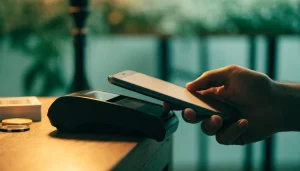
Published limit accounts conflict. One specialist review describes a UK ceiling of £30 per transaction, with some casinos or networks permitting £40 or £50. Another gives a €10 minimum, a €30 maximum and a €240 monthly cap. Those figures cannot be reconciled into one reliable schedule: they use different currencies and specify different kinds of limits. Treat them as separate reports, not as a single set of current rules.
There is also a distinction between a per-payment cap and a daily allowance. A specialist review describes network-level use as typically limited to about £10 per transaction and £30 per day; another account describes a £30 daily limit without specifying a per-transaction ceiling. The disagreement matters. A stated daily allowance does not establish what one payment will be accepted, and a casino’s own cashier may impose a lower cap.
The mobile operator controls the daily Boku allowance, rather than the casino. That can make a payment fail even when the casino account is in good order: the network may have reached its limit, or the requested amount may exceed the amount the network will authorise. For a pay-as-you-go customer, the available phone credit is a hard constraint. Boku deducts the deposit from that balance, so a request above the remaining credit cannot be completed.
Fees are a separate question from limits. Boku does not charge the customer for a standard deposit, but a mobile operator may add a processing charge. The cashier’s displayed amount therefore need not tell the whole cost story; the phone account can be affected by network charges as well as the deposit itself.
Bank transfer casino payments follow a different funding route, with bank-account rules rather than mobile-network controls. Boku’s economics are tied to the phone account. Check the amount the cashier accepts, the network allowance and any operator charge before treating a displayed cap as guaranteed. Different controls. Different outcome.
When Boku is only an indirect route to a casino cashier
A Boku-to-Neteller route is different from paying a casino directly with Boku. A specialist payment review describes funding a Neteller account through Boku, then using Neteller at a casino that accepts the e-wallet. That creates two separate payment steps, and acceptance at one stage does not establish acceptance at the other. The casino cashier must support Neteller, while the Boku option must be available for funding the wallet.
This route does not turn a mobile-bill payment into a bank transfer. The first charge is still handled through the mobile account; Neteller is the method presented at the casino. Someone comparing a UK bank-transfer casino with a pay-by-phone option should therefore check which method appears in the casino cashier, rather than treating the indirect route as a bank deposit.
There are also alternatives that remain within the pay-by-phone category. Fonix is one such service, while some operators have used Siru Mobile instead of Boku. These are separate payment products, not different names for a bank transfer. Pay by Phone and Fonix are available through EE, O2, Vodafone and Three, although a particular service still needs to appear in the operator’s cashier to be usable there.
The distinction matters operationally. With an intermediary wallet, the casino receives a Neteller payment, not a Boku transaction; the casino’s own cashier terms govern that deposit. With a direct Boku payment, the phone account is the funding route. Neither arrangement proves that the same casino accepts bank transfers, or that all payment options are available to every account.
I have seen payment labels treated as interchangeable in marketing copy. They are not. A mobile-funded wallet is a chain of payment services, and the cashier’s supported methods decide whether the final step works. Separate routes. Separate checks.
What are the deposit limits at pay-by-mobile casinos?
Boku’s standard UK limit is £30 per deposit, although some casinos or mobile networks may allow £40 or £50. Network limits are typically about £10 per transaction and £30 per day; PAYG deposits are also capped by your remaining phone credit.
Can I deposit by phone bill without Boku?
Yes. Some UK casinos use alternatives such as Fonix or Siru Mobile for pay-by-phone deposits, and availability depends on the casino and mobile network.
Why might a Boku deposit be declined?
You may have reached a transaction or daily limit set by the mobile network, or, if you use PAYG, your remaining phone credit may be too low. Boku deposits must also be in amounts divisible by ten.
Can a casino deny issuing a promotion if I deposit with Boku?
Yes. Promotion eligibility varies by operator, and Boku deposits generally do not come with specific bonuses. Check the casino’s bonus terms before depositing.
How does Boku work?
Boku charges a deposit to your monthly mobile bill or deducts it from your PAYG credit. You choose Boku in the casino cashier, enter the amount and your phone number, then confirm using an SMS code.
Casino Payments in the UK: Deposits and Withdrawals
Content created by the «Bentelbrothers.com» team