
Check whether Klarna can actually fund a casino account
 Available in US
Slot availability does not confirm that Klarna deposits are supported; the payment route depends on the operator and funding path.
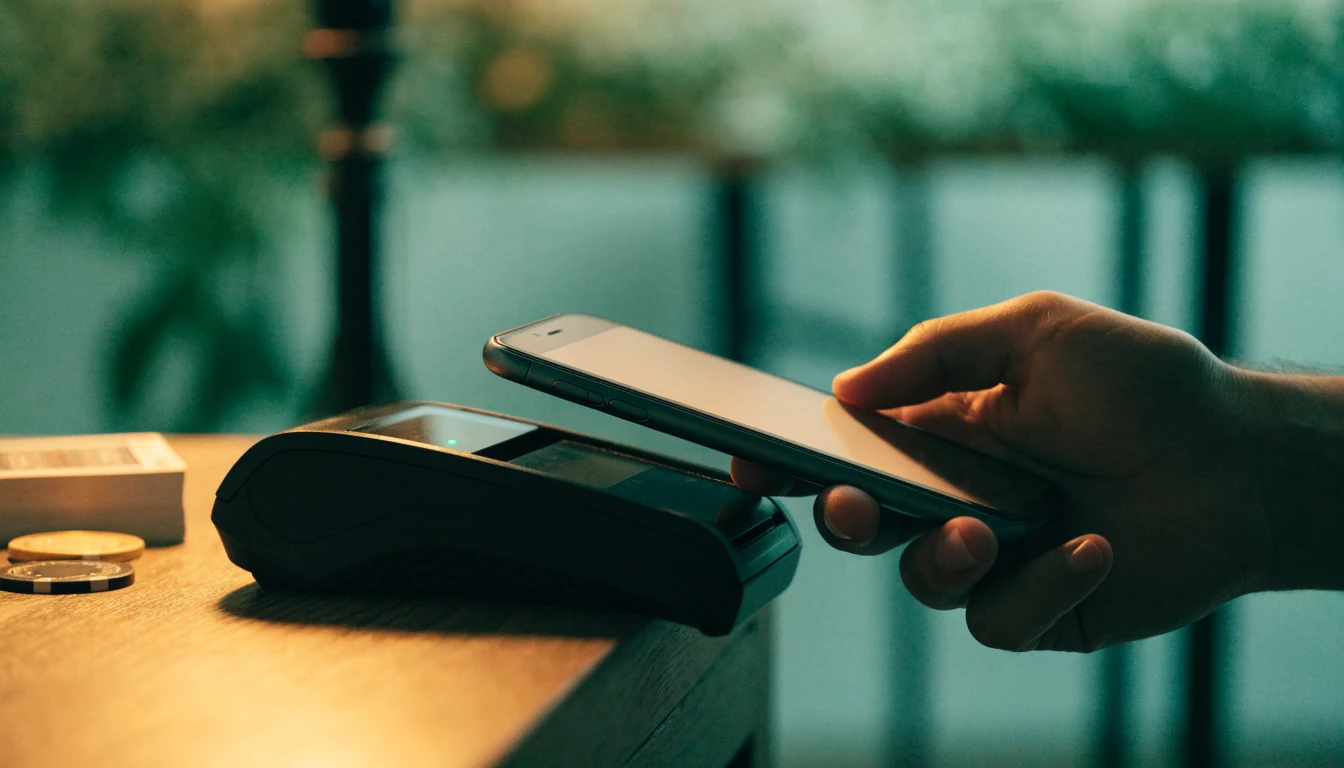
Klarna and online slots: the payment question comes first
A casino can offer online slots without accepting Klarna. These are separate parts of the service: slots are games made available on the site, while Klarna would be a payment route. Seeing slot titles, a welcome offer or a casino account advertised alongside Klarna does not establish that the payment method works there.
I have seen this distinction get blurred in promotional copy. A phrase such as “Klarna slots” sounds like a single product, but it can refer to several different things: a casino that offers slots and mentions Klarna, a payment option someone hopes to use for a deposit, or a search for a bonus linked to that method. Those meanings are not interchangeable. The game catalogue tells nothing by itself about how an account can be funded.
The same applies to requests for a list of casinos or accounts using Klarna. A site may have a casino licence and a large selection of slots, yet the payment route can depend on the operator’s current arrangements and the particular Klarna product or funding path. General brand recognition is not evidence that every service bearing that name can be used for gambling. Nor does a payment logo on a general information page prove that it is available for a particular customer or transaction.
That separation matters because a deposit is not just a button with a familiar label. In the background, the operator and payment provider must be able to process the transaction under their rules. The name attached to a service does not settle how the transaction is classified, where the funds originate, or whether the route is permitted for gambling. Those are practical distinctions, not marketing semantics.
The UK credit-card restriction is an important part of that assessment. The regulator banned credit-card gambling on 14 April 2020, and the rule has not been relaxed. Remote gambling operators cannot accept credit-card payments for gambling, including credit-card funding routed through a money service business. A wallet cannot be used as a workaround where it allows credit-card funds to be used for gambling.

That does not mean every payment product associated with a financial brand has the same classification. It does mean that calling a route “Klarna” is not enough to establish that it is allowed. The funding source and transaction path matter. If a proposed arrangement relies on credit-card funds reaching a gambling account, routing them through another service does not remove the restriction. The route has to be assessed for what it actually does.
This is why claims about a Klarna casino bonus deserve the same separation. A bonus is an offer governed by an operator’s terms; it does not prove that Klarna can fund the account. Even where a payment method is accepted, the operator may set separate conditions for promotional eligibility. “Bonus included” is not a description of the payment route. Small wording difference. Big practical consequence.
Likewise, a site that provides casino accounts and slots is not necessarily a site with a usable Klarna deposit option. The casino account is the operator’s product, the games are part of its entertainment offering, and the payment route is a separate operational decision. An advert may place all three in one sentence because that is concise. It does not make them one feature.
I would treat claims about slots available through Klarna in the same way. Slots are not purchased individually with a named payment method; the account is funded through a permitted route, and games are then accessed within the casino. A game’s presence says nothing about whether Klarna can be used to put money into that account. No connection follows automatically.
The “not on GamStop” wording raises a different question again: it concerns account controls and operator coverage, not whether a payment method is accepted. Combining that phrase with Klarna does not make the payment claim stronger, and payment choice is not a way around UK gambling controls. For UK players, legal real-money gambling is provided by operators holding the relevant UK Gambling Commission licence.
The useful starting point, then, is not the game list or the offer headline. It is the basic distinction between what the casino provides and how money may be handled. Slots can be available without Klarna; a Klarna mention can appear without confirming a usable gambling payment route; and a proposed route must not depend on credit-card funds being used for gambling. Keep those questions separate. That is the first check.
Klarna deposits: what the casino cashier needs to confirm
A casino’s general payment branding does not establish that Klarna is available for a deposit. The relevant test is whether Klarna appears as a usable route in that casino’s cashier for the account in question. A logo on a promotional page, a payment-method article or an app-store listing is not the same thing as an option at checkout.
That distinction is easy to lose in operator comparisons. A specialist review may list familiar methods such as Visa and Mastercard, but that does not confirm that Klarna is supported. Nor does a broad phrase such as “multiple payment options” identify which methods work, in which direction, or for which customers. Payment details need to be specific to the cashier, not inferred from a general brand claim.

In practice, a payment method has to be presented as an available selection in the deposit flow. If Klarna is absent, the casino has not shown that it can take a Klarna deposit through that route. If it is present, the displayed terms still matter: the label should identify the payment option clearly, and the amount, currency and any conditions should be visible before the transaction is confirmed. A method name alone is not the full answer.
This is why a list described as “Klarna casinos” needs stronger evidence than a list of casinos with online slots or a list of sites that mention payment providers. The list must connect a named operator to an active Klarna deposit option, rather than relying on association or old wording. Without that connection, the label overstates what has been established.
The same care applies to claims about casino apps. An app can provide access to the same account and cashier as a website, but the existence of an app does not prove that Klarna is offered there. The payment route has to be confirmed in the relevant cashier. A method appearing on a website does not automatically establish that it appears in the app, and the reverse should not be assumed either.
Nor does “instant banking” settle the question. It describes a category of payment experience, not proof that a particular provider or product is Klarna. When a page groups Klarna with instant banking, the underlying checkout option still needs to be named and available. Similar wording is not interoperability.
I have seen payment tables treated as if they were a live cashier. They are not. A table is a claim about a method; the cashier is where the transaction is actually offered. That difference matters most when a page uses a confident headline but gives no operator-specific detail about the deposit route. Marketing language can be broad. The checkout cannot.
The same evidence standard applies to claims about new casinos, Bitcoin casinos or sites described as outside GamStop. Those labels concern other aspects of a site and do not verify its Klarna deposit facilities. Adding a payment name to a category does not make the payment route real. Each claim needs its own confirmation.
For the wording to be dependable, it should be clear which operator is meant, that Klarna is offered for deposits, and that the claim reflects the current cashier rather than a general payment list. If the only evidence is a page mentioning payment brands, the careful description is that the page names those brands—not that it confirms Klarna acceptance.
A neat table can conceal a missing check. A live option is the meaningful detail.
Are there UK online casinos that accept Klarna?
If you are considering Klarna for casino payments in the UK, check each casino’s current payment options and terms before signing up. The details below provide the payout-speed information available for each entry.
-
Dieselwin
- Payout speed
- 1-3 business days
Dieselwin lists a payout speed of 1–3 business days.
-
Chanze
- Payout speed
- 1-3 business days
Chanze lists a payout speed of 1–3 business days.
-
EvoSpin
- Payout speed
- 1-3 business days
EvoSpin lists a payout speed of 1–3 business days.
-
SpinFormula
- Payout speed
- 1-3 business days
SpinFormula lists a payout speed of 1–3 business days.
-
Jetsetspins
- Payout speed
- 1-3 business days
Jetsetspins lists a payout speed of 1–3 business days.
-
x3bet
- Payout speed
- 1-3 business days
x3bet lists a payout speed of 1–3 business days.
-
Britsino
- Payout speed
- 1-3 business days
Britsino lists a payout speed of 1–3 business days.
-
Revery Play
- Payout speed
- 1-3 business days
Revery Play lists a payout speed of 1–3 business days.
-
Amunbet
- Payout speed
- 1-3 business days
Amunbet lists a payout speed of 1–3 business days.
-
Zombillion
- Payout speed
- 1-3 business days
Zombillion lists a payout speed of 1–3 business days.
That is not the same as saying Klarna has never appeared as a payment option or could not be added by an operator. It means a claim of acceptance needs to be checked against the casino’s own current payment information, rather than treated as established.
The distinction matters because payment branding can create a misleading shortcut. A casino may offer online slots and other games, while its cashier supports a different set of payment methods. A name appearing in a general payment discussion, or a page describing Klarna’s services, does not establish that a particular casino takes Klarna deposits. Nor does it establish that the route is available to UK customers.
In the UK, casinos commonly accept debit cards, including Visa and Mastercard. That gives a useful point of comparison, but it does not confirm Klarna acceptance. A cashier listing debit cards is evidence about those card methods only. It should not be read as an indirect endorsement of a separate payment service.
I have seen “best” used loosely in payment pages. In practice, the word can mean little more than a list of casinos paired with a payment logo, without showing that the cashier actually offers that route. The useful question is narrower: does the UK-facing cashier display Klarna as an available option for the account making the deposit? If not, a general claim that a casino “accepts Klarna” is not enough to rely on.

Deposit and payout claims also need to be kept apart. A statement that a casino accepts a payment method for deposits does not, by itself, establish that withdrawals can be made through the same method. The wording “pays out to Klarna” therefore requires its own confirmation, not an assumption based on deposit branding.
Ordinary casino payment options do exist, including the debit-card methods noted above, but their availability does not turn them into Klarna routes. Specific payment support is an operator-level detail, not a feature that can be inferred from the casino’s games or from a broad description of a provider.
That is the practical distinction: a payment method is confirmed at the point where the operator offers it for the intended transaction. Until then, “Klarna casino” is a claim, not a dependable description of the cashier.
Klarna cards, debit cards and the UK credit-card ban
The word “card” does not settle whether a payment can be used for gambling. A card may be described by a brand, presented through a payment service, or linked to an account, but the relevant question is how the payment is funded and classified. A search for casinos accepting a Klarna card in the UK can therefore bring together claims that sound alike while referring to different payment arrangements.
That distinction matters because UK-licensed casinos cannot accept credit-card payments for gambling. The regulator introduced the ban on 14 April 2020, and it has not been relaxed. It is not a matter of a casino choosing to exclude a particular card from its own cashier. The restriction applies to credit-card gambling, including credit-card funds routed through a money service business. A digital layer does not make a prohibited funding route acceptable.
Debit cards are different in classification. UK casinos commonly accept debit cards, including Visa and Mastercard, but that does not establish that every card bearing a familiar name will work, or that a Klarna-branded payment is a debit-card payment. Nor does a casino’s support for ordinary debit cards prove it accepts Klarna payments. Those are separate claims.
I have seen payment descriptions flatten these distinctions into one word: “card”. It is convenient copy, but it leaves out the part that determines whether a transaction can proceed. A label alone cannot show whether a product draws on a debit balance, uses credit, or follows a route the operator supports. So a listing for online casinos accepting Klarna card payments is not evidence that the payment is permitted under the UK rules or available at a particular casino.
The same caution applies when a service is used between a card and a gambling account. If credit-card funds are used through a wallet or money service business, the routing does not remove the restriction. UK-licensed casinos cannot accept wallet payments where the wallet allows credit-card funds to be used for gambling. The payment chain matters, not just the name displayed at the final step.

That is why claims about Klarna debit cards need more than a product name. “Debit” must describe the actual funding route, rather than appear as shorthand for a card-shaped product or a payment screen. And even where a route is not credit-funded, that only addresses the restriction; it does not prove the casino supports that route.
There is no shortcut in the wording. “Klarna accepted” may describe a checkout option in another retail context, while a casino payment has its own rules and controls. Likewise, a mobile casino does not face a different credit-card standard merely because the transaction begins on a phone. The device changes the interface, not the classification of the funds.
For anyone comparing casinos accepting Klarna in the UK, the useful distinction is not simply card versus no card. It is credit-funded versus debit-funded, and permitted versus actually supported. A familiar brand cannot answer both questions. Keep them separate.
Klarna slots and games: separate the game from the cashier
A casino’s games catalogue and its deposit methods answer different questions. A page can promote slots, table games or a mobile experience without saying anything reliable about whether Klarna appears as a usable payment option. The game runs inside the casino account; the deposit is handled through the cashier and its payment providers. One does not establish the other.
Do
- Check the live cashier for payment methods
- Review specific bonus terms for eligibility
- Verify current transaction fees in the terms
Don't
- Assume a game's presence proves Klarna support
- Trust a general payment logo as proof of access
- Infer payout speed from deposit speed
That distinction matters when a site or advert uses phrases such as “Klarna slots” or “Klarna casino games”. The wording can make Klarna sound like a feature of the games themselves. It is not. A slot does not have its own Klarna setting, and a game’s availability on a phone does not confirm that a Klarna-funded deposit will be accepted.
The same applies to “best” claims linked to bonuses. A welcome offer is a separate promotion with its own terms. Payment eligibility may be restricted, and the payment method named in a headline does not prove that deposits made through it qualify. The terms attached to the offer and the method shown in the live cashier are the relevant details. Marketing shorthand is not the rulebook.
“New” and “mobile” labels add little evidence. A recently launched casino may have a familiar-looking games lobby but a different set of payment arrangements. A mobile site or app may display the same games as the desktop version while offering a different checkout flow. A logo on a general payments page can also describe a provider relationship without confirming that the specific account, product or transaction route is available.
I have seen these categories blurred in promotional copy because the combination sounds like one package: games, bonus, payment and speed. Operationally, they remain separate. The games catalogue describes what can be played; the cashier describes what can be deposited; bonus terms describe which deposits qualify. Each claim needs its own evidence. A neat headline does not join them together.

Claims about fees need the same care. A casino’s games page cannot establish the cost of a payment route, and a payment logo alone does not show whether the casino or provider charges for a transaction. The published terms and transaction screen are where any applicable cost should be stated. If no fee is shown clearly, the claim that a method is “free” should not be inferred from its name.
Speed claims can also mix up stages. A specialist review has described card deposits as instant while payouts may take several business days. That illustrates why deposit speed and withdrawal timing should not be treated as one promise; it says nothing about Klarna specifically, or about how a particular casino will process a transaction.
The practical reading is simple: a casino can offer the games without offering Klarna, and a payment claim does not guarantee bonus eligibility, mobile availability or a particular fee. Separate the catalogue from the cashier. Then separate both from the promotion.
Payment alternatives when Klarna is not available
A substitute depends on what the payment route needs to do. A method that works for a deposit may not support withdrawals, and a familiar name does not make it available at every casino. I would compare the options by their role in the cashier, rather than treating any one as the “best” Klarna alternative.
Open banking and bank transfers are worth considering where the casino offers them. A specialist review describes these routes as capable of providing instant deposits and fast withdrawals at many sites. That is not a promise for every operator or transaction: processing can differ by cashier and account. The useful distinction is that a bank-linked route may serve both sides of the payment process, whereas a prepaid voucher does not.
Open Banking
Can provide instant deposits and fast withdrawals at many sites, though processing varies by operator.
Paysafecard
A prepaid option used for deposits only; it cannot be used as a route to return casino funds.
E-wallets
Services like Skrill and Neteller are available at some sites but are often excluded from promotions.
Paysafecard is a prepaid option for deposits only. It can suit someone who wants to pay from a voucher balance, but it should not be mistaken for a route that also returns casino funds. That limitation matters before depositing: a deposit method and a withdrawal method are not automatically interchangeable. Funds may have to leave through another route, subject to the casino’s process.
E-wallets such as Skrill and Neteller are offered at some sites, according to a specialist review. The same type of review notes that these wallets are often excluded from promotions. That is a material condition, not a minor footnote: a payment can be accepted while still affecting eligibility for an offer. The cashier’s terms, rather than the wallet’s general reputation, determine what applies at a particular casino.
These options are alternatives to investigate, not guaranteed replacements for Klarna. Bank-linked payments may combine deposit and payout functions where supported; Paysafecard is deposit-only; and e-wallet availability and promotion treatment vary. None should be described as a “Klarna casino” merely because it appears in a payment menu.
The practical comparison is therefore about function and conditions. A route may be suitable for adding funds but unsuitable for receiving them, or available while an offer is excluded. A specialist review can help identify methods to look for, but the operator’s current cashier and payment terms establish what is actually available. A label is not enough.

Checking payment compatibility before depositing
Payment branding is a starting point, not proof that a particular account can use a particular route. A casino page may display a provider’s name while the cashier offers different methods, or the available options may depend on the account or payment product. I treat the cashier as the practical check: it shows what the operator is offering for that transaction, rather than what a general payment list suggests.
A specialist review may list Visa and Mastercard among a casino’s payment methods. That does not establish that either card is currently available to a UK customer, or that every card product carrying the brand will be eligible. The exact option needs to appear in the live cashier. The same distinction matters when a payment service is accessed through an app, a linked card or another intermediary: a familiar logo does not confirm that the full route is supported.
A useful check is to work through the transaction before authorising it:
- Sign in to the intended casino account and open its deposit cashier.
- Look for the exact payment method, not just a related brand or a general payments page.
- Check whether the cashier identifies the relevant card or payment route, and whether any eligibility conditions are shown.
- Review the amount, currency and any charges displayed before confirming.
- Stop if the route is absent, the terms are unclear, or the payment page redirects to a different method than expected.
That is the point at which claims about Klarna deposits, Klarna cards or Klarna Pay need to be tested. The name may refer to different products or ways of funding a payment; it is not enough for a site to mention Klarna somewhere in its promotional material. A cashier that does not present the specific route cannot be treated as confirmation that it works.
I have seen payment lists read as if they were promises. They are not. A method can be named in general information and still be unavailable for the account or transaction being made. Nor does a completed account registration prove that a later deposit route will be accepted. The status of the payment option is determined at the point of use.
For “instant” payment wording, the distinction is especially important: a label does not establish that a deposit will complete instantly. The cashier and the payment confirmation are the relevant stages to inspect, without assuming that branding settles timing or acceptance.
Compatibility Check
-
1
Access Cashier
Sign in to the casino account and open the deposit section.
-
2
Locate Method
Look for the exact payment method rather than a general brand or information page.
-
3
Verify Terms
Check for eligibility conditions, amount, currency, and any charges before confirming.
-
4
Final Validation
Stop the transaction if the route is absent or redirects to an unexpected method.
The sensible test is therefore a compatibility check, not a guess based on a logo. If the exact method is not displayed and its conditions are not clear before authorisation, the route has not been confirmed.
Why Klarna is not a casino withdrawal method
A payment route that works for a deposit does not automatically work in reverse. A casino cashier may process money coming in through one service while its withdrawal process sends funds back through the original source or another route it supports. That distinction matters when “Klarna withdrawal” is used as if it were a standard payout option.
UK anti-money laundering rules generally require casino payouts to return to the original payment source. This is part of closed-loop controls: the operator checks where deposited funds came from and aims to send eligible withdrawals back along that route. It is not a promise that every deposit method can receive a payout. The cashier’s deposit screen and its withdrawal rules serve different purposes.

I have seen payment branding create the wrong expectation. A Klarna logo, or a Klarna-linked card appearing during a deposit, would not by itself establish that a casino can pay winnings to Klarna. The relevant detail is the payment product and route the operator supports for withdrawals. “Instant” describes an advertised part of a transaction, not necessarily the whole process.
Timing has separate stages. The casino must review and approve a withdrawal before the payment provider or bank completes its part. A specialist casino review describes first withdrawals as potentially taking longer while verification is completed; internal processing and account status can affect the overall wait. So a deposit that appears promptly is no reliable guide to when a payout will arrive.
There is no sound basis for treating Klarna as a direct casino withdrawal method simply because it may be associated with a deposit route. The practical question is whether the cashier lists a withdrawal route that matches the original source, and whether the account has completed the operator’s checks. If the payment route cannot receive casino payouts, the operator may need to use another permitted route under its rules and verification process.
That is the distinction: deposit acceptance is not payout compatibility. A fast incoming payment does not settle the withdrawal method or its timing.
Making a deposit without creating avoidable payment friction
Payment checks are easier to follow when the gambling account and the payment account belong to the same person. If the names or other basic account details do not line up, a transaction can prompt questions that have nothing to do with the game or any advertised offer. From the operator’s side, that is a routine ownership check, not a judgement about why the deposit was made.
I have seen people treat the payment step as separate from the account they opened: a relative’s account, a different name on a payment service, or details entered inconsistently can turn a straightforward transaction into an exception for review. The cleaner arrangement is one customer, one matching set of details. Less to reconcile.
That principle applies to searches about depositing with Klarna, too. A search for a small Klarna deposit, a Klarna-linked bonus or a no-deposit promotion does not change whose account is being funded. Nor does the wording of an offer establish that a particular payment route is supported. Any promotion has its own terms; account ownership remains a separate control.
The same logic matters later if funds need to be returned or a transaction is reviewed. A consistent route gives the operator a clearer record connecting the account holder to the payment. It does not guarantee approval or remove checks, but it avoids adding an obvious mismatch to them. The cleanest route is often the same named account used consistently for both sides of the transaction.
This is why payment friction can start with something mundane: a spelling difference, outdated account information or a payment account belonging to someone else. Keeping details consistent is not a way around operator checks. It simply means those checks are less likely to be complicated by a basic ownership discrepancy.
A Klarna label, a bonus headline or a claimed minimum deposit cannot substitute for that consistency. The account holder and the payment route still need to make sense as belonging to the same customer. Plain mechanics.

Klarna and casinos outside GamStop: keep the questions separate
A claim that a casino is “outside GamStop” answers a different question from whether its cashier accepts Klarna. One describes the operator’s relationship to a self-exclusion scheme; the other is a payment-method claim. Neither proves the other. A site can advertise both together without that wording confirming either detail.
I have seen these claims blur together in promotional copy. “Klarna casinos not on GamStop” may sound like a single product category, but it combines separate checks: whether the operator is covered by the scheme, whether it holds the licence required to serve customers in Great Britain, and whether Klarna is actually offered for the intended transaction. The label alone settles none of them.
For real-money gambling offered to customers in England, Scotland and Wales, the operator must hold a UK Gambling Commission licence. A payment option does not change that requirement, and choosing a particular method does not switch off an account’s self-exclusion status or other controls. Separate questions. Separate evidence.
UKGC rules also require remote operators to invite new customers to set a financial limit before their first deposit and to make account-level limit controls accessible. Those safeguards belong to the account and operator, not to the branding on a payment button. A promise of “no limits” or “unaffected by GamStop” should not be read as proof that a payment route removes those controls.
The same distinction applies to claims about “no fee”. That phrase says nothing by itself about scheme coverage, licensing or whether Klarna is available. Any fee statement needs to be assessed on its own terms; it cannot verify the rest of the offer.
I would treat a combined claim as several claims, not as a shortcut. Check the operator’s UKGC status and its account-control terms independently of any payment branding. If the wording implies that payment choice makes self-exclusion irrelevant, it is not a reliable description of how the UK-licensed account controls work.
Why must withdrawals return to the deposit method?
Returning funds to the original payment source is a common anti-fraud and anti-money-laundering control. Using another route may require extra verification.
What is the fastest withdrawal method for UK casinos?
PayPal, open banking services and debit cards linked to fast payout systems are generally among the quickest. The casino’s approval process and your verification status also affect how soon you receive the money.
Is Skrill available?
Yes, Skrill is offered at some UK-friendly casino sites and remains a common deposit method. It may be excluded from promotions.
What is the current minimum deposit?
Minimum deposits usually start at £10–£20, depending on the payment method.
Which method has the lowest fees?
There is no universally cheapest method. Compare casino and provider charges, bank or issuer fees, currency conversion and any network costs for the amount you plan to transfer.
Do UK casino withdrawals require verification?
Verification may be required, and first withdrawals can take longer while checks are completed. Having a fully verified account can help avoid delays.
Are Visa and Mastercard deposits definitely debit cards?
No. The Visa or Mastercard name alone does not confirm that a particular card is eligible; check the card product and the casino cashier. UK casinos cannot accept credit-card payments for gambling.
Why can a fast payout casino still delay my withdrawal?
A fast payment route does not remove the casino’s internal approval time. Withdrawals can take longer if verification is still needed, particularly on a first payout.
Casino Payments in the UK: Deposits and Withdrawals
Content created by the «Bentelbrothers.com» team