
Know what a Mastercard deposit does—and doesn’t do
 Available in US
A card payment method does not change slot rules or bonus terms, and making a deposit does not guarantee that withdrawals use the same route.

Mastercard Deposits and Online Slots: What the Rules Allow
A Mastercard deposit is a way of putting funds into an account; it does not change the rules attached to the slots those funds may be used on. In Britain, the distinction matters because the regulator sets limits on how online slots operate, while a casino’s payment and promotional terms sit alongside those limits. A card logo or a slot-themed offer cannot override them.
For online slots, the maximum stake depends on the player’s age. The limit is £5 per game cycle for customers aged 25 and over, and £2 for those aged 18 to 24. The higher limit for adults came into force on 9 April 2025. These are maximums, not recommended stakes or targets. A casino may set a lower amount, and a bonus does not create permission to exceed the applicable cap.
The rules also shape the pace of play. In Britain, a slot spin must take at least 2.5 seconds, and autoplay is prohibited. A promotion may describe play as “fast” or “smooth”; the practical meaning is still bounded by these requirements. There is no compliant setting that lets a player bypass the spin duration or start an unattended sequence of spins. Marketing language is not a separate set of rules.
Choosing a casino that accepts Mastercard in the UK means checking whether its payment options suit your needs, including how quickly withdrawals are processed. This list highlights the payout-speed information available for each operator.
-
Dieselwin
- Payout speed
- 1-3 business days
Dieselwin lists a payout speed of 1–3 business days.
-
Chanze
- Payout speed
- 1-3 business days
Chanze lists a payout speed of 1–3 business days.
-
EvoSpin
- Payout speed
- 1-3 business days
EvoSpin lists a payout speed of 1–3 business days.
-
SpinFormula
- Payout speed
- 1-3 business days
SpinFormula lists a payout speed of 1–3 business days.
-
Jetsetspins
- Payout speed
- 1-3 business days
Jetsetspins lists a payout speed of 1–3 business days.
-
x3bet
- Payout speed
- 1-3 business days
x3bet lists a payout speed of 1–3 business days.
-
Britsino
- Payout speed
- 1-3 business days
Britsino lists a payout speed of 1–3 business days.
-
Revery Play
- Payout speed
- 1-3 business days
Revery Play lists a payout speed of 1–3 business days.
-
Amunbet
- Payout speed
- 1-3 business days
Amunbet lists a payout speed of 1–3 business days.
-
Zombillion
- Payout speed
- 1-3 business days
Zombillion lists a payout speed of 1–3 business days.
This is where slot promotions can be easy to misread. A headline may foreground a bonus, free spins or a branded game, but the offer remains subject to its written conditions and the rules governing the game. The promotional label does not establish which slots are eligible, how a bonus can be used, or whether a particular payment method qualifies. Those details have to be stated by the operator. A Mastercard deposit, by itself, tells little about the offer attached to it.
I have seen how the word “bonus” can make a payment decision look simpler than it is. The visible offer is only one part of the arrangement; the underlying terms decide whether a deposit method is included and which play counts. A specialist review has reported that PayPal may be left out of bonus eligibility, but that is a report about a particular source’s findings, not a rule that applies across casinos. The operator’s current terms are the relevant reference for any specific promotion.
The same care applies to searches for Mastercard slot casinos or a list of casinos with a Mastercard bonus. A payment method and a slot promotion are separate attributes. Even where a casino accepts a card, that does not establish that every offer applies to card-funded play or that every slot is included. Nor does a game’s presence in a casino catalogue establish that it is eligible for a particular promotion. The small print carries the distinction.

There is also a regulatory boundary behind the account itself. Remote gambling licensees serving consumers in Great Britain must hold the relevant Gambling Commission licence. The Gambling Act 2005 governs gambling in England, Wales and Scotland, while Northern Ireland has a different legal framework. For a British player, the licence is part of the operating conditions under which real-money slots are offered; it is not a decorative badge or a payment feature.
That framework includes safeguards before play begins. Operators must check a customer’s age before allowing a deposit. They must also invite new customers to set a financial limit before the first deposit and make account-level limit controls accessible. These measures do not depend on whether the account is funded by Mastercard or another route. They are part of the regulated account, not an optional extra tied to a promotion.
I would separate three questions when reading an offer: whether the casino is authorised for the British market, whether the slot follows the applicable play rules, and whether the promotion’s terms include the chosen payment method and game. They are related, but one answer does not settle the others. A payment logo cannot certify a bonus, and a bonus banner cannot suspend slot restrictions.
For that reason, “best online slots with Mastercard” is not a useful promise unless the details behind it are clear. The relevant facts are the operator’s licence, the game’s terms, the stake and speed rules, and the promotion wording. A list based only on a card name leaves out the conditions that govern actual play. Plain terms matter more.
What a Mastercard Deposit Actually Looks Like at the Cashier
A Mastercard deposit is less mysterious than the wording on a casino’s payment page can make it sound. In practical terms, the cashier is the point where the account balance, the selected payment route and the amount meet. The useful detail is not a banner saying “instant” or “easy”; it is what the site displays after Mastercard is selected and before the transaction is confirmed.
The sequence is generally straightforward. Once signed in, the account holder opens the cashier or deposit area, chooses a payment method, enters an amount and follows the payment prompts. The cashier may show a minimum deposit beside the method or update it when the method is selected. That distinction matters: an amount accepted for one route may not be accepted for another, even within the same account.
A specialist review gives a broad indication that minimum deposits can fall in the £10–£20 range, depending on the payment method. That is not a universal Mastercard minimum, nor a promise about any particular cashier. The figure is best treated as a prompt to check the live screen, where the selected route and the operator’s current terms determine what can be entered.

From the cashier to the confirmation screen
I have seen payment pages make a simple transaction feel more complicated by putting the important conditions in small print beneath a prominent button. The order of checks is more useful than the button itself: confirm the amount, confirm the method, then read the transaction summary before submitting. If a cashier displays a minimum that conflicts with the amount entered, changing the amount or choosing another listed method may be necessary; repeatedly submitting the same rejected amount does not clarify the rule.
The payment form may ask for card details or pass the transaction to a separate payment screen. The exact appearance depends on how the casino has built its cashier and how the payment is processed. What remains consistent is the need to follow the displayed steps rather than assuming that every Mastercard transaction uses an identical screen. A casino app can present the same cashier in a smaller layout, but the underlying task is still to select the route, enter the amount and complete the prompts.
Before a first deposit, remote operators must prompt new customers to set a financial limit. Account-level limit controls must also be accessible. This means a deposit flow can include an account-setting step as well as the payment form. It is not an optional promotional extra: it is part of the controls UKGC-licensed remote operators are required to provide.
Operators must also verify a customer’s age before allowing funds to be deposited into a gambling account. That check can affect when the cashier is available for use. In my experience, people often treat a payment screen as the beginning of the process, when some account checks may have to be completed first. The cashier is not a workaround for account requirements.
Mastercard Deposit Process
-
1
Access the Cashier
Sign in to the account and open the deposit area or cashier section.
-
2
Select Payment Method
Choose Mastercard from the list of available routes and enter the desired amount.
-
3
Complete Account Checks
Set a financial limit (for new customers) and complete any required age verification.
-
4
Confirm Transaction
Review the transaction summary and follow the final payment prompts to complete the deposit.
Reading the amount and method together
The method label and the amount field should be read as a pair. A displayed minimum applies to the selected route, not necessarily to every payment option in the cashier. The same principle applies when the interface changes after a method is chosen: the new information is the relevant information for that transaction, not an earlier figure remembered from another screen.
The amount entered is also distinct from the amount the cashier says will be added to the account. The transaction summary is where those figures should be reconciled before confirmation. If the displayed total is unclear, the sensible move is to stop and check the payment terms rather than infer what a button will do. A tidy-looking checkout is not the same thing as a clear one.
For a Mastercard casino deposit, the most useful record is the confirmation shown after the payment flow completes. It helps distinguish a completed transaction from a form that was merely filled in or a payment that has not reached a final state. I avoid starting the same deposit again simply because a page has not refreshed; first, the cashier’s displayed status needs to be understood. Duplicate attempts create confusion, not clarity.
The small mechanics matter. An amount can be within a casino’s general deposit range yet still fall below the minimum for the selected method. A payment page can also include account controls before it permits a deposit. Once those pieces are treated separately—the account, the chosen route and the amount—the cashier becomes easier to read. No flourish. Just the transaction.

Are Mastercard Casinos Still Available in the UK?
Yes, Mastercard can still be used for gambling at UK casinos when the card is a debit card and the operator accepts that card product. The important distinction is not the Mastercard logo. It is whether the money is being drawn from a debit account or borrowed on a credit facility.
UK casinos commonly accept debit cards, including Mastercard. That does not mean every card carrying the logo will work at every cashier. A Mastercard debit card is different from a Mastercard credit card, even if the cards look similar and come from the same bank. For gambling payments, the issuer and the casino need to be able to identify the card type correctly.
Credit-card gambling was banned by the regulator on 14 April 2020, and the rule has not been relaxed. UK-licensed casinos cannot accept credit-card payments for gambling. The prohibition is about the source of funds, not the payment network printed on the plastic. A credit Mastercard therefore is not an eligible route simply because a casino accepts Mastercard debit cards.
That distinction can be obscured by broad payment labels. A cashier may display “Mastercard” without explaining every card product that can pass through it. In practice, the logo is only a starting point; acceptance depends on the payment route and card classification. I have seen this create needless confusion: a player sees Mastercard listed and assumes all Mastercard cards are treated alike. They are not.
The same principle applies when a credit card is routed indirectly. Remote gambling operators cannot accept credit-card payments for gambling, including credit-card funds sent through a money service business. Nor can an operator accept a wallet payment where that wallet permits credit-card funds to be used for gambling. Moving the transaction through another layer does not turn borrowed funds into a debit payment.
What “Mastercard accepted” really means
In a UK casino context, “Mastercard accepted” should be read as a statement about eligible payment products, not a blanket approval for every card bearing the brand. A debit Mastercard may be supported; a credit Mastercard cannot be used for gambling. If the card type is unclear, the cashier or the card issuer can clarify whether it is classified as debit or credit.
A prepaid product can raise a separate question, because its funding and classification may differ from a standard debit card. The label alone should not be treated as proof that a transaction is permitted or supported. The casino’s payment process has to recognise the product and apply the relevant restrictions.
There is also a difference between legal eligibility and practical availability. The credit-card ban does not mean Mastercard has disappeared from UK casino payments. It means the permitted route is debit, subject to the operator’s own payment options and checks. A search for casinos that accept Mastercard in the UK can therefore point to a valid payment method, but it cannot establish that a particular credit card will be accepted.

I would treat the card type as the first check, before looking at any promotional claim or payment logo. The distinction is simple, but its consequences are not: debit can be eligible; credit is barred. That is the dividing line.
Debit Card Acceptance: Where Mastercard Fits
Debit cards are a familiar way to fund UK casino accounts, and Visa and Mastercard are both commonly accepted. That broad pattern is useful, but it is not a promise that every casino supports every card carrying the Mastercard logo. Acceptance is an operational setting at the individual operator, not a feature that follows automatically from the payment brand.
I have seen the distinction get lost in comparison pages. A site may be described as accepting Mastercard, while the live cashier shows a narrower set of available methods or does not accept a particular card product. Specialist casino reviews may list Visa and Mastercard as payment options; that list is a starting point, not confirmation of what is available to a UK customer at the point of deposit. The cashier is the practical check.
The label “Mastercard accepted” can cover more than one situation. It may refer to debit cards bearing the brand, while leaving the status of a specific product unclear. Even within debit cards, eligibility can vary. A prepaid or other card product should not be assumed to work simply because a standard Mastercard debit card is listed. The operator’s current payment screen is where that distinction becomes visible.
Do
- Check for Mastercard in the live cashier.
- Verify that the route is specifically for debit cards.
- Confirm the card product is eligible under the terms.
Don't
- Assume all Mastercard cards are treated the same.
- Rely on general payment graphics or logos.
- Assume a mention in a review guarantees current availability.
That is why broad claims about online casinos accepting Mastercard need reading with care. They describe a payment route at a general level. They do not establish that every UK-facing casino offers it at present, that it appears in every account, or that all Mastercard debit cards are eligible. A logo in a general payment graphic is weaker evidence than an available Mastercard option in the account cashier.
The same practical point applies on a phone. A mobile casino may offer a payment interface, but the relevant question is whether Mastercard appears among the methods available in that account. A page that mentions card payments is not enough to establish that the Mastercard route is active. Interfaces can also distinguish between card brands or products, so the wording of the available option matters.
I would treat the acceptance claim as a sequence of checks, not a blanket category:
- Is Mastercard displayed in the current cashier?
- Does the wording identify debit-card use, rather than card payments in general?
- Is the specific card product eligible under the operator’s terms?
Those checks answer different questions. The first confirms that the operator currently presents the method; the second clarifies what kind of card route is meant; the third avoids assuming that all products under one brand are treated alike. None can be settled reliably by the brand name alone.
There is no contradiction between Mastercard being widely recognised and a particular payment attempt not being available. General acceptance describes the market pattern; the cashier determines the operator’s current offer and the card products it supports. In practice, that is the difference between seeing Mastercard mentioned in a review and seeing it offered as a usable method in the account. Logos are not a settlement.
Mastercard, Slot Games and Bonus Conditions
A Mastercard deposit does not, by itself, establish whether a promotion applies. The cashier confirms whether the card can fund the account; the bonus terms determine whether that particular deposit qualifies. Those are separate checks, and marketing pages often place them close together.
When a welcome offer is advertised, the important wording is the payment-method exclusion. Some terms restrict a bonus to selected deposit routes, while others exclude named methods. A card can be accepted for deposits yet fail to qualify for a promotion under the operator’s rules. “Bonus available” is not the same as “bonus available with every payment method”.
I have seen this distinction cause avoidable confusion: a player sees Mastercard among the cashier options, claims an offer, then finds that the deposit method is treated differently for promotional purposes. The practical answer is not a general claim that Mastercard casinos offer better bonuses. It is the terms attached to the specific offer and the specific account.
The same applies to slot bonuses. Terms may define which games count towards playthrough, or how different games contribute. That detail is separate from whether a Mastercard deposit is eligible in the first place. A list of slots on a casino site does not automatically mean every title qualifies for every promotion. The promotional rules are the controlling document.
It is worth separating three questions: whether the casino accepts the card, whether the deposit qualifies for the offer, and whether the games being played count under that offer’s conditions. Treating those as one question is how “best Mastercard bonus” claims become misleading. No payment brand can settle all three.
Payment exclusions are not limited to cards. A specialist casino review reports that Skrill and Neteller are often excluded from promotions at some sites. That is a report about promotional terms, not a rule that applies across the market; the operator’s current offer conditions remain decisive. Terms can change, so an old review or an archived promotion is not a substitute for the active wording.
The phrase “best games” can also obscure what matters. A game may be available in the casino’s lobby but not count towards a particular bonus, or may be treated differently under its terms. Where a promotion names eligible games or sets contribution rules, those details matter more than a broad claim about the size of the slot selection. No universal ranking of Mastercard slots follows from the payment method.
For a fair comparison, separate the headline value from the conditions attached to it. Check the payment exclusion, eligible games, contribution rules, and any requirements for accepting or declining the offer. If the terms do not clearly establish that a Mastercard-funded deposit qualifies, the cashier’s card logo is not proof that it does.
Promotional language sells the headline. The conditions decide the transaction.
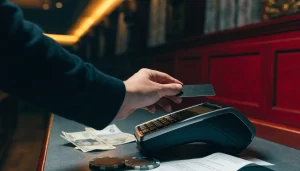
Alternatives When Mastercard Is Not the Right Route
The practical alternative depends on what needs replacing: a card-based deposit, a route linked directly to a bank account, or a way to pay without using a card at the cashier. The options are not interchangeable. Some are deposit-only, and an operator’s cashier determines which methods are available for a particular account.
Bank-based payments are one route to check. A specialist review reports that open banking and bank transfers can support instant deposits and fast withdrawals at many sites; that is a description of availability, not a promise that every casino or bank will process a payment at the same speed. The difference matters. A bank transfer may appear in the deposit menu while withdrawal support, processing conditions or account checks differ. “Instant” describes a possible payment experience, not the whole transaction.
Prepaid vouchers serve a narrower purpose. Paysafecard is used to deposit, not to withdraw. It can therefore act as a Mastercard alternative for funding an account, but it does not provide a matching route for receiving a payout. That distinction is easy to miss in a cashier list: a payment logo can describe one direction only.
E-wallets offer another category. A specialist review characterises Skrill as a widely used deposit choice at UK-facing casino sites in 2026, but availability still depends on the operator. Skrill and Neteller are listed by some sites and may be excluded from particular promotions, so the payment method and the offer terms need to be read together. PayPal is also described in specialist coverage as popular for convenience and speed, with some promotions excluding it. Those observations should not be treated as a rule for every casino.
Bank-based Payments
Includes open banking and bank transfers for deposits and withdrawals.
Prepaid Vouchers
Options like Paysafecard that are used for deposits only.
E-wallets
Services such as Skrill, Neteller, and PayPal, subject to operator availability.
Some UKGC-licensed casinos also accept Apple Pay for deposits. It is an option to look for in the cashier, rather than an assumption based on the card stored in a phone. The cashier’s payment list is the operative detail.
From behind the counter, I found that the neatest comparison starts with the job the payment must do. A voucher may suit a deposit-only need; a bank-based route may offer a different deposit and payout path; an e-wallet may be convenient where the casino supports it. Then the operator’s terms settle the matter. “Alternative” does not mean equivalent.
Promotion conditions deserve a separate check before choosing a route. A payment method can be accepted while being excluded from a particular bonus. That does not make the payment invalid; it changes whether the promotional terms apply. Availability and eligibility are separate decisions.
None of these options establishes that a casino is legitimate by itself. For real-money play in Great Britain, the operator must hold the relevant UK Gambling Commission licence. Payment branding is not a substitute for that check.
Card Compatibility, Account Details and Currency
A Mastercard logo on a casino’s payment page is a starting point, not a promise that every Mastercard will work. The cashier is the practical check: payment options can change, and the card product presented by the bank still has to be eligible. That is why a page describing casinos that accept Mastercard in the UK cannot settle whether a particular card will be accepted at the point of deposit.

I have seen a transaction become harder to resolve when the account details and payment route appear to belong to different people. Keeping the casino account information and the card route aligned to the same customer reduces avoidable ownership questions. It does not guarantee approval, but it removes a basic source of friction.
The detail that matters is consistency, not a clever workaround. A payment route in another person’s name can make it harder to establish who is funding the gambling account. A card issued to the account holder is the cleaner arrangement; the casino may still apply its own checks. Keep the account information accurate and use a route belonging to the same customer. Fewer loose ends.
Currency deserves the same attention before the first transaction. A specialist review of casino payment information reports that GBP is supported, but that should not be treated as confirmation for every cashier or account. The currency shown for the individual account is what matters. If it is not GBP, a card payment may involve conversion; confirming the account currency beforehand helps avoid an unexpected exchange.
This is easy to overlook because the card itself can be accepted while the transaction still carries a currency complication. The relevant check is not only whether Mastercard appears among the available methods, but also what currency the casino account uses and what the cashier displays before confirming a deposit. Payment approval and currency settings are separate details.
- Is Mastercard available in the current cashier?
- Does the card belong to the account holder?
- Is the account currency set to GBP to avoid conversion?
- Is the card product a debit card rather than credit?
For casinos that take Mastercard, these checks are more useful than relying on a general claim that the method is available. A cashier can show whether the option is currently presented for the account, while the account details establish whether the payment route belongs to the same customer. Neither a logo nor a search result can confirm both.
The same applies to people looking for Mastercard debit casinos in the UK: a card network name alone does not establish that a specific card product will be accepted. Availability should be checked in the live cashier, and the account currency should be confirmed before the first payment. Those small checks do not make every transaction frictionless, but they help prevent avoidable problems before money moves.
Why Mastercard Deposits Do Not Guarantee Mastercard Withdrawals
A Mastercard deposit confirms that the casino’s cashier accepted that card for incoming funds. It does not establish that the same card can receive a payout. Deposits and withdrawals are separate transaction routes, with different checks and sometimes different processing arrangements.
The key principle is closed-loop handling. UK anti-money laundering rules generally require a payout to go back to the original payment source. That helps establish where the funds came from and reduces the scope for moving money through unrelated accounts. If a card cannot receive the full withdrawal, the casino may need to use another permitted route after checking the account and payment history. The fallback is not simply the player’s choice.

This is why “Mastercard deposit and withdrawal” should not be read as a promise of a matching card payout. The cashier may show Mastercard for deposits while the withdrawal page sets out other routes, or the casino may confirm the payout method only after reviewing the account. A Mastercard-branded card can be accepted for one direction without being available for the other.
Timing also has two separate stages: the casino’s own approval and the payment provider’s handling after release. A specialist review reports that a card deposit can arrive instantly while a payout takes several business days; that is an account of timing, not a guaranteed schedule for every casino or card. The casino’s internal checks come first.
The first withdrawal can take longer where KYC is still outstanding. The operator may need to verify identity and confirm that the payment source belongs to the account holder before authorising the transfer. Until those checks are complete, a request can remain pending even if the card was used successfully to deposit. Once approved, the receiving bank or card issuer still has a role in crediting the funds.
In practice, “fast withdrawal” describes a chain, not a single button press. The casino’s processing policy, verification status and available payout route all matter. If the cashier does not explicitly show Mastercard as a withdrawal option, a successful Mastercard deposit is not evidence that funds will return to that card. The route must be confirmed in the account’s withdrawal screen or with the operator. No shortcut.
Limits, Fees and the Cost of Moving Money
A Mastercard deposit has two separate checks: whether the casino accepts the card, and how much can be moved through it. The cashier’s minimum and maximum are not universal Mastercard terms. Operators can set different ceilings for each transaction, day or month, and those figures may also depend on the payment method and account status. A limit shown for one route therefore cannot safely be assumed to apply to another.
The same distinction matters when comparing costs. A specialist payment review identifies several possible charges around a deposit: a casino fee, a payment-provider fee, a charge from the card issuer or bank, currency conversion and network costs. Which of these applies depends on the transaction; the presence of Mastercard does not, by itself, establish that the deposit is free.
The displayed fee is only part of the calculation. If the casino account and card transaction use different currencies, the exchange rate may include a spread. A specialist payment review notes that this conversion margin can outweigh a visible flat charge. That is easy to miss because a flat fee is explicit, while the spread is reflected in the rate used to convert the money.
I have seen people compare payment routes by looking only at the cashier’s fee line. That leaves out charges applied elsewhere in the payment chain. The useful comparison is the total amount taken from the account against the amount credited to the casino balance, using the actual currency and deposit amount. No route is automatically the cheapest.
For Mastercard casinos, the practical point is to inspect the limit and fee information displayed for that card in the cashier, then check the card issuer’s terms as well. A low casino-side charge does not settle the full cost, and a stated maximum may change with account status. Small print, real money.

GamStop Status Is Separate from the Payment Method
A Mastercard logo answers a narrow question: whether the cashier presents that payment route. It does not show whether a casino is covered by GamStop, nor whether its self-exclusion arrangements meet UK requirements. Searches for Mastercard casinos not on GamStop can blur those separate checks. They are not interchangeable.
For a casino serving customers in Great Britain, the more basic regulatory test is whether the remote gambling licensee holds the relevant UK Gambling Commission licence. UK-licensed casinos must provide responsible gambling tools, including self-exclusion. GamStop status is a separate matter; card acceptance cannot confirm it. A payment option is not a regulatory badge.
I have seen payment pages treated as shorthand for the whole operation. That is a poor shortcut. A casino may display Mastercard while the information about its licence, account controls and self-exclusion sits elsewhere in its terms or safer-gambling pages. Those details need to be assessed on their own, rather than inferred from the cashier. No card brand can settle the question of whether a particular operator is registered with GamStop.
There are also safeguards that apply at account level. Remote operators must make new customers set a financial limit before they make their first deposit, and must keep limit controls accessible within the account. That requirement concerns how gambling is managed; it does not establish GamStop participation. Separate mechanisms, separate checks.
The phrase “no GamStop” can sound like a payment feature, but it is not. Mastercard casinos without GamStop are not a distinct card category, and a Mastercard slots page cannot establish an operator’s self-exclusion status. The UK regulatory position remains the useful baseline: real-money gambling offered to Great Britain customers requires a UKGC licence, and licensed casinos must offer self-exclusion tools.
A payment method tells little about safeguards. The licence and the operator’s own responsible-gambling information are the relevant places to verify those matters. Keep the categories distinct.
Why must withdrawals return to the deposit method?
Returning funds to the original payment source is a common anti-fraud and anti-money-laundering control. Using the same customer details and payment route can also reduce avoidable transaction delays.
What is the fastest withdrawal method for UK casinos?
PayPal, open banking services and debit cards linked to fast payout systems are generally among the quickest options. The casino’s approval process and whether your account is verified also affect how quickly you receive the funds.
Are fast casino withdrawals guaranteed?
No. Withdrawal speed depends on the casino’s approval process and your verification status; first withdrawals may take longer while checks are completed.
Which payment methods are accepted in Great Britain?
Common options include Visa and Mastercard debit cards, PayPal, bank transfers and open banking. Some sites also offer Apple Pay, Skrill, Neteller or Jeton; Paysafecard is for deposits only.
Can I deposit in GBP?
Yes, GBP is supported. Check the account currency before your first transaction to avoid conversion.
What is the current minimum deposit?
Minimum deposits commonly start at £10–£20, depending on the payment method. Check the cashier after selecting your method for the amount currently allowed.
Are Visa and Mastercard deposits definitely debit cards?
No—the card logo alone does not confirm which card products are eligible. Credit-card gambling is banned in the UK, so check the cashier and use an eligible debit card.
Casino Payments in the UK: Deposits and Withdrawals
Content created by the «Bentelbrothers.com» team