
Check Zimpler acceptance before you deposit
 Available in US
A cashier listing confirms a displayed payment route, while bonus eligibility, withdrawals and verification depend on separate terms and checks.

Zimpler, Slots and Bonus Conditions
A payment method can matter twice when a casino promotion is involved: first at the point of deposit, and again when the bonus is assessed. Seeing Zimpler in a cashier would establish only that a payment route is displayed for that transaction. It would not, by itself, show that a deposit made with it qualifies for a welcome offer or another promotion. The bonus terms decide that.
I have seen the distinction get lost in promotional copy. A cashier presents the available route; an offer describes its own eligibility rules. They are related, but they are not the same document. For a Zimpler deposit, the useful check is whether the offer’s terms name Zimpler, exclude particular payment methods, or set another condition that applies to the deposit. If the wording is unclear, the offer should not be treated as confirmed merely because the cashier accepts the payment.
The payment route and the offer are separate checks
A bonus may depend on more than whether the account receives a deposit. Its terms can define who qualifies and which deposits count. The relevant detail is the wording attached to that specific offer, not an assumption that every payment method works in the same way. A promotion displayed beside the cashier is not a substitute for those terms.
When considering UK casinos that accept Zimpler in 2026, payout timing is one practical detail to check. This list gives the stated withdrawal timeframe for each operator.
-
Dieselwin
- Payout speed
- 1-3 business days
Dieselwin lists a payout speed of 1–3 business days.
-
Chanze
- Payout speed
- 1-3 business days
Chanze lists a payout speed of 1–3 business days.
-
EvoSpin
- Payout speed
- 1-3 business days
EvoSpin lists a payout speed of 1–3 business days.
-
SpinFormula
- Payout speed
- 1-3 business days
SpinFormula lists a payout speed of 1–3 business days.
-
Jetsetspins
- Payout speed
- 1-3 business days
Jetsetspins lists a payout speed of 1–3 business days.
-
x3bet
- Payout speed
- 1-3 business days
x3bet lists a payout speed of 1–3 business days.
-
Britsino
- Payout speed
- 1-3 business days
Britsino lists a payout speed of 1–3 business days.
-
Revery Play
- Payout speed
- 1-3 business days
Revery Play lists a payout speed of 1–3 business days.
-
Amunbet
- Payout speed
- 1-3 business days
Amunbet lists a payout speed of 1–3 business days.
-
Zombillion
- Payout speed
- 1-3 business days
Zombillion lists a payout speed of 1–3 business days.
This is why searches for Zimpler casino bonuses can produce an answer that is incomplete. A site may mention a payment method in general while its promotion has separate exclusions. Equally, a promotion may be available to eligible customers without making every deposit route eligible. The practical question is not simply whether Zimpler appears somewhere on the site; it is whether the selected offer applies to an account funded by that route.
I treat a method as unconfirmed for bonus purposes until the terms connect it to the offer, either by allowing it or by making clear that it is not excluded. Silence is not a promise. If the wording does not resolve the point, the operator’s customer support can clarify the rule before a deposit is made. Keeping a copy of the terms shown at the time also helps if the offer is later described differently.
What other e-wallet terms can illustrate
A specialist affiliate review has reported that PayPal may be excluded from bonus eligibility, despite being presented as a popular option for speed and convenience. That is a report about the conditions described in that review, not a rule that applies to every operator or offer. It is a useful example of why payment convenience and promotion eligibility should not be treated as interchangeable.

The same distinction appears in specialist affiliate coverage of Skrill and Neteller: those reviews describe the wallets as available at some sites while also reporting that they are often excluded from promotions. The wording is not a universal condition. Individual terms can change, and the rule for one wallet does not establish the rule for Zimpler.
The point is easy to miss because payment pages are designed to show what can be used, while bonus pages are designed to explain what qualifies. One answers a transaction question; the other sets the offer’s conditions. A method can be accepted for an ordinary deposit and still be excluded from a particular promotion. Conversely, an exclusion from one offer says nothing conclusive about a different offer.
That separation matters for slot play because a bonus is not simply cash added to an account without conditions. If a promotion is attached to a deposit, its terms govern the bonus and any play associated with it. The cashier’s payment label cannot establish those terms, and a general page about slots cannot replace the offer-specific wording.
Read the terms as part of the transaction
For anyone comparing Zimpler with a casino offer, the clean sequence is to identify the exact promotion, read its payment exclusions, and then check whether the proposed deposit method is covered. The wording should be read as a whole: an apparent allowance in one sentence may sit alongside eligibility requirements elsewhere in the same terms. A headline is not the rulebook.
Do
- Identify the exact promotion
- Read payment exclusions in the terms
- Check if Zimpler is specifically covered
Don't
- Infer eligibility from other wallets
- Assume a cashier logo confirms a bonus
- Rely on headlines instead of the rulebook
If the offer says nothing clear about Zimpler, that gap should not be filled by inference from PayPal, Skrill or Neteller. Those are separate methods, and their reported treatment in specialist reviews cannot settle Zimpler’s status. Nor does the presence of a Zimpler option establish that a bonus will be credited. The operator’s current terms, attached to the particular promotion, are the deciding reference.
I would also keep the deposit decision and the bonus decision mentally separate. A payment route can be suitable for funding an account even when a promotion is not available with it. Declining a bonus may be simpler than relying on an assumption, but the choice should follow the actual terms, not a guess based on the method’s name. No assumption carries over.
Checking Deposit Availability Before Choosing a Site
A payment logo on a landing page is not the same thing as a working deposit option. The cashier is where availability becomes concrete: it shows which methods can be selected for that account, at that point in time, and what the operator will accept for a deposit. For anyone comparing UK casinos that may take Zimpler, that distinction matters more than a broad claim on a promotional page. A method can be discussed in general without being available to every customer or account.

I have seen payment decisions go wrong because the check stopped at the homepage. A cashier can show a different set of options, or apply conditions that are not obvious in a short description. The useful question is not whether a site has ever mentioned Zimpler, but whether the active cashier presents it as a deposit method and lets the account proceed on the stated terms. If it does not appear, a name in a review or an old payment guide cannot make it usable.
Check the transaction before funding
The minimum deposit is not necessarily the same across payment methods. A specialist review gives a range of £10–£20 as a typical starting point, but the cashier’s displayed minimum for the chosen route is the practical figure to check. It can affect whether a small test deposit is possible at all. The same applies to maximums: the permitted amount may differ by payment method, by transaction, and by the account’s status. A figure shown for one route should not be assumed to apply to another.
There are a few details worth reading together before submitting anything:
- whether the method is listed for deposits in the live cashier;
- the minimum and maximum shown for that selected route;
- whether any account-level conditions affect the amount;
- whether the payment screen states a currency or other transaction condition.
This is not paperwork for its own sake. The cashier is part of the operator’s control system. An amount can be declined because it falls outside the method’s permitted range, while a different method may have different boundaries. Treating a site-wide limit as universal is a common way to misread the offer.
The same caution applies to card logos. A specialist review may list Visa or Mastercard, but that does not establish that a particular UK customer’s card product is eligible now. The live cashier is the relevant check for current availability. A logo is a category label; it is not confirmation that every card bearing that brand can be used for gambling deposits.
Read the account controls as part of setup
Payment availability is only one part of getting an account ready. Remote operators must put a financial limit prompt in front of a new customer before the first deposit, and account-level controls must remain accessible. That means the setup flow may ask for a limit before the cashier allows funding. It is a required control, not a payment-method feature, and it should not be confused with a deposit maximum attached to a particular transaction route.
I regard that separation as important. A financial limit is set at account level; the cashier’s minimum or maximum applies to a payment method or transaction. One does not replace the other. If a setup screen presents a limit choice and the cashier later displays a separate range, both are relevant to the decision to proceed.
For a site advertised as a Zimpler casino, the sensible check is therefore narrow and practical: open the cashier after account setup, look for Zimpler among the available deposit methods, select it only if offered, and read the amount and conditions displayed before confirming. This establishes whether the route is usable for that account; it does not establish that every casino promoted under the same label offers it.
Avoid relying on static claims
Payment menus can change, and a method’s presence on an old page is not proof of present availability. Nor does a casino app necessarily show the same route as a website before login; the account cashier remains the point at which the actual options appear. A comparison based on phrases such as “instant banking” can also blur separate services together. The method name and the transaction details should be visible, not inferred from marketing language.
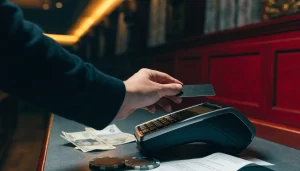
There is a further distinction between a site offering a method and the method being suitable for a particular deposit. The account may have a different limit, or the payment provider may present conditions during authorisation. I would not treat a successful appearance in a list as a promise that every transaction will complete. It is a check of availability, not a guarantee of acceptance.
The same standard applies when looking for a new Zimpler casino, an app, or a site described as outside GamStop: none of those labels proves that the cashier offers a usable Zimpler deposit route. Payment details cannot establish a site’s regulatory or self-exclusion status. Keep those questions separate.
The cleanest assessment is made in the live account, with the displayed method, amount range and setup controls in view. Promotional wording is only the front window. The cashier is the working counter.
What Online Casino Cashiers Actually Show
A payment summary can describe a market without establishing which methods work at a particular casino. In a specialist review of casino payment options, the methods reported across the websites included Visa, Mastercard, bank transfers, e-wallets and several cryptocurrencies. That is a useful outline of the categories in circulation. It is not a site-by-site confirmation of every method.
Zimpler is a named payment service, so a broad reference to e-wallets does not answer whether a casino accepts it. The category may cover several providers, and their availability can differ between operators. Nor does a list of familiar brands establish that every listed method appears in every cashier. The wording is easy to overread; the scope matters.
I have seen payment pages compressed into tidy rows of logos and labels. That presentation makes a portfolio look settled, although the underlying list may describe a general range rather than a live option for each customer. “Available payments” can mean the operator supports a method somewhere in its service, not that the method is offered for every account, transaction or market.
That distinction matters when searching for online casinos that accept Zimpler in the UK. A broad overview of casino payment methods cannot, by itself, confirm that Zimpler is among the options at a specific site. It also cannot establish whether Zimpler is accepted for deposits, withdrawals or both. Those are separate capabilities, not interchangeable meanings of a payment logo.
The same caution applies to claims about the “best” Zimpler casinos. A ranking based on general cashier information would imply a level of certainty that the information does not provide. Without a confirmed operator-specific listing, a reader cannot reliably tell which casinos take Zimpler, whether the service is currently offered, or whether a named casino pays out through it. The distinction is not pedantic. It is the difference between a market overview and a usable statement about one operator.

Payment categories also have different levels of detail. “Bank transfer” identifies a broad route; “e-wallet” identifies a type of service; a provider name identifies a particular brand. Moving from one level to another requires evidence. The presence of e-wallets in a general list does not turn every e-wallet into an accepted method, any more than the presence of card brands proves that every card product is supported.
So the answer to whether Zimpler can be used at UK online casinos is not contained in a general catalogue of payment types. Such a catalogue can show that several kinds of payment are reported across casino websites, while leaving the status of one named service unresolved at individual-operator level. Broad coverage, not confirmation.
Card Payments: Debit Only in the UK
Debit cards are a familiar way to fund a UK casino account. Visa and Mastercard debit cards are commonly accepted, but the card network alone does not tell the whole story: the product must be a debit card, and the live cashier must show it as available. A logo on a general payments page is not confirmation that a particular card can be used for gambling.
The distinction is about where the money comes from. A debit-card payment draws on funds in a bank account; a credit-card payment draws on credit. The UK prohibition applies to credit-card payments for gambling, and it has not been relaxed since it took effect on 14 April 2020. A casino cannot make such a payment acceptable simply by listing the same card network that also issues debit cards.
I have seen payment labels treated as if they settle the question. They do not. “Visa accepted” may describe debit-card compatibility, not permission to use a Visa credit card. Mastercard works the same way: the brand name is not the funding source. The card product matters.
There is also no workaround through an intermediary. Credit-card funds routed through a money service business remain credit-card funds for this purpose. Remote gambling licensees cannot accept gambling payments made this way, nor can they accept wallet payments where the wallet allows credit-card funds to be used for gambling. Adding a service between a card and the casino does not change the underlying source of the money.
That point matters when comparing online casinos accepting Zimpler payments with sites that take cards. Zimpler and a debit card are different payment routes; a search for casinos accepting Zimpler debit cards can blur them together. A payment method being mentioned alongside card options does not establish that it is itself a card, or that a casino accepts every type of card connected to a named network. Compatibility has to be read at the level of the actual payment route.
The same distinction applies on mobile. A mobile casino may display a card symbol or provide a payment screen, but neither presentation changes the UK rule. The relevant question is whether the transaction is funded by an eligible debit card rather than credit. No special mobile exception exists.

For players comparing payment options, the practical reading is straightforward: check whether the cashier identifies the card as debit, and do not infer credit-card acceptance from a Visa or Mastercard logo. A card that cannot be classified clearly should not be treated as an eligible gambling payment. The prohibition is not a technical preference or a bonus condition. It is a market rule.
“Cards accepted” is marketing shorthand. The funding source decides.
Slot Play and the UK Rules That Apply
A payment method does not change the rules that govern an online slot session in Britain. Whether an account is funded through Zimpler or another route, the game must operate within the requirements for UK-licensed remote gambling. That distinction matters: a cashier can show a deposit option, but it cannot make a slot’s features lawful if they conflict with the rules.
The clearest session-level restriction is autoplay. Online slot autoplay is banned in Britain, so a player must initiate each spin rather than start a sequence and leave it running. I have seen autoplay presented as a minor convenience, but its practical effect is to remove the pause between decisions. The ban makes that pause part of the session. No automatic sequence.
Each online slot spin must also last at least 2.5 seconds. This is a minimum duration, not a promise that every spin will take exactly that long. A faster animation does not alter the rule: the regulated game must meet the minimum. The requirement applies to the spin itself, not to how quickly a deposit reaches the account or how long a cashier takes to process a payment.
Autoplay
Prohibited in Britain; players must initiate every single spin manually.
Spin Duration
Each online slot spin must last a minimum of 2.5 seconds.
Stake Limits
Maximums are £5 for adults aged 25+ and £2 for those aged 18 to 24.
Stake limits also apply by age group. For customers aged 25 and over, the maximum stake is £5 per game cycle. For customers aged 18 to 24, the maximum is £2 per game cycle. The £5 limit for all adults came into effect on 9 April 2025; it did not remove the lower limit for younger adults. These are legal ceilings, not recommended amounts or indications of what a particular game will allow.
That can make promotional wording less informative than it appears. A slot may be described as fast, flexible or suited to mobile play, but those claims do not override the autoplay ban, minimum spin duration or stake cap. Nor do they establish that a particular title is available at a specific casino. I would separate the game’s presentation from the controls that govern play. Marketing describes the surface; the rules set the boundaries.
The same care applies to searches for the best slots at Zimpler casinos. A payment brand does not identify a game catalogue, and a general casino list cannot establish which titles are currently offered or how they are configured. No reliable ranking follows from the payment method alone. The useful check is whether the site is operating under the UK rules and whether the slot session behaves accordingly—not whether a page labels its games “best”.
For mobile play, the legal requirements do not become softer because the screen is smaller. Autoplay remains prohibited, spins still have to meet the minimum duration, and the age-based stake limits still apply. A mobile layout may change how controls are displayed, but not the rules behind them.

I treat these requirements as the baseline, not a feature of one payment option or one slot. They apply to the session regardless of how the account was funded. No workaround.
Other Ways to Fund an Online Casino Account
When Zimpler is not shown as a payment option, the alternatives fall into different categories. A bank transfer, a prepaid voucher and an e-wallet do not work in the same way, and a method mentioned in a general review is not proof that a particular casino accepts it. I separate the payment type from the question of whether it is available at a specific site.
A specialist review describes open banking and bank transfers as capable of supporting instant deposits and fast withdrawals at many sites. That is a report about the options it covered, not a promise about every casino or every transaction. The practical difference is that these routes connect a payment to a bank account, whereas a voucher or wallet has its own funding arrangement. “Fast” is not a complete payment description. Deposit and withdrawal handling can differ.
Paysafecard is a prepaid voucher, and its role is deposit-only. That distinction matters: it can fund an account, but it should not be treated as a route for receiving casino withdrawals. A method that works for putting money in is not automatically a full alternative to Zimpler if the aim is to use one payment route for both directions.
Alternative payment categories
- Bank transfers and open banking: Often support instant deposits and fast withdrawals.
- Prepaid vouchers (e.g., Paysafecard): Deposit-only options that cannot be used for withdrawals.
- E-wallets (e.g., Skrill, Neteller, Jeton): Site-specific availability with varying rules per provider.
E-wallet availability is also site-specific. A specialist review characterises Skrill as a widely used deposit choice among UK-facing casino sites in 2026, while describing Jeton as present at only a small number of UK online casinos that year. Those are attributed observations, not a directory of current cashiers. Skrill and Neteller are also reported as available at some sites; their presence should not be assumed at every operator. Different payment brands may have different rules, so the category alone does not settle whether a particular account can use one.
I would not call any of these the “best” Zimpler alternative without knowing what the payment needs to do. For a deposit-only arrangement, a prepaid voucher may fit; for a bank-linked route, open banking or a transfer may be relevant; and an e-wallet may suit someone who already uses that service. The label is not the cashier.
The useful comparison is therefore functional: whether the method is deposit-only or supports more, whether it is actually offered by the casino, and whether its terms suit the intended transaction. An online casino payment page can mention several familiar names while offering a narrower set of choices to a particular customer. So I treat lists of alternatives as a starting point, not evidence that Zimpler itself—or any substitute—is available. A short distinction, but an important one.
How to Confirm a Payment Method Is Accepted
A payment logo on a casino page is a clue, not confirmation. I treat the live cashier as the decision point: it shows the routes the account can actually use, rather than a broad list that may include methods unavailable in a particular market or account. For anyone checking whether a casino accepts Zimpler in the UK, that distinction matters. A mention elsewhere does not establish that Zimpler will appear as an available deposit option after registration.
The check should happen before money is committed. Open the cashier while signed in, select the deposit route and read the information shown for that method. The name needs to match the service being considered; a similarly described payment option is not necessarily the same route. If Zimpler is absent, it should not be treated as accepted simply because a page elsewhere refers to Zimpler casinos or Zimpler deposits.
There is a second check: whether the displayed method is usable with the particular account or payment product. A specialist review lists Visa and Mastercard among the methods found on casino sites, but that does not settle current UK availability or whether a specific card product is eligible. The cashier is the practical check for those details. A brand logo alone is not enough.
I learned to separate three questions that promotional pages tend to fold into one: is the method named, is it currently available to this account, and can the transaction be made using the customer’s own payment details? Those are different checks. A method can be described on a site yet not be offered in the active cashier; a listed card brand may not mean every card linked to it will work. No implied promise.
- Open the live cashier while signed in
- Verify the method name matches Zimpler exactly
- Check if the account and payment route belong to the same person
- Review any eligibility notes attached to the route
Ownership details are another source of avoidable friction. When the casino account information and the payment route belong to the same person, basic identity and ownership details are less likely to conflict during a transaction. In practice, the cleanest arrangement is often one named account used consistently for deposits and withdrawals. That does not guarantee a payment will be accepted, but it avoids introducing a mismatch that can prompt questions or delay handling.
The same principle applies when considering Zimpler pay or a Zimpler-linked account: the service must be available in the cashier, and the relevant account should belong to the casino customer. A search result, an old page, or a payment icon cannot establish either point. The active screen is the useful evidence.
I also check the cashier’s displayed conditions before submitting anything, including any eligibility notes attached to the route. If the method is not listed, or the ownership details do not line up, I would not treat a test transaction as a reliable way to find out. Start with what the account actually shows. No guesswork.
Withdrawals, Verification and the Return-to-Source Rule
A deposit method and a withdrawal method are not automatically interchangeable. A casino may show a payment option for deposits without offering it for payouts, and a Zimpler deposit alone does not establish that withdrawals can be sent back through Zimpler. That distinction matters when comparing claims about Zimpler casino withdrawals in the UK: the live cashier and the operator’s withdrawal terms need to confirm the route.
UK anti-money laundering controls generally require casino payouts to go back to the original payment source. This return-to-source approach helps operators check where funds came from and where they are going. In practice, the casino may first try to return a withdrawal through the method used for the deposit. If that route cannot handle the payout, the operator’s own rules determine what happens next; a different route may involve further checks.
No shortcut.
Withdrawal timing has two separate parts: the casino’s internal review and the time taken for the payment to reach its destination. A specialist casino-payment review notes that the operator’s approval process and the state of account verification can affect how long a payout takes. Those conditions are specific to the operator and account, not a fixed Zimpler withdrawal time that applies across casinos.
The first withdrawal can take longer while KYC is completed. An operator may need to finish checking account details before approving a payment, so a pending request does not necessarily mean the payment provider has already received it. From the counter side, that distinction is often where expectations go wrong: a displayed withdrawal request is not the same as an approved payout.
A Zimpler-branded route should therefore be assessed on both sides of the transaction. The cashier needs to show it as a withdrawal option, and the terms need to explain any conditions attached to the payout. If the casino accepts Zimpler only for deposits, the return-to-source process may lead to another method or an additional verification step. Payment branding alone cannot settle that question.
The practical point is simple: withdrawal availability and timing depend on the casino’s process, completed verification and the payment route it permits for returning funds. No universal instant-payout promise follows from using Zimpler.
Deposit Speed, Payout Timing and Currency Costs
A deposit confirmation and a withdrawal arriving in a bank account are separate stages. A specialist casino review describes card deposits as potentially instant, while a payout may take several business days. That difference is not a contradiction: the deposit is authorised at the point of payment, whereas a withdrawal may still be awaiting the casino’s approval and the receiving payment route’s processing.
The same distinction matters when considering Zimpler. A payment method’s deposit speed does not establish how quickly a later withdrawal will reach a bank account. Timing depends on the withdrawal route and the steps that follow a request. A fast balance update is only the first part of the transaction.
Bank transfers have their own timing variables. A specialist review identifies bank cut-off times, weekends and currency conversion as factors that can affect delivery. A transfer initiated after a bank’s processing cut-off may not move through the same cycle as one submitted earlier; weekends can also interrupt banking processes. Conversion adds another step where the casino account and receiving bank account use different currencies. No single arrival time follows from the words “bank transfer”.
Currency deserves attention before the first deposit, not only when a withdrawal is pending. A specialist review reports that GBP is supported on the pages it assessed, but that does not establish the currency setting of every casino account. The account currency should be confirmed before money is moved. If the account is set to another currency, a deposit or withdrawal may involve conversion, with the resulting amount affected by the exchange rate applied.
I have seen “instant” do a lot of work in payment copy. It may describe the deposit authorisation, not the whole journey from casino balance to bank account. The practical comparison is therefore between the stated deposit route, the withdrawal route, the casino’s processing stage and any conversion involved. Speed is not one clock.

GamStop Status and the Limits of Payment Information
A casino cashier can show whether a payment route is offered; it cannot establish whether the operator is connected to GamStop. Zimpler’s presence, absence or branding says nothing reliable about a site’s self-exclusion arrangements. The same applies to claims that a payment method identifies casinos outside GamStop or makes a site unaffected by an exclusion.
I have seen payment details treated as a shortcut to judging an operator. It is the wrong signal. Payment acceptance is a transaction feature, not evidence of a licence, a particular exclusion status or suitability for someone who has chosen to stop gambling. A site advertising Zimpler is not, on that basis, a safe alternative to a self-exclusion decision.
For customers in Great Britain, remote gambling licensees must hold the relevant UK Gambling Commission licence. UK-licensed casinos must provide responsible-gambling tools, including self-exclusion. That obligation belongs to the operator; it is not created or removed by the payment method. Payment information alone cannot confirm how a particular site applies an exclusion or whether it is covered by one.
There is a separate requirement before play begins: remote operators must prompt new customers to set a financial limit before their first deposit and provide accessible controls for managing account-level limits. These controls are part of the licensed operator’s responsibilities. A deposit option cannot replace them.
When assessing a site’s status, the relevant evidence is the operator’s licensing and self-exclusion information, not a list of accepted methods or a claim about Zimpler slots. If self-exclusion is being used, looking for a payment route said to avoid it runs against the purpose of that protection. No payment label changes that.
Why must withdrawals return to the deposit method?
UK casinos commonly return withdrawals to the original payment source as an anti-fraud and anti-money-laundering measure. An alternative route may require additional verification.
What is the fastest withdrawal method for UK casinos?
PayPal, open banking services and debit cards linked to fast payout systems are generally among the quickest. The casino’s approval process and your verification status also affect how soon funds arrive.
Are fast casino withdrawals guaranteed?
No. Withdrawal speed depends on the casino’s approval process and whether your account is fully verified; first withdrawals can take longer while checks are completed.
Is Skrill available?
Yes, Skrill is available at some UK-friendly casino sites. It is often excluded from promotions, so check the terms of the specific offer.
What is the current minimum deposit?
Minimum deposits usually start at £10–£20, depending on the payment method.
Which method has the lowest fees?
There is no universal lowest-fee method. Compare casino and provider charges, any exchange-rate spread, and network costs for the amount you plan to deposit or withdraw.
Casino Payments in the UK: Deposits and Withdrawals
Content created by the «Bentelbrothers.com» team