
Understand the limits before paying through your phone
 Available in US
Boku routes a casino deposit through a mobile operator, charging a bill or available PAYG credit rather than creating a separate wallet.

What a Pay-by-Phone Deposit Actually Does
Boku is a way to put money into a casino account by charging the payment to a mobile connection. It is not a separate casino balance, a general-purpose wallet or a substitute for registering with the casino. The casino account remains where the funds are held for play; Boku is the route used to fund it.
That distinction is easy to miss in a cashier. A payment method may appear alongside cards and other options, giving the impression that it works like an account in its own right. It does not. Boku links the deposit to the mobile phone number entered during payment, then routes the charge through the mobile operator. Depending on the phone plan, the amount is added to the bill or taken from available pay-as-you-go credit.
I find it useful to separate the two sides of the transaction. On one side is the casino account, which records the deposit. On the other is the mobile account, which carries the charge. Boku connects them for that payment; it does not merge them. The mobile bill is not a casino wallet, and a phone number is not a replacement for the casino’s account details.
Pay n play can make getting started at an online casino feel more straightforward, but payout arrangements are also worth checking. This list provides a quick reference to the payout speed stated for each operator.
-
Dieselwin
- Payout speed
- 1-3 business days
Dieselwin lists a payout speed of 1–3 business days.
-
Chanze
- Payout speed
- 1-3 business days
Chanze lists a payout speed of 1–3 business days.
-
EvoSpin
- Payout speed
- 1-3 business days
EvoSpin lists a payout speed of 1–3 business days.
-
SpinFormula
- Payout speed
- 1-3 business days
SpinFormula lists a payout speed of 1–3 business days.
-
Jetsetspins
- Payout speed
- 1-3 business days
Jetsetspins lists a payout speed of 1–3 business days.
-
x3bet
- Payout speed
- 1-3 business days
x3bet lists a payout speed of 1–3 business days.
-
Britsino
- Payout speed
- 1-3 business days
Britsino lists a payout speed of 1–3 business days.
-
Revery Play
- Payout speed
- 1-3 business days
Revery Play lists a payout speed of 1–3 business days.
-
Amunbet
- Payout speed
- 1-3 business days
Amunbet lists a payout speed of 1–3 business days.
-
Zombillion
- Payout speed
- 1-3 business days
Zombillion lists a payout speed of 1–3 business days.
Where the charge goes
For someone on a monthly plan, a Boku deposit is charged to the mobile phone bill. The casino receives a deposit through the payment process, while the player’s mobile operator places the corresponding charge on the bill. The practical result is that the payment is associated with the phone service rather than being taken directly from a bank account at the point of deposit.
For a pay-as-you-go customer, the same basic idea applies, but the charge comes from the available phone credit. That makes the source of funds different, not the purpose of Boku: it still pays for a casino deposit. If the payment is being considered as a way to avoid entering card details, that distinction matters. The payment has not become anonymous cash or an independent online balance; it is tied to the mobile account used for the transaction.
The arrangement can feel direct because the phone is both the device used to access the casino and the channel through which the charge is made. But those are separate roles. A phone can display the casino site, receive a text and identify the mobile account being billed, while the casino continues to maintain its own player account and deposit record.
A payment route, not a casino account
“Pay by Phone” describes how a deposit is funded, not a different kind of casino. The casino still holds the customer account, applies its account rules and records the money deposited. Boku does not create a second gambling account or store a general-purpose balance that can be spent across unrelated services.

That matters when comparing casinos that accept this type of deposit. The presence of Boku in a cashier tells only part of the story: it identifies a possible way to fund an account. It does not, by itself, say anything about the casino’s games, account conditions or whether a particular player can use the method. The payment option also does not change the need for the casino account to be properly registered.
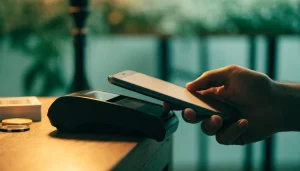
The process itself follows that narrow purpose. In the casino cashier, the player selects Boku, enters the deposit amount and provides a mobile number. A verification code is then sent by SMS, and the player confirms the payment through that code. The text is part of authorising the phone-linked transaction. It is not a new casino login or a sign that Boku has opened a separate account.
This is why an unsuccessful payment can be confusing: the casino and the mobile account are involved in the same transaction, but they are not the same system. The cashier is where the deposit is requested; the mobile operator is where the charge is applied. The account receiving the funds remains the casino account.
There is a small but important piece of discipline in the wording. A casino may describe Boku as a way to deposit “by phone”, but that should not be read as meaning that all casino activity happens through the phone bill. The bill covers the payment. The casino account covers the deposit and subsequent play. One route in. Two separate records.
Before depositing, the casino’s UK Gambling Commission licence should be checked on the regulator’s public register. That check concerns the operator, not Boku: using a mobile-billed payment method does not establish that a casino is authorised to serve customers in Great Britain.
The cleanest mental model is straightforward. Boku carries a casino deposit to the mobile account for billing or deduction from PAYG credit. It does not become a casino wallet, and it does not replace the casino account. A payment channel, not an account.
Why UK Availability Has Narrowed
The number of British casinos offering Boku has contracted since 2023. Specialist casino reviews describe operators moving away from it, with some introducing other Pay by Phone services and others removing phone-based deposits altogether. The change is real, but its cause is easy to misstate: the UK Gambling Commission did not introduce a rule banning Boku by name.
The distinction matters. A cashier that no longer shows Boku reflects an operator’s payment and compliance decision, not necessarily a new prohibition on that particular payment brand. Operators decide which services to support within the rules that apply to their gambling business. If the commercial or compliance case for a payment method changes, the operator can remove it without a regulator having singled it out.
From inside the industry, a payment option is never just a button in a cashier. The operator has to be satisfied that the arrangement works with its compliance controls and obligations. A provider can therefore disappear from a casino’s payment menu even when the underlying payment method remains available elsewhere. “Pay by phone” is not one universal facility; availability depends on the relationship between the payment provider, the operator and the customer’s network.

That is why broad claims about all UK casinos accepting Pay by Phone can mislead. A brand may have offered Boku previously, or support another phone-billing service now, without accepting Boku deposits. The payment options can also differ between operators that appear to belong to the same market. A shrinking list is not the same thing as a UK-wide ban.
The licensing question is separate
Payment availability does not establish whether a casino may lawfully serve customers in Great Britain. The relevant check is the operator’s gambling licence. The UK Gambling Commission regulates commercial gambling in Great Britain, including remote gambling offered to consumers there. That responsibility applies regardless of where the operator’s key equipment is located.
The Commission issues operating licences to gambling businesses and personal licences to individuals performing relevant roles. For a player assessing an online casino, the operating licence is the central point: a business offering remote gambling to Great Britain must hold the appropriate UKGC licence. The Commission is the sole regulator for commercial gambling in Great Britain.
I treat the licence and the cashier as two different checks. The licence concerns whether the operator is authorised to offer gambling in the market; the cashier shows which deposit methods that operator currently makes available. Finding Boku in a cashier does not replace checking the licence, and a valid licence does not mean Boku must be offered.
The Commission’s remit is often shortened in casual discussion to “UK regulation”, but the relevant remote-gambling requirement is specifically tied to consumers in Great Britain. The Gambling Act 2005 governs gambling in England, Wales and Scotland, rather than Northern Ireland. That distinction is useful when reading statements about where a licence applies; it does not turn a payment provider into a regulator or make its availability a licensing test.
Why operators can remove it
When a casino drops Boku, the decision sits with that operator. Compliance risk is one reason operators have chosen to move away from the service, but it should not be confused with a regulator’s direct instruction to remove Boku. The regulator sets the framework for licensed gambling businesses; operators make decisions about the payment methods they can support within that framework.
The practical result is uneven availability. Some licensed casinos may retain Boku, some may offer a different Pay by Phone service, and some may not provide phone-based deposits at all. Those categories can shift as operators review their payment arrangements. An old review or a general statement that a casino accepts mobile payments may not establish that Boku is currently available in its cashier.
For that reason, “casinos that accept Pay by Phone” and “casinos that accept Boku” are not interchangeable descriptions. The first can include services other than Boku; the second refers to the specific payment method. The same care applies to claims about casinos that accept Pay by Phone payments in Britain: the operator’s current cashier and licence status are separate facts, and both matter.
A smaller market, not a named ban.
Transaction Caps, Network Limits and PAYG Balance
A Boku deposit can be constrained at more than one point: by the amount a casino permits in a single transaction, by a mobile network’s rules, and, for Pay As You Go (PAYG) customers, by the credit left on the phone. These limits are not interchangeable. A deposit that fits the casino’s cashier may still be refused by the network.

Published figures do not line up neatly. One specialist review describes £30 as the standard UK per-transaction limit, with some casinos or networks allowing £40 or £50. Other specialist reviews give a different picture: one puts the network-level allowance at about £10 per transaction and £30 per day; another gives a £30 daily limit without specifying a separate transaction cap. That is a genuine disagreement, not a set of figures that can be combined into a dependable universal ceiling.
I would treat any stated figure as an indication of the arrangement described by that particular review, not as a promise that applies across casinos and networks. Boku availability and limits can depend on the operator and mobile provider involved. A cashier may set a maximum for one deposit, while the network applies its own controls to the total charged over a period. The two checks may therefore produce different answers.
Casino cap and network allowance
A per-transaction cap concerns one payment request. A daily network limit concerns the accumulated amount charged through the mobile account during the day. Where the network limit is reached, splitting a deposit into smaller requests does not necessarily get around it: the provider may count the total rather than assess each request in isolation.
The distinction matters when a casino displays a higher maximum than a payment method can actually pass. The casino controls what it is willing to accept in its cashier; the mobile provider can still decline a payment under its own limit. A specialist review attributes Boku’s daily deposit controls to the mobile operator rather than the casino, but that should not be read as proof that every provider applies one identical rule. The practical limit is the one that applies to the account and transaction at the time.
Boku deposit limits
Limits can be imposed at three different levels: the casino's per-transaction cap, the mobile network's daily or per-payment allowance, and for PAYG customers, the available prepaid phone credit.
This is why a single headline maximum can be misleading. It may describe the casino’s permitted amount, a network’s per-payment threshold, or its daily allowance. Those are different controls. A displayed casino limit does not override a mobile-network restriction, and a network limit does not mean every casino will accept a deposit of that size.
The extra constraint on PAYG
PAYG adds a balance check. A specialist review states that a prepaid customer cannot use Boku to deposit more than the credit remaining on the phone. That is separate from both the casino cap and any network-level allowance: even if those limits would permit a payment, insufficient prepaid credit can prevent it from going through.
For instance, a balance below the requested deposit amount cannot cover the charge. The transaction may be declined rather than partially funded. The available credit is therefore a ceiling of its own, and it can change as the phone is used or topped up.
Monthly-billed customers and PAYG customers do not face precisely the same balance constraint. With a monthly bill, the charge is added to the mobile account; with PAYG, it comes out of existing credit. In either case, the casino’s displayed maximum is only one part of the calculation.
In practice, there is no single figure that can safely be applied to every Boku deposit. The relevant limits may come from different parties, and the published accounts disagree on the exact thresholds. Separate controls.

Bonuses and the Conditions Behind the Offer
A welcome offer and a payment method are separate parts of a casino account. The promotional page may advertise a deposit match, but that does not establish that every way of funding the account qualifies. In my experience, the decisive wording sits in the offer terms: a deposit can reach the balance successfully and still fail to trigger the promotion.
Pay by Phone deposits, including Boku, may be excluded from welcome bonuses. Operators set their own qualifying-payment rules, so eligibility varies rather than following a common industry standard. A specialist review reported that MrQ, Duelz, Mr Vegas and Videoslots accepted pay-by-phone deposits for bonus eligibility. Treat that as an operator-specific finding, not a blanket promise: offers and terms can change, and the cashier’s availability of Boku does not itself prove that a particular promotion applies.
That distinction is easy to miss. “Deposit match” describes the promotional calculation, not the conditions for earning it. One specialist review described a UK welcome offer matching a deposit pound for pound, up to £100, with wagering set at 35 times the bonus. Those figures are an illustration of the terms reported in that review, not a standard that every casino follows. The wagering requirement, qualifying deposit methods and eligible games all need to be read as part of the same offer.
The same caution applies to expiry. A specialist review reported bonus funds expiring after 30 days and bonus spins after 72 hours. Such deadlines are offer conditions, not universal timers attached to Boku. A promotion can have different rules, or there may be no promotion attached to the deposit at all. Small print. Important small print.
Do
- Check the exact promotion terms before depositing
- Look for qualifying deposit conditions
- Verify payment-method exclusions in the small print
Don't
- Infer bonus eligibility from a banner
- Assume Boku qualifies for all welcome offers
- Rely on the presence of Boku in the cashier as proof of a bonus
A specialist review of the platforms it assessed found no Boku-specific deposit restrictions, while also noting that Boku deposits did not generally come with a dedicated bonus. That does not mean a Boku transaction automatically qualifies for every welcome offer. It means the payment method may be accepted without a separate Boku promotion or restriction on those assessed platforms; the offer’s own terms remain decisive.
I would check the exact promotion before making a deposit, rather than infer eligibility from a banner or from seeing Boku in the cashier. Look for any payment-method exclusions, the qualifying deposit conditions and the rules for using or retaining bonus funds. If the wording does not clearly include Pay by Phone, the safer reading is that eligibility has not been established. A normal deposit and a bonus-qualifying deposit are not always the same transaction in the operator’s accounting.
Online Casinos: Where Boku Still Fits
There are online casinos where Boku has been reported as a deposit option, but the list is small and should be treated as a snapshot rather than a permanent directory. A specialist casino review identified BoyleSports, Sun Bingo, William Hill, Sky Vegas, PlayOJO, Genting Casino, Betfred, Lottoland, bwin and 888 Casino among operators accepting Boku deposits. The same review described BoyleSports as having added Boku to its cashier as a UK-based payment option.
That is a useful starting point, not a guarantee that the method will appear for every account. Payment menus change, and an operator may alter its options without changing its wider casino service. I have seen this distinction matter in practice: a brand can remain available while a particular payment route disappears from the cashier. Check the live cashier before planning a deposit.
A separate specialist review described the remaining direct-Boku choices as a small, identifiable group, including Jackpot Mobile Casino and Peachy Games. It is a narrow corner of the UK online-casino market, not a broad payment network accepted across most sites. The names provide leads, not a ranking; suitability depends on the operator’s current terms and the payment choices actually displayed.

There is also a terminology trap. “Pay n Play” can suggest a particular account-opening or instant-play model, while Boku is a Pay by Phone deposit method. A casino accepting Boku is not, on that basis alone, a Pay n Play casino in the broader product sense. Nor does Boku make a debit card or bank account part of the deposit: its role is simply as a payment option at participating sites.
The practical test is operator-specific. Confirm that the casino currently offers Boku to UK customers, and verify its valid UK Gambling Commission licence on the Commission’s public register before depositing. A familiar brand name is not a substitute for checking the licence attached to the service being used. Operators serving Great Britain with remote gambling must hold the relevant Commission licence, wherever their key equipment is located.
I would treat any published list as a shortlist to verify, not as a promise of availability. If Boku is absent from the cashier, the name appearing in a review does not make it available for that account or at that moment. The same caution applies to sites described as accepting Pay by Phone: the label may refer to a different provider, rather than Boku itself.
Small market. Changing menus.
Other Ways to Pay by Mobile
When a casino removes Boku, that does not necessarily mean it has stopped taking payments through a phone. Some operators have switched to another Pay by Phone service; others have removed the option altogether. Specialist reviews tracking payment methods describe this shift as having gathered pace since 2023, with Fonix and Siru Mobile among the replacements. The cashier is the deciding point: a service’s availability elsewhere does not mean it is enabled at every casino.
The operator examples reported in specialist reviews split between the two services. MrQ and Duelz are associated with Fonix, while Mr Vegas and Videoslots are reported to offer Siru Mobile. These are alternatives to a direct Boku deposit, not different names for the same payment route. A casino may support one provider and not another, so the useful check is the payment menu on the specific account, rather than an assumption that phone billing is universal.

That distinction matters in practice. “Pay by mobile” can sound like one broad payment option; in a cashier it means a particular provider, with its own availability at that operator. A familiar casino name is not enough to establish which route it currently offers. Payment menus change. Check the listed provider before planning a deposit, and confirm that the method is available for the account being used.
There is also an indirect route described in specialist payment reviews: Boku can be used to add funds to a Neteller balance, and Neteller can then be used at casinos that accept it. This is not the same as paying the casino directly with Boku. The first transaction funds the e-wallet; the later transaction is made from Neteller. In other words, Neteller becomes the payment method the casino sees.
That route depends on both steps being available. Boku must be usable for funding Neteller, and the chosen casino must accept Neteller. If either link is absent, the chain does not work. It should not be read as a way to make Boku available in every cashier, nor as a guarantee that a particular deposit will be accepted.

From the operator side, the difference is straightforward: a direct Pay by Phone payment and an e-wallet deposit arrive through different payment channels. The label on the cashier matters more than the phone being involved somewhere in the process. I would treat any route described as an “alternative” as a separate method to verify, not as a promise of interchangeable access. Practical distinction.
Mobile Billing, Debit Cards and Credit-Card Restrictions
“Pay n play card” can suggest that a deposit is taken from a bank card. Boku works differently: the charge goes to the mobile phone bill, or comes out of available PAYG credit. A debit card is a separate payment route, not another name for a Boku transaction. That distinction matters in a casino cashier, where payment methods may appear beside one another even though they draw on different accounts.
In my experience, the label does more selling than explaining. “Pay by Phone” describes the billing route; it does not mean that a casino has authorised a debit-card payment or that a card is unnecessary for every part of an account. Boku is tied to the mobile number and the network account behind it. A debit-card payment instead comes from the card account. Similar-looking buttons, different source of funds.
Other Pay by Phone services also depend on network support. EE, O2, Vodafone and Three support Pay by Mobile and Fonix. That is useful context when comparing mobile-billing options, but it does not turn those services into card payments. Nor does network support by itself confirm that a particular casino offers a service: the cashier’s available methods still determine what can be used for that account.
Credit cards are different again, because UK gambling rules restrict their use for gambling. A remote gambling operator must not take a credit-card payment for gambling, including where the card is routed through a money service business. A wallet cannot be used as a workaround if it lets credit-card funds pay for gambling. The restriction concerns the source of the money, not merely the name of the payment button.
Debit cards are not covered by that credit-card prohibition, but they remain distinct from Pay by Phone. When a cashier offers both, choosing a debit card does not make the transaction a Boku deposit, and selecting Boku does not charge the bank card. I treat those as separate rails, not interchangeable versions of “pay n play”.
For any real-money deposit, the operator must hold a current UK Gambling Commission licence to serve Great Britain. The licence check and the payment choice answer different questions: one concerns whether the casino may lawfully operate, the other how a deposit is funded. Keep them separate.
Withdrawals Need a Separate Payment Route
Boku handles the money going into a casino account, not the money coming back out. It is a deposit-only method: winnings cannot be sent to a Boku balance or added to a phone bill as a withdrawal. That distinction matters when comparing pay-by-phone casinos. A deposit option does not mean the same payment route is available in both directions.

In practice, a separate withdrawal method has to be registered with the casino when depositing through Boku. Depending on the operator, that might be a debit card, an e-wallet or a bank transfer. The casino’s cashier and account rules determine which methods can be linked and used for payouts. Boku itself does not provide a route for cashing out.
I have seen payment labels make this less obvious than it should be. A cashier may show Boku alongside other methods, but that list describes ways to fund an account, not necessarily ways to withdraw from it. The withdrawal page is a separate part of the process. Check that an eligible payout method is available and registered before relying on a Boku deposit. Otherwise, a balance may be ready to withdraw while the account still needs another payment route set up.
This also puts claims about “instant” or “fast” withdrawals into perspective. Choosing Boku for a deposit does not make a casino pay winnings through Boku, nor does it establish how quickly a different method will be processed. Payout timing depends on the casino’s withdrawal process and the selected route; the deposit method alone cannot settle that question. No shortcut.
For UK players, the operator must also be checked independently of its payment options. Before depositing, verify its current UK Gambling Commission licence number on the Commission’s public register. A familiar cashier method is not evidence of a valid licence.
The practical sequence is straightforward: identify an available withdrawal route, register it with the casino, and understand that route’s conditions before making a deposit. Pay by Phone can serve the funding side, but it does not complete the payout side. A casino offering Boku deposits is therefore not, on that basis, a casino offering direct Boku withdrawals.
Making a Boku Deposit in the Casino Cashier
A Boku deposit is made from the casino’s cashier, but the steps are specific to Pay by Phone. It is not a general-purpose account to select elsewhere and then use at the casino. The payment begins inside the operator’s deposit screen.
After signing in, open the cashier and choose Boku from the payment methods shown. Enter the amount the cashier accepts, then provide the mobile number that will be used for the transaction. Take care over the number: the SMS confirmation is sent to that phone, so an error can stop the payment before it is authorised.
Boku then sends a verification code by text. Enter the code in the casino’s confirmation screen to approve the deposit. Until that step is completed, selecting the method and submitting the details has not finished the transaction. The cashier should display the result once the confirmation has gone through.
A specialist review describes Boku deposits as available only in amounts divisible by ten, giving £10, £20 and £30 as examples. That is a report of the accepted increments, not a promise that every cashier will present the same amount buttons. The options visible in the chosen casino’s cashier determine what can be submitted there.
This distinction matters for searches about a £5 Pay N Play deposit. A Boku cashier using the reported increments would not offer £5 as an amount; the label Pay N Play does not change the steps or the available denominations of a Boku transaction. The relevant method is the one actually listed by the casino.
If the cashier does not show Boku, there is no Boku deposit to complete through that screen. If the SMS does not arrive or the code is rejected, the transaction has not been confirmed; the issue is with that payment attempt, rather than a separate casino account needing to be funded first. Keep the process simple: select the method, enter the details, and confirm by text. No extra wallet step.
Using Pay-by-Phone Deposits for Online Slots
A Boku deposit can fund real-money online slots, but it does not change how the game works or the rules that apply to play in Britain. The payment is one part of the casino account; the slot remains subject to the same controls as if it had been funded by another permitted method. “Pay n play” can sound like a different kind of gambling. It is not.
I have seen payment labels do too much work in casino marketing. A Pay by Phone option describes how money reaches the account, not whether a slot is free, how its features operate or what conditions attach to an offer. Free-play versions and real-money games are separate choices. A deposit does not turn a free slot into a cash game, nor does it make a real-money game exempt from British rules.
For online slots, autoplay is banned in Britain. Each spin must also last at least 2.5 seconds. Those requirements apply regardless of whether the account was funded through Boku or another payment route. A phone-bill deposit cannot shorten a spin or enable automatic play. The game rules stay put.
Stake limits apply as well: the maximum stake per game cycle is £5 for customers aged 25 and over, and £2 for those aged 18 to 24. These are rules about slot play, not Boku transaction limits. Keeping the two separate matters; a payment cap does not describe the permitted stake on a game.
A slot bonus is another separate layer. One specialist review reports that bonus funds expire within 30 days and bonus spins within 72 hours, but those timings should not be treated as a universal rule. The operator’s own terms determine the conditions attached to a particular offer. Payment and promotion are different questions.
So the practical distinction is simple: Boku may fund a slot balance where the casino accepts it, while the game remains governed by the same British slot rules. No special payment exception.
What are the deposit limits at pay-by-mobile casinos?
Boku deposits are usually capped at £30 per transaction, although some casinos or networks may allow £40 or £50. Network-level limits can be about £10 per transaction and £30 per day, and PAYG deposits are also limited by your remaining phone credit.
Are Boku casinos still available in the UK in 2026?
Yes, a small number of UKGC-licensed casinos still accept Boku, although availability has declined since 2023. Some operators have switched to services such as Fonix or Siru Mobile, while others have removed pay-by-mobile deposits.
Are there any Boku casinos left in the UK?
Yes. Jackpot Mobile Casino and Peachy Games are among the remaining sites identified as accepting direct Boku deposits.
Why might a Boku deposit be declined?
A deposit may fail if it exceeds the applicable transaction or daily limit, or if a PAYG account does not have enough remaining credit. Boku payments also require confirmation using the SMS verification code.
Casino Payments in the UK: Deposits and Withdrawals
Content created by the «Bentelbrothers.com» team