
Choose a payment route beyond the Ukash label
 Available in US
Compare prepaid vouchers, cards and e-wallets by how they fund deposits and whether they can also support withdrawals.

If Ukash Is Not in the Cashier, What Can Replace It?
A missing voucher option does not point to one universal substitute. The alternatives work differently: some use a prepaid balance, some draw from a bank account or card, and some sit between the player and the casino as an e-wallet. The practical choice depends on whether the priority is keeping spending separate from a bank account, using a familiar payment route, or choosing a method that can also handle withdrawals.
Paysafecard is the closest match in form to a prepaid voucher. It is bought in advance and used to make deposits, rather than drawing directly on a debit card or bank account. The important distinction is that Paysafecard is deposit-only. It can serve as a way to fund play, but it should not be treated as a complete deposit-and-payout route.
That difference matters more than branding. A voucher can separate the casino transaction from a bank card, but a deposit-only method does not provide the same payment journey as an account or card that may also be available for withdrawals. A voucher alternative is not automatically an equivalent alternative.
When looking for a UK casino that accepts Ukash, check that the payment method is currently available to you before signing up. The verdicts below reflect only the payout-speed information provided.
-
Dieselwin
- Payout speed
- 1-3 business days
The provided information lists payouts taking 1–3 business days. Ukash acceptance is not confirmed here.
-
Chanze
- Payout speed
- 1-3 business days
The provided information lists payouts taking 1–3 business days. Ukash acceptance is not confirmed here.
-
EvoSpin
- Payout speed
- 1-3 business days
The provided information lists payouts taking 1–3 business days. Ukash acceptance is not confirmed here.
-
SpinFormula
- Payout speed
- 1-3 business days
The provided information lists payouts taking 1–3 business days. Ukash acceptance is not confirmed here.
-
Jetsetspins
- Payout speed
- 1-3 business days
The provided information lists payouts taking 1–3 business days. Ukash acceptance is not confirmed here.
-
x3bet
- Payout speed
- 1-3 business days
The provided information lists payouts taking 1–3 business days. Ukash acceptance is not confirmed here.
-
Britsino
- Payout speed
- 1-3 business days
The provided information lists payouts taking 1–3 business days. Ukash acceptance is not confirmed here.
-
Revery Play
- Payout speed
- 1-3 business days
The provided information lists payouts taking 1–3 business days. Ukash acceptance is not confirmed here.
-
Amunbet
- Payout speed
- 1-3 business days
The provided information lists payouts taking 1–3 business days. Ukash acceptance is not confirmed here.
-
Zombillion
- Payout speed
- 1-3 business days
The provided information lists payouts taking 1–3 business days. Ukash acceptance is not confirmed here.
Debit cards: familiar, but not prepaid
Debit cards are a common casino payment option in the UK, including Visa and Mastercard. Unlike a voucher, a debit card accesses funds in a bank account. It is a direct route rather than a stored prepaid balance, which may suit someone who values using a familiar payment instrument over keeping a separate voucher balance.
Credit-card payments for gambling are not permitted at UK-licensed casinos. That restriction also covers credit-card funds routed through a money service business, so a wallet or intermediary should not be assumed to make a credit-funded payment acceptable. The distinction is between a debit card linked to available funds and credit used for gambling.
Apple Pay is another possible deposit route: some UKGC-licensed casinos accept it. Availability is not universal, and its presence does not establish that it can receive withdrawals. It is better understood as an additional way to fund a casino account than as a prepaid voucher in another form.
E-wallets: an account between the bank and casino
PayPal, Skrill and Neteller are separate account-based options rather than vouchers. A specialist review describes PayPal as valued for speed and convenience, while noting that a casino may exclude PayPal deposits from bonus eligibility. That is a condition to check against the casino’s own promotion terms, not a fixed rule across the market.

A specialist review also reports Skrill and Neteller at some sites and says they are often left out of promotions. Their attraction is the separate payment account; the trade-off may be that a promotion does not apply to a deposit made through that route. Payment method and bonus terms therefore need to be considered together. “Bonus eligible” is not a property of the wallet itself.
Bank-based options
Open banking and bank transfers connect the payment more directly to a bank account. A specialist review reports that these routes can provide instant deposits and fast withdrawals at many sites. That makes them a different sort of alternative from a voucher: they are not a prepaid balance, but a bank-based payment channel.
The wording “fast” still needs context. A deposit and a withdrawal are separate transactions, and processing can depend on the casino as well as the payment route. The review’s description is not a promise for every operator or account.
For a voucher-like structure, Paysafecard is the clearest comparison among these options, with the limitation that it is deposit-only. For a familiar bank-linked payment, a debit card is more direct; an e-wallet places an account between the bank and casino; open banking and bank transfers use a bank-based route. No single method reproduces every feature of a prepaid voucher.
That is the useful distinction. Replacement means choosing which part of the voucher experience matters, not assuming that one named service has taken its place.
Why a Casino’s Payment Page Matters More Than Its Ukash Label
A payment method named on a casino’s promotional page is not the same thing as a route available to every customer. The cashier is where the operator presents the options that can be used for that account and transaction. That distinction matters when a site carries an old Ukash reference, a general payment logo or a broad claim about supported methods: none of those, by itself, confirms what can be selected at the point of deposit.
I have seen payment information treated as if it were fixed site-wide. In practice, a payment page is a live part of the account journey, not merely a list of brand names. Options can depend on whether the account is being used in the UK, the payment product involved and the casino’s current arrangements. A method mentioned in a review or on a landing page may therefore not appear in a particular cashier. The label is not the transaction.
This also explains why two casinos can present different choices even when their general descriptions sound similar. Each remote gambling licensee decides which routes to make available and how to display them. A payment provider may be supported by one operator and absent from another; a method might be listed on an information page while the cashier shows a narrower set of options. The practical question is not whether the name appears somewhere on the site, but whether the relevant route is actually offered in the account.
The cashier is the useful reference point
A specialist casino review can be useful for orientation, but its payment details are not a substitute for the operator’s current cashier. Reviews can describe a site at a particular point in time, while payment arrangements and eligibility can change. The cashier connects the stated method to the account’s available transaction route. That is the detail that advertising copy tends to flatten.

Card information needs the same care. UK casino descriptions commonly refer to Visa and Mastercard, but a specialist review’s list does not establish that every card product is accepted for every UK account. Current availability and card-product eligibility need to be checked in the cashier. The distinction is operational, not cosmetic: a familiar card logo does not prove that the specific card can be used for gambling deposits.
The same principle applies to newer-looking payment buttons. Some casinos licensed by the UK Gambling Commission accept Apple Pay for deposits, but that does not make it a universal option. Its presence at one operator cannot be carried over to another, and a mention on a general page does not establish that it is available to every account. The cashier is the site-level confirmation.
A payment page also has to be read in context. A method may appear as a deposit option without being shown as a withdrawal route. The two functions should not be assumed to match. A name in the cashier tells what the casino is currently offering in that part of the transaction; it does not, on its own, describe every stage of the player journey. That difference is easy to miss when a page reduces payments to a row of logos.
Labels can outlast arrangements
A Ukash label can remain visible in older text or an archived promotion after the practical payment route has changed. It may also be used loosely in material that does not explain how a transaction would actually be made. Neither situation establishes that the cashier supports Ukash now. The operator’s current payment interface carries more weight than a label whose date and meaning are unclear.
This is why a casino’s payment page matters more than its Ukash branding. It reflects the choices the operator is presenting at the point where a deposit would be set up, rather than what a headline once claimed. Even then, the displayed options are only one part of a UK casino’s standing: remote gambling licensees serving the British market must hold the relevant UK Gambling Commission licence. A payment logo does not establish that status.
From the counter side, the cleanest interpretation is a narrow one. A site may advertise a method; a review may repeat it; a logo may still be visible. Those are clues, not confirmation. The cashier is the operational check.
Labels travel. Options change.
Using Prepaid Payments on Mobile and for Casino Play
A prepaid payment is a way to fund a casino account, not a feature attached to a particular game. If a casino’s cashier offers a voucher method and accepts it for the account, the deposit route is separate from whether play takes place on a desktop, phone or tablet. Slots and live casino games use the casino balance; the payment method does not, by itself, determine which games that balance can be used for.
That distinction matters on mobile. A site may have a mobile-friendly cashier, but the presence of a payment logo elsewhere on the site does not show that the method can be completed in the mobile version. The relevant point is whether the deposit screen presents the method and lets the transaction proceed. A voucher may require information to be entered or a provider page to open, so the practical experience depends on the payment flow the casino makes available on that device.

I separate the device question from the method question. A phone can display a cashier without supporting every route shown on a desktop page; equally, a mobile site can offer a payment method that is not visible in a general information page. The cashier is where the transaction is actually attempted. No special mobile status follows from the word “prepaid”.
The same logic applies to game choice. A deposit is made to the player account, rather than specifically to a slot or live table. Once funds are available in that account, the payment method is not what makes a game playable. Game access depends on the casino’s own offering and rules. A voucher label should therefore not be read as a promise that a particular slot or live casino product accepts that voucher directly.
Paysafecard illustrates the important limit of prepaid funding: it is a voucher for deposits only. That does not make it unsuitable for casino play, but it does mean a deposit route should not be confused with a route for receiving winnings. The account can be funded through one method while a payout has to follow a separate process. UK anti-money laundering rules generally require payouts to return to the original payment source, which is why deposit-only methods can complicate the path back out.
In practice, the payment screen and the withdrawal terms answer different questions. The first indicates whether a deposit can be made through a voucher. The second explains how a balance may be paid out. Treating those as one feature is where “deposit and withdraw” claims become misleading: a method may support the first leg without being capable of handling the second. The cashier’s deposit options alone cannot establish a withdrawal route.
A prepaid voucher can also make the deposit feel more distinct from using a bank account or card, but it does not remove the casino’s account procedures. The operator still handles the funds through a player account, and the payment method does not turn casino play into a direct purchase of individual games. I regard that as the basic distinction: payment funds the account; the account is used for play.
Questions about whether a particular Ukash-branded option works on mobile, or whether the name is still usable in the UK, cannot be answered merely by describing prepaid vouchers as a category. A voucher’s general suitability for online payments does not confirm that a casino currently supports that named route. Nor does it establish that a deposit can be made from every mobile interface. Those are separate matters from whether prepaid funds can be used for casino play.
The word “mobile” can make a payment claim sound broader than it is. It may refer to a site that loads on a phone, a cashier that displays a method, or a completed transaction. Those are not interchangeable. For casino play, the useful distinction is narrower: a supported deposit may fund the account on a mobile device, while game access and any later payout remain subject to the casino’s own arrangements.
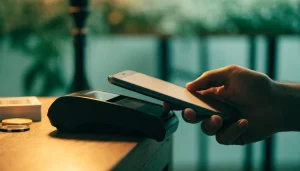
I would not treat a voucher as a complete payment cycle unless both directions are clear. Deposit-only means exactly that. The balance may still be usable for slots or live casino games, but the route used to put money in does not automatically provide a route to take it out. Separate stages.
What a UKash Casino Search Can—and Cannot—Confirm
A search for casinos associated with Ukash in the UK in 2026 expresses a practical hope: that a familiar prepaid route will still be available for a deposit. The wording of a result cannot establish that. A page may discuss the method, repeat an older claim or use the term to attract people looking for it, without confirming what a casino currently offers.
I have learned to separate three things that are often presented as one: a casino’s name appearing beside Ukash, a page describing Ukash, and a live payment option available to a particular customer. Only the last one establishes that the route can actually be selected. Even then, availability may depend on the casino’s current payment arrangements and the account being used.
That distinction matters because search results compress detail. A title can imply support while the page itself gives no current confirmation. A short preview may also draw on wording that is no longer prominent in the full text. Neither is evidence of a working deposit route. A confident label is still a label.
Do
- Check the live cashier for available routes
- Read specific claims within the page text
- Verify current operator confirmation
Don't
- Rely on search titles as proof of access
- Assume a brand mention equals availability
- Trust outdated labels or cached pages
Read the claim, not just the label
The useful question is what a page actually says and how specifically it says it. “Accepts Ukash” is a claim about availability. A page that merely explains prepaid payments, or groups several methods under a broad heading, does not make the same claim. Nor does a casino appearing in a list prove that the method is available now.
Date and context matter too. A page may have been written for an earlier payment setup, or its headline may have remained unchanged while the details moved on. That does not automatically make the page wrong; it means the headline cannot carry the whole burden of proof. Details beat labels. Every time.
I have also seen payment lists treated as if they settle more than they do. A specialist review may list Visa and Mastercard, for instance, but that does not confirm current UK availability or whether a particular card product is eligible. Those points need confirmation in the casino’s cashier. The same principle applies more strongly to a method named only in a search title: mention is not access.
What the wording can tell you
The phrase “Ukash casino” signals an interest in a payment method and a type of gambling site. Adding “UK” narrows the intended market; adding “2026” signals that present-day relevance matters. None of those words verifies that an individual operator accepts Ukash, that deposits will work, or that the payment route is available to a specific account.

A search result can still be useful as a starting point. It can lead to the operator’s own payment information or to a fuller explanation of what a third-party page means by “support.” But the source and the exact claim should remain visible in the reading. A directory entry is not an operator confirmation, and a reference to a method is not proof of a live option.
The safest interpretation is therefore narrow: a result identifies a topic worth checking, not a confirmed payment facility. That keeps a familiar name from being mistaken for a transaction route.
Prepaid Casino Deposits: Limits and Account Controls
A prepaid deposit has two separate ceilings to consider: the amount accepted by the payment method and the amount the casino permits for the account. They are not necessarily the same. A voucher may have a value that does not match the casino’s minimum deposit, while an operator may also impose transaction, daily or monthly maximums. A payment can therefore fail even when funds remain on the voucher.
A specialist casino review gives a typical minimum-deposit range of £10–£20, with the figure depending on the selected method. That is a guide, not a price list applying to every prepaid option or casino. The cashier’s displayed minimum is the usable figure for a particular account: it may differ between payment routes and can change when the operator updates its terms. A voucher balance below the displayed threshold may not be usable for that deposit.
Maximums need the same care. Casino limits can apply to a single transaction or be measured across a day or month; the applicable ceiling can also depend on the payment method and account status. A specialist review describes those maximums as variable rather than setting one shared figure. In practice, the cashier and the account’s deposit controls matter more than a general description of prepaid payments. If the operator’s stated minimum and the voucher’s available value do not line up, there may be no partial-deposit workaround.
The account controls have a different purpose from payment-method limits. UKGC rules require a remote gambling operator to ask a new customer to set a financial limit before that customer makes a first deposit. The operator must also make account-level limit controls accessible. These controls sit with the gambling account, not inside the voucher: they can shape how much is deposited through the account, while the payment provider separately determines what a transaction can carry.
That distinction is easy to miss. A payment method’s maximum is a processing condition; a player-set financial limit is a control on gambling spend. Lowering an account limit can restrict deposits even when the chosen prepaid method has sufficient value. Conversely, having room under an account limit does not override a voucher’s own balance or the casino’s payment ceiling. Different controls, different jobs.
I have seen cashier wording make this sound like one simple “deposit limit”. It is not. The operator may show a minimum and maximum for the chosen route, while the account’s own limit appears elsewhere in the responsible-gambling area. Check which figure applies to the transaction and which is an account-wide setting. The distinction prevents a declined deposit from being mistaken for a problem with the voucher itself.

Operators must verify a customer’s age before allowing deposits into a gambling account. That requirement is separate from any value limit: a payment method being visible does not itself authorise a deposit. The financial-limit prompt is also part of the account process, not a feature that a prepaid voucher replaces.
For prepaid casino deposits, the useful comparison is therefore not just the voucher’s face value. It is whether that value meets the cashier’s current minimum, whether the transaction sits within the method and account maximums, and whether the account’s financial settings permit the deposit. Those conditions can differ by casino and by payment route. Check the figures shown for the selected transaction. No shared ceiling.
Prepaid Payments, Withdrawals and the Return-to-Source Rule
A deposit and a withdrawal are not simply opposite movements through the same button. In a UK casino, the payment route can affect where a payout is permitted to go. Anti-money laundering rules generally require winnings to be returned to the original payment source. This is part of the closed-loop approach: funds should not enter through one route and leave through an unrelated one without a reason being checked.
I have seen this distinction get lost in the word “prepaid”. It sounds like a complete payment account, but a voucher may be designed only to fund a casino balance. Paysafecard, for instance, is deposit-only. That can make it useful for putting money into an account while leaving it unsuitable as the route for receiving a withdrawal. A cashier showing a voucher for deposits does not, by itself, establish that the same voucher can receive winnings.
The practical consequence appears later. If a deposit was made with a method that cannot accept a payout, the casino may need to use another permitted route or ask for additional checks before releasing funds. The alternative is not automatically a free choice: the operator may need to establish that the destination belongs to the same customer and that the change is consistent with its anti-fraud controls. That is where account details and payment ownership matter.
A casino may also divide a payout between payment sources or ask for another method where the original route cannot take the full amount. The details depend on the operator’s rules and the payment method’s capabilities. There is no sound basis for assuming that every prepaid deposit will be handled in the same way across casino sites. The important distinction is between a method accepted for funding and a route that can actually receive a withdrawal.
In my experience, the least complicated arrangement is one named account used consistently for both depositing and withdrawing. It keeps the ownership trail clear. When a different route is introduced, even for a legitimate reason, the operator may need to verify more information. Returning funds to the original source is a standard anti-fraud and AML control, not a judgement about the player.
That also explains why an online casino with prepaid vouchers can still have a separate withdrawal process. A deposit confirmation proves that a payment reached the account; it does not prove that the voucher is capable of receiving funds back. Before relying on a prepaid method, the withdrawal terms need to be read alongside the deposit options, particularly where a voucher is deposit-only.

The distinction matters on mobile as well as desktop. The screen used to make a deposit does not change the payment’s underlying role. A mobile casino may accept a prepaid payment for funding, while its withdrawal process still follows the original-source rule and the method’s limits. Convenience at the deposit stage is not the whole payment journey.
For searches about UKash or another voucher, the useful question is not only whether a casino accepts it at deposit. It is whether the route can participate in withdrawals, and what happens if it cannot. Deposit accepted. Payout route unresolved.
Is Ukash Still Accepted at UK Casinos?
There is no reliable basis for a blanket claim that Ukash is still accepted across UK casinos. Payment options belong to individual operators, not to the casino market as a whole, and a method’s name on an old page or in a general description does not establish that it can be used for a deposit now.
That distinction matters because payment information can outlast the arrangement it describes. A page may retain an old label, while the operator’s active payment options have changed. The reverse can also happen: a payment route may be available to some customers but not appear for every account or transaction. A claim that a casino accepts Ukash therefore needs to be tied to that casino’s current payment process, rather than repeated as a market-wide fact.
From the operational side, I treat a method as accepted only when it is offered as a usable route for the relevant account. A logo, a third-party listing or wording in promotional copy is weaker evidence. None completes a transaction. The distinction is practical, not semantic: a name can remain visible after the route behind it has stopped being available.
So, are Ukash casinos still available? That depends on the specific casino and what its live payment process currently offers. Without a current, site-level confirmation, it would be misleading to answer yes for UK casinos generally. It would be equally unwarranted to turn uncertainty into a claim that no casino accepts it. Both statements overreach.
The phrase “still accepted” also needs care. It can mean that a casino lists Ukash, that a customer can select it, or that a deposit can actually be completed through it. Those are not interchangeable. A listing is a claim; an active option is a stronger indication; a completed payment confirms the route for that transaction. Even then, it does not prove that the same option will remain available indefinitely.
I would not use the word “accepted” on the strength of a brand mention alone. The meaningful answer is narrower: Ukash acceptance can only be established for a particular operator at the time its payment route is checked. Until then, the status is unconfirmed—not a dependable basis for choosing a casino or planning a deposit.
A clear distinction. That is the point.
What Replaced Ukash in the UK?
“Replacement” can mean two different things: a service that took over from Ukash, or another way to fund a casino account. Those are not the same claim. I would not describe any current payment method as Ukash’s direct successor without evidence that it inherited the service or its customer balances. A similar-looking checkout option is not proof of continuity.

For a player seeking a prepaid deposit, Paysafecard is one relevant alternative. It is a voucher used for deposits only, so it can serve the prepaid part of the job without being a like-for-like replacement across the whole payment journey. That distinction matters. A payment label may solve the immediate deposit problem while offering no route for a later withdrawal.
EcoPayz is another name that can cause confusion. The service rebranded to Payz in 2022. That is a change of name, not evidence that Payz took over from Ukash. In payment copy, a rebrand can be presented as continuity because the underlying service continued under a different identity. It should not be stretched into a separate historical claim.
Other payment routes, such as debit cards, bank-based services and e-wallets, may appear in casino cashiers, but they are alternatives in the broad sense rather than documented Ukash replacements. Availability depends on the operator and the account. The practical question is what route the casino currently offers, not whether its payment menu contains a method that sounds familiar.
I have seen “replacement” used loosely in payment descriptions. Often it means only that another option can perform one similar task. That is a useful distinction, not a technicality: vouchers, wallets and bank payments have different roles, and a deposit route does not automatically handle withdrawals.
So the cautious answer is that Paysafecard can be considered for prepaid deposits, while Payz is the current name following EcoPayz’s rebrand. Neither fact establishes a direct succession from Ukash. The label alone proves little.
Paysafecard
A relevant alternative for those seeking prepaid deposits, though it is deposit-only.
Payz
The current name of the service following the EcoPayz rebrand in 2022.
Bank-based / E-wallets
Broad alternatives including debit cards and wallets, subject to operator availability.
What Happened to Ukash—and What That Means for 2026 Searches
The question of what happened to Ukash has two parts that are easy to collapse into one. One concerns the history of a payment name; the other concerns whether a casino can take that payment now. A clear answer to the first does not, by itself, settle the second.
I have seen payment labels linger in casino copy long after the practical route behind them has changed or disappeared. An old review, a cached page or a heading can preserve a name without confirming that the cashier still offers it. That is not proof of a particular Ukash history. It is a reason to separate a historical explanation from a live payment claim.
The same distinction applies to a page dated 2026. The date may describe when a page was published or updated, but it does not establish that every statement on it was checked against a working casino cashier. Nor does a reference to Ukash prove that the name refers to a payment route currently available to UK customers. Labels are easy to retain; payment options are operational.
Searches for casinos associated with Ukash in the UK can therefore reflect several intentions: finding an old service, looking for a voucher-style deposit, or checking whether a familiar name still works. Those are related questions, not interchangeable ones. The phrase “what happened to Ukash” calls for a historical account. A casino payment claim calls for present-day confirmation.
I would not infer a direct successor merely because another prepaid method appears in the same conversation. Similar use does not establish a corporate connection, a transfer of service, or a formal replacement. That distinction matters: calling something a replacement can sound like a documented handover when it may mean only that people are looking for another way to pay.
For a 2026 search, the useful reading is narrow. Treat Ukash as the subject of a historical question unless a current casino payment page independently confirms an available route. A remembered name is not a transaction option. A date stamp is not confirmation.
Checking a UKash Casino Site Before Depositing
A payment logo or a method named on a casino page is not enough to establish that it can be used for a particular account. The cashier is where the available deposit route becomes concrete: check the method shown there, the account currency and any conditions attached to that transaction. If Ukash is claimed, the important detail is whether that route is actually offered at the point of deposit.
A specialist review may list Visa and Mastercard, but those names do not confirm current availability in the UK or eligibility for every card product. The cashier must clarify both. UK-licensed casinos cannot accept credit-card payments for gambling, so a card option should not be treated as permission to use a credit card. Credit-card funding routed through a money service business is also prohibited.
Ownership details matter as well. In my experience, mismatches between the casino account and payment account create avoidable questions before a transaction can be processed. Using account information and a payment route belonging to the same customer reduces that friction. Basic check. Names and account details should be consistent, rather than borrowed or entered differently across services.
The same care applies when a payment is made through a wallet: UK rules prevent operators from accepting wallet payments where the wallet allows credit-card funds to be used for gambling. A method appearing in a list is not a workaround for that restriction.
Before depositing, confirm the exact route in the cashier and ensure the payment account belongs to the casino customer. Keep the transaction details. Those simple checks do not guarantee a particular outcome, but they help distinguish a usable payment option from a label that does not fit the account or payment product.
Why must withdrawals return to the deposit method?
Returning funds to the original payment source is a common anti-fraud and anti-money-laundering control. Using another route may require extra verification.
Why can a fast payout casino still delay my withdrawal?
A casino must complete its own approval process, and a first withdrawal may take longer while verification is completed. Payout speed also depends on whether your account is fully verified.
Do UK casino withdrawals require verification?
Yes, verification may be required, particularly before a first withdrawal. Completing it can help avoid delays.
Are fast casino withdrawals guaranteed?
No. Withdrawal speed depends on the casino’s approval process, whether your account is verified and the payment method; a fast deposit does not guarantee a fast payout.
What is the current minimum deposit?
The minimum deposit usually starts at £10–£20, depending on the payment method.
Are Visa and Mastercard deposits definitely debit cards?
No. Visa and Mastercard can be linked to different card products, so check that the card is a debit card and eligible in the casino cashier. UK-licensed casinos do not accept credit-card gambling payments.
Is Skrill available?
Yes, Skrill is available at some UK-friendly casino sites and remains a common deposit option. It may be excluded from promotions.
Casino Payments in the UK: Deposits and Withdrawals
Content created by the «Bentelbrothers.com» team